By Ava Doherty
Pamela Anderson once remarked that “activism is sexy”. It is an arresting phrase, but it also raises an uncomfortable question: why should activism need to be sexy at all? Why must political commitment be translated into the language of attractiveness before audiences are willing to engage with it?
The answer may lie less in activism itself than in the way Anderson has been understood throughout her career. From the moment of her 1989 Playboy cover, she has rarely been allowed to exist outside the framework of her sexuality. For decades, her body has been treated as the organising principle of her public identity, leaving her political commitments as an afterthought. If Anderson believes activism must be sexy, perhaps it is because sexuality has always been the language through which the public has been prepared to hear her.
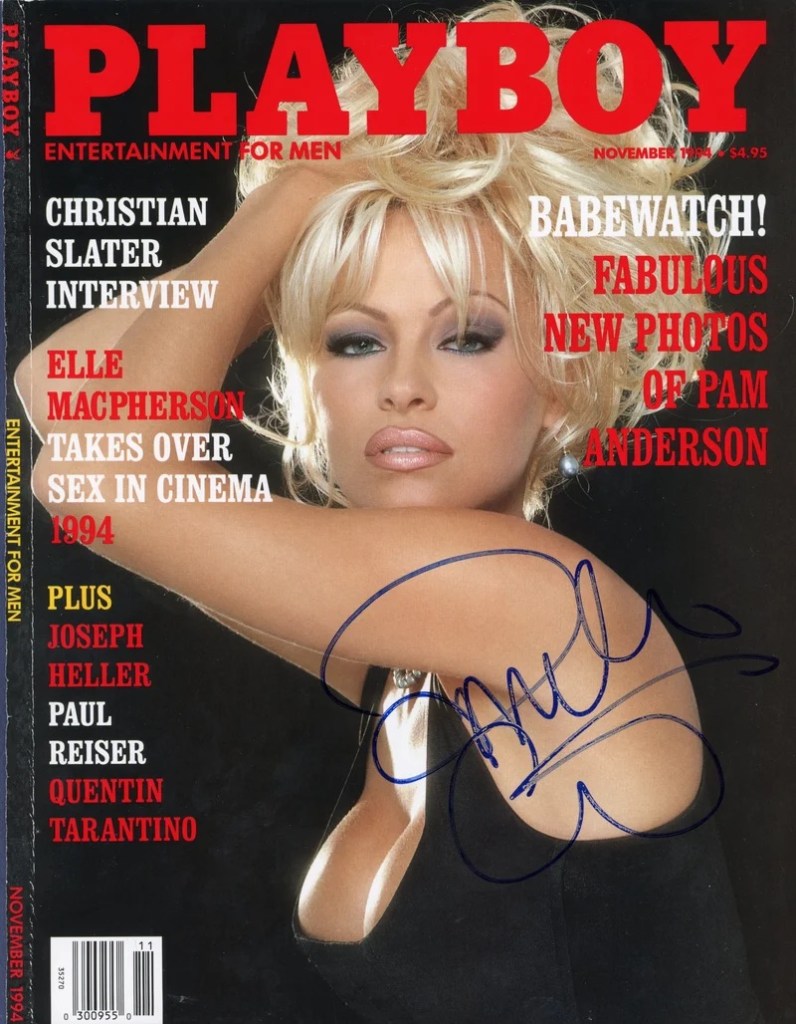
This is striking because Anderson has, by her own account, been an activist since arriving in Los Angeles. Across the years in Playboy, Baywatch and The Naked Gun, she has campaigned consistently on animal rights, feminism and class politics. That record has been documented by The Guardian, The Independent, 60 Minutes Australia and British morning television, yet it remains considerably thinner than coverage of her acting, modelling and relationships.
Her activism extends far beyond occasional celebrity endorsements. Anderson has fronted PETA’s famous “I’d Rather Go Naked Than Wear Fur” campaign, protested against KFC over animal welfare, campaigned against seal hunting, and was recognised by PETA as its 2016 Person of the Year. Through the Pamela Anderson Foundation, she has continued responding to global political events, commenting on issues ranging from environmental causes to social inequality.
When she discussed France’s gilets jaunes movement, where she lives, she framed it as a conflict between metropolitan elites and the rural poor, communicating her views through tweets and blog posts rather than academic texts. That method is hardly a betrayal of political seriousness. If anything, it echoes a long tradition of making political ideas accessible; after all, The Communist Manifesto itself was published as an inexpensive pamphlet intended for ordinary readers rather than scholars.
Given this record, the obvious question is not whether Anderson is an activist, but why so few people primarily understand her as one.
Part of the answer lies in the way female sexuality is culturally interpreted. Freud’s Madonna-whore complex describes a tendency to divide women into two mutually exclusive categories: those who are respected and those who are desired. As Freud famously observed, where such men love, they do not desire; where they desire, they cannot love. Anderson’s relationship with Tommy Lee generated precisely this sort of public discourse, reinforcing an image that has shaped how she continues to be received in media and political culture.
Celebrity scholarship reaches a similar conclusion. Jeffrey A. Brown argues that Anderson belongs to a lineage of women, including Marilyn Monroe, whose public identities become repositories for wider cultural anxieties about sexuality. Research on postfeminist celebrity culture likewise shows that highly sexualised women are routinely rendered legible through desire, scandal and authenticity rather than political agency. Their politics are not ignored because they do not exist, but because audiences have been taught to see something else first.
The imbalance is measurable rather than merely anecdotal. Searches of major newspaper archives overwhelmingly return stories about Playboy, Baywatch, cosmetic surgery and Tommy Lee, while three decades of campaigning are frequently reduced to biographical footnotes rather than becoming the organising principle of Anderson’s public identity.
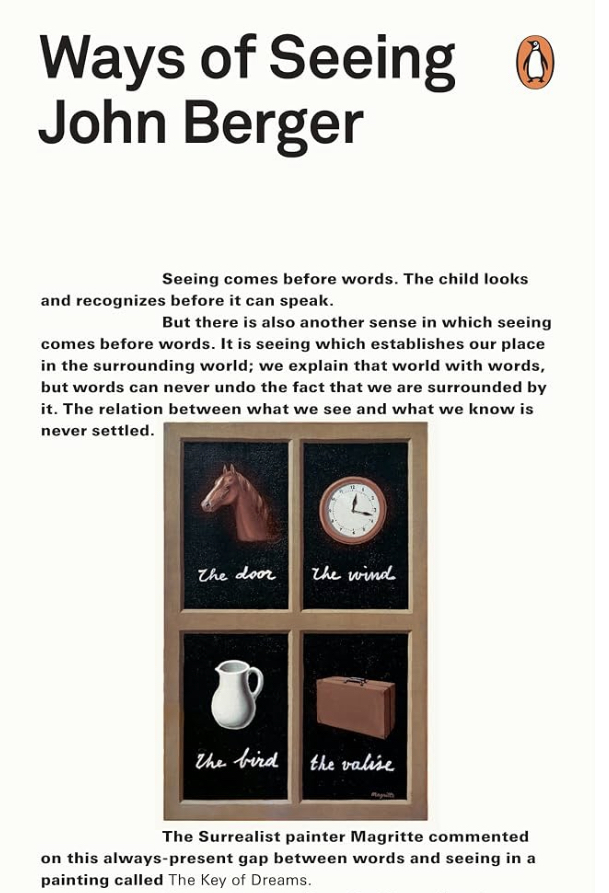
John Berger helps explain why this imbalance persists. In Ways of Seeing (1972), he argued that women exist within a culture of spectatorship in which they remain vulnerable to the viewer’s gaze, whether they look away or stare directly back. Even looking back is still a reaction within someone else’s frame of observation rather than genuine control over it. Anderson willingly entered that system through modelling, but once an image circulates commercially, it no longer belongs to the person depicted. It belongs to the audience that consumes it.
The consequence is that Anderson remains trapped within the sexual context in which her career began. Having been culturally positioned as the “whore” in the Freudian schema, she struggles to receive the intellectual credibility automatically granted to the “Madonna”. When she commented thoughtfully on the 2018 French protests, many women on social media celebrated not simply her politics but the fact that she defied a stereotype. She represented a version of womanhood capable of contradiction rather than confinement to a single identity.
That multiplicity becomes even clearer when Anderson’s politics themselves are considered. She is hardly an uncomplicated feminist icon. She has expressed discomfort with aspects of third-wave feminism, arguing that some strands disempower men. She counts Julian Assange as a friend, believing him to be aligned with truth, and she has spoken about Brexit in terms that reject easy liberal consensus, arguing that the European Union “must change if it wants to win over those who voted” to leave. Whether one agrees with these positions or not, they reveal someone whose politics resist straightforward categorisation.
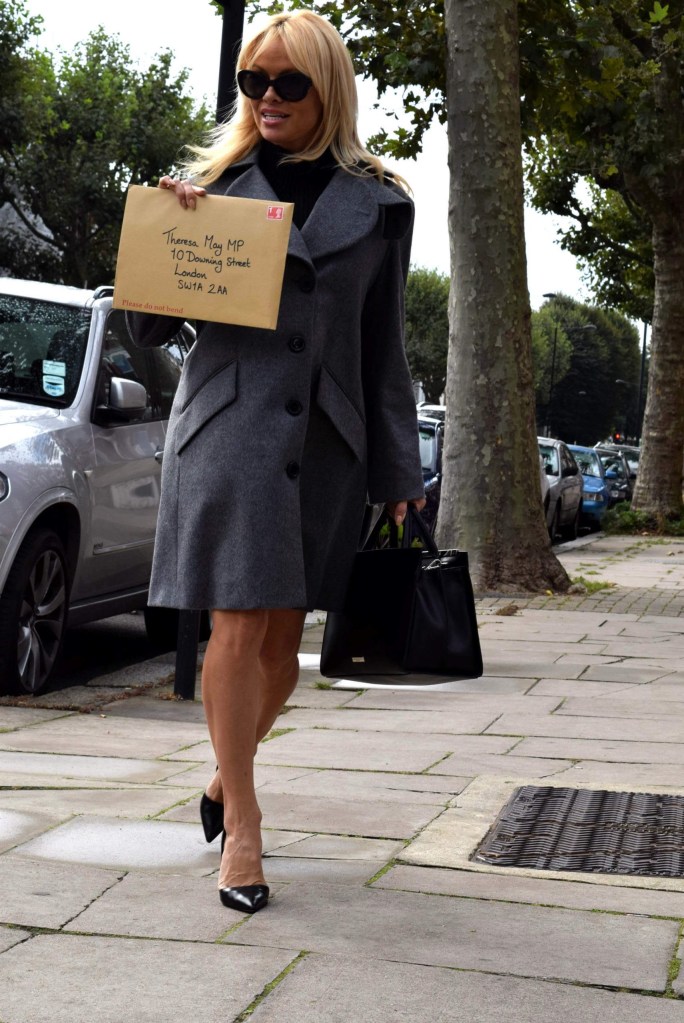
Anderson is neither simply a liberal celebrity nor merely a feminist symbol. She is politically idiosyncratic – which returns us to her claim that “activism is sexy”. Perhaps it is not that activism inherently needs to be sexy. Rather, for Pamela Anderson, sexuality became the only language through which much of the public was willing to recognise her activism at all. She learned to communicate political commitments through the identity the media had already assigned to her.
Her self-definition therefore points towards something larger than the familiar duality of womanhood. It suggests its multiplicity: that a woman can be a sex symbol, an activist, a philanthropist and a politically unconventional thinker simultaneously, even if audiences have long struggled to see all of those identities at once.
Further Reading
Berger, J. (1972) Ways of Seeing. London: British Broadcasting Corporation and Penguin Books.
Buss, D.M. and Shackelford, T.K. (2023) ‘An evolutionary explanation of the Madonna-whore complex’, Evolutionary Psychological Science, 9, pp. 372–384. Available at: https://doi.org/10.1007/s40806-023-00365-5.
O’Neil, L. (2018) ‘Pamela Anderson’s political activism – from French riots to broken capitalism’, The Guardian, 6 December. Available at: https://www.theguardian.com/world/2018/dec/06/pamela-anderson-political-activism-is-no-flash-in-the-pan (Accessed: 30 June 2026).
British Broadcasting Corporation (BBC) (n.d.) Yellow Vests: Who are France’s gilets jaunes? Available at: https://www.bbc.co.uk/news/resources/idt-sh/yellow_vests (Accessed: 30 June 2026).

