By Olivia Hurton
In the debris of the post-war world the Ossie Clark label burst onto London’s 1960s fashion scene with a clear aspiration: to make young girls in the street as glamorous and uninhibited as their idols. A style was born that admiring designer Anna Sui has named the ‘rock star’s girlfriend’ look, made up of skin-skimming chiffon dresses, art deco inspired bias cuts, sharp-edged trouser suits, cascading feather boas, multicoloured watersnake jackets, and blouses that erupt into psychedelic floral prints. The liberated style Ossie Clark promoted from 1965 to 1974 was the antithesis to the fashion philosophy promoted by Christian Dior in the 1950s, which saw women in rigid tailoring and demure, ladylike twinsets. Ossie Clark made clothes for women that danced and dared.
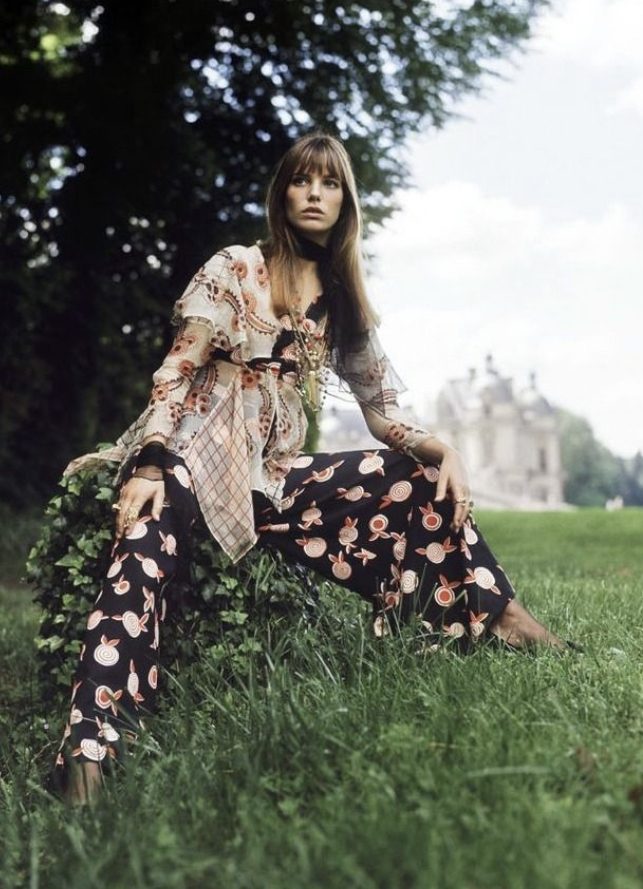
Behind the brand was master cutter and designer, Ossie Clark (1942-1996), and maker of exuberant geometric designs, Celia Birtwell (1941-). Speaking of the label’s rationale, Clark said ‘in the 1930s and 1940s satin bias, feather boas and lace were worn by goddesses of the screen, we thought: why can’t people on the street wear them?’ Yet it was some time before this democratic aspiration was accomplished. Unashamedly luxurious, the made-to-measure clothes were out of reach for many. A ‘Floating Daisy’ dress originally cost £140; that is the equivalent to over £2000 today.
The exclusivity of the clothes was attacked in an article for the London Review of Books by Jenny Diski, who went as far as saying that what was of interest in the sixties and seventies ‘cannot be deduced from Ossie’s frocks’, as is usually claimed, because their wearers belonged to an elite minority of aristocrats, artists and models. So if Ossie Clark clothes are retrospectively seen to have epitomised a zeitgeist, it is arguably because they were taken up by an artistic in-crowd with inordinate media exposure. Indeed, the Rolling Stones commissioned Ossie Clark to make stage outfits, and the fashion brand’s Chelsea studio became an informal hangout for Marianne Faithfull and Anita Pallenberg, who drank and smoked as the latest styles were being concocted out of sensuous swathes of fabric.
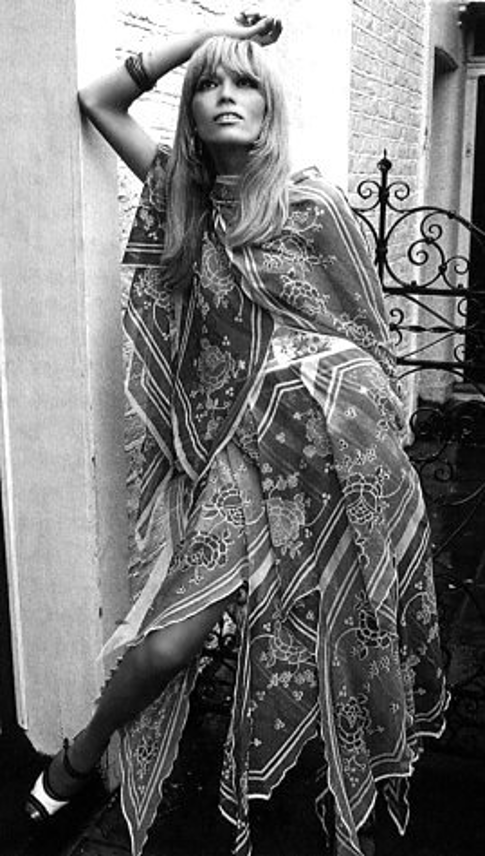
But the vibrant prints and fluid forms that Clark and Birtwell created were not entirely divorced from wider culture. After the war, optimism and youthful energy pulsated through London’s bohemian artistic enclaves of Notting Hill and Chelsea. Around King’s Road women in their early twenties were successfully opening independent fashion boutiques: Mary Quant, who popularised the mini-skirt, had launched Bazzar in 1955, and Alice Pollock, who teamed up with Clark and Birtwell, established Quorum in 1964. Both shops targeted young people who possessed new economic power. Many were entering the workplace earlier, providing them with disposable income which they lavished on records and clothing. Fashion was looked upon as a fraternity-mark, something that could give expression to their political ideology and values. What Clark and Birtwell offered to young consumers was an intoxicatingly feminine vision of freedom, clothes that burst into riotous prints and seductively caressed the body in silks and chiffons, gesturing to the new sexual liberties afforded to women by the contraceptive pill after 1961.
The colourful genesis of the label and its cultural legacy are the subject of the Fashion and Textile Museum’s current retrospective Ossie Clark + Celia Birtwell, running from October 2 2026 to April 11 2027, which takes viewers through the blazing but brief sartorial history of the Ossie Clark brand in over 120 garments. Unlike the 2003 Ossie Clark exhibition at the Victoria and Albert Museum curated by Sonnet Stanfill, this exhibition by Teresa Collenette and Dennis Nothdruft rightly brings into focus the importance of the creative partnership shared by Clark and Birtwell, who were an iconic duo artistically and, by 1969, a married couple.
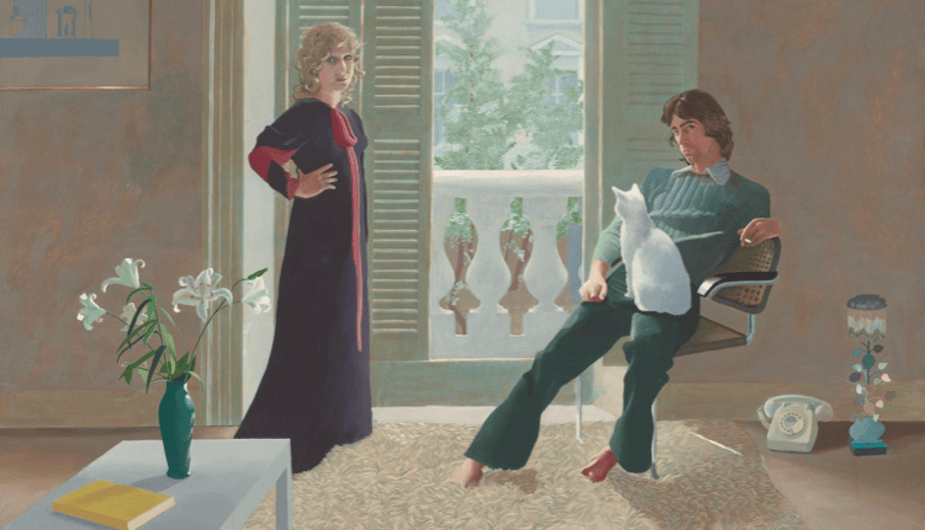
Despite their impressive synergy where fashion was concerned, it was by all accounts a difficult relationship, one that frequently veered from the domestic harmony immortalised in David Hockney’s portrait Mr and Mrs Clark and Percy (1970-71). Clark struggled with drug addiction, was openly bisexual, and after his wedding to a pregnant Birtwell, left her at home so that he could enjoy the honeymoon in Barbados alone. Quite predictably, the company was impacted by Clark’s lackadaisical temperament and poor business acumen. But the curatorial notes to the exhibition avoid personal criticism. The label’s closure is half-truthfully assigned to ‘the changing landscape of fashion’. None of the tragedy takes away from the exuberant story told by the clothes themselves, however, which continue to be sought out by collectors of vintage fashion.
Organised chronologically, the exhibition explores different eras of the brand’s development, from its early years of experimentation at the Chelsea boutique, Quorum in the 60s, to the diffusion line partnerships that saw Ossie Clark team up with Radley and then, in the twenty-first century, reach a new generation through collaborations with Topshop and Joanie. Along the way, the various cultural and artistic sources which shaped Birtwell and Clark’s practice are illuminated, from their shared fascination with the op art movement, contemporary rock stars, and Sergei Diaghilev’s Ballet Russes. Particular highlights include the Bowie-named ‘Ziggy Stardust’ dress with its tiered chiffon frills, inspired by the ancient Ionic Greek cloak known as an eguklion, and the myriad expertly tailored snakeskin jackets using material which Clark serendipitously found in an old warehouse. (Sharon Tate famously wore her full-length snakeskin coat to The Rosemary’s Baby premier in 1969, and Twiggy had a personalised version luxuriously lined with fur.)
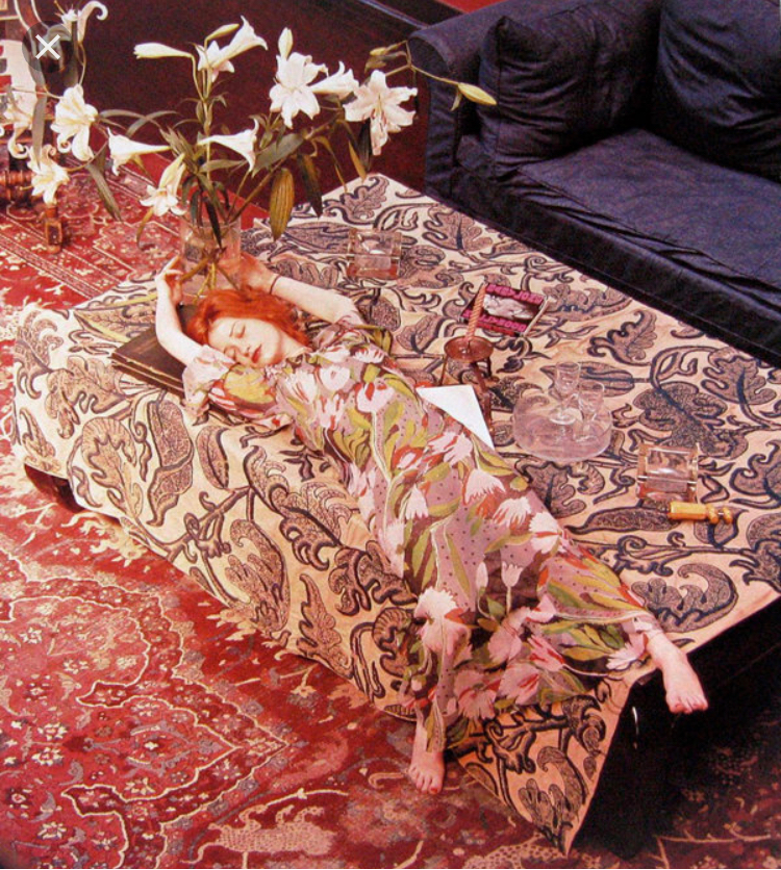
Particularly pleasing is the exhibition’s mapping of the intricate processes that lie behind the making of each garment. In the first gallery which features early designs, iconic pieces, such as a Grecian-inspired satin tunic from 1967 with medieval style ties around the bodice and sleeve, are accompanied by Clark’s original sketches. What is presented is akin to a 1960s version of a Sandro Botticelli woman; the female figure is shown cocking her arm in a display of attitude while her dress appears romantically in motion, as if blown by the wind. This early design is a nod to Clark’s lifelong preoccupation with not only how clothes looked, but how they moved.
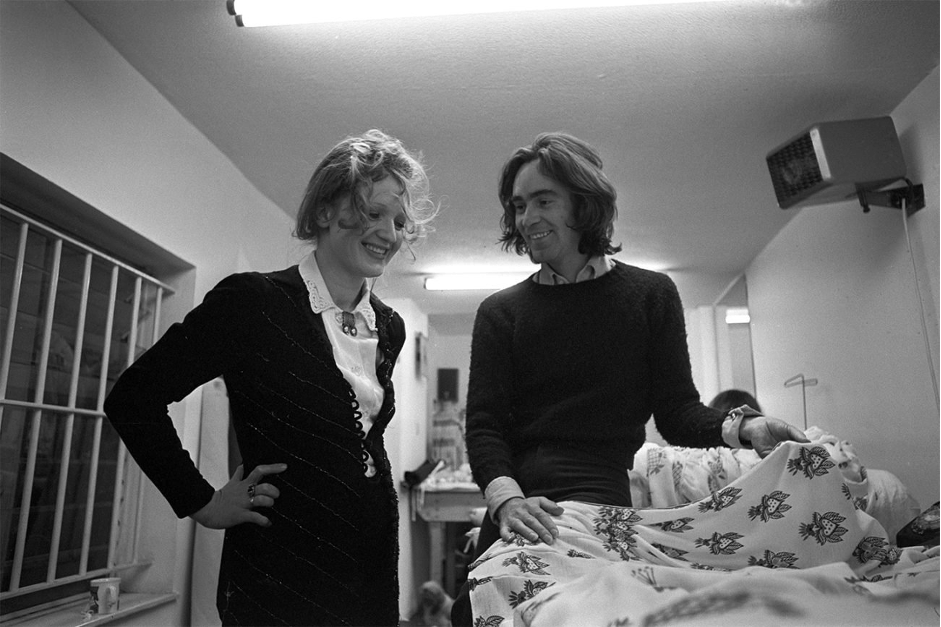
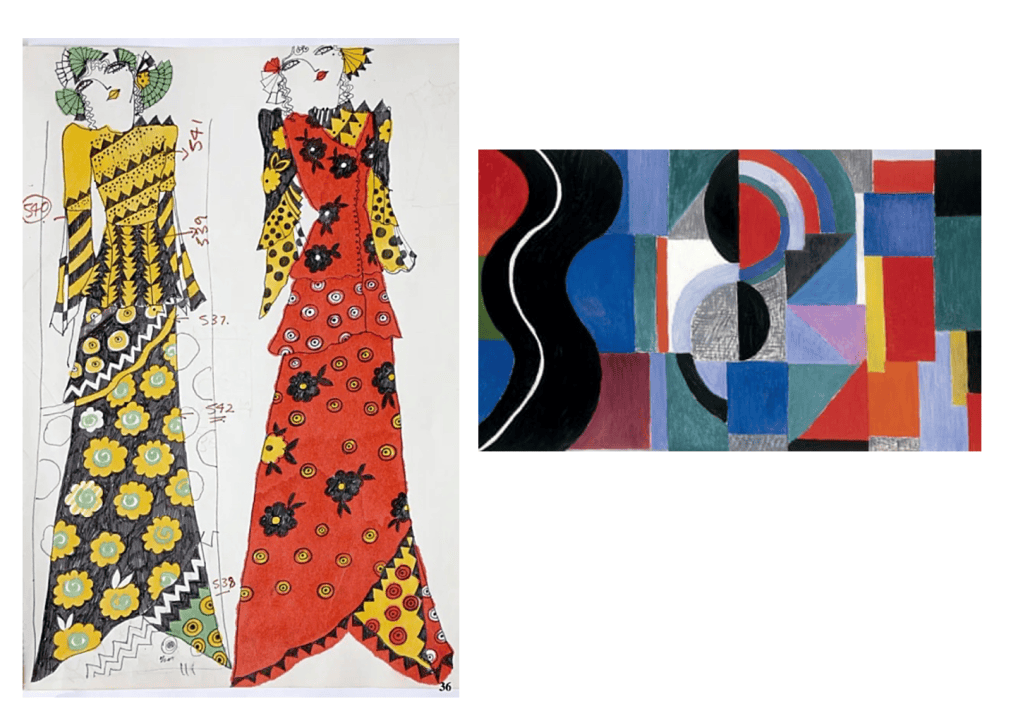
As the narrative arc of the show makes clear, more often than not it was Birtwell who took on the role of creative catalyst. Ossie Clark designs began with her reverie-like outlines of a ‘dream girl’, a Pre-Raphaelite model with puckered lips and wistful eyes, which she clothed in brightly hued dresses with clashing geometric patterns. Her trademark graphics included shooting stars, garden trellises, floral poesies, swirling circles and jagged zigzags. Fascinatingly, these unpretentious doodles, alive with youthful verve and spirit, were indebted to highbrow artistic culture. They reinterpreted the dizzying chromatic lines of Bridget Riley and the rainbow swirls of Sonia Delaunay (who successfully made art into wearable fashion herself) into multipurpose gowns, suitable for evening and day. The result is graphic patterns that give the impression of ecstasy and movement, even when on a mannequin.
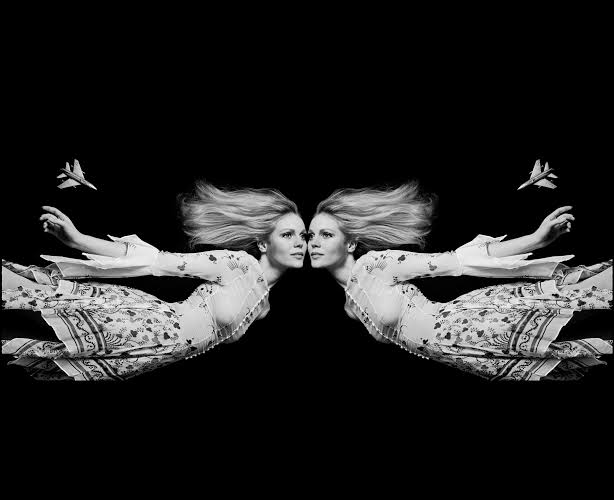
It was Clark’s task to take Birtwell’s print designs and then devise the garment’s technical construction from material textiles. By his own standards, he was the unrivalled ‘scissor king’ among 1960s fashion designers (Yves Saint Laurent apparently sent spies to the Quorum boutique to watch him at work). He benefited from a rigorous post-college period spent in apprenticeship at Christian Dior in Paris, and regularly scoured the V&A’s archive of historical garments while a student at the Royal College of Art, with an eye to how Schiaparelli, Charles James, and others cut fabric. He worked spontaneously on mannequins, seldom drawing designs. As Celia Birtwell recalled, ‘He’d get the toile, draw what he wanted from the mannequin, lay it flat and cut it. I don’t think anyone knows how to do that anymore, and that’s what made them fit the body and made you feel nice because it was built round a 3-D form’. He cut clothes with mathematical precision so that they seemed to float around the body. This was captured in the label’s ethereally shot adverts, such as Jim Lee’s striking ‘Ossie Clark Aeroplane’ (1969), where the model, Debbie Condon, appears to take flight in her ‘Monkey Puzzle’ pattern handkerchief hem dress.
Movement was not just an aesthetic consideration for Ossie Clark; it was integral to how the garments were presented to clients at catwalk shows. This is thoughtfully conveyed in the central gallery of the exhibition where the mannequins make dynamic poses on the runway. Enthralled by the intoxicating ways music and fashion could inform each other, Clark demonstrated this in his shows. The staid processions of expressionless models at Parisian couture were happily done away with in favour of carnivalesque, happening-style events, which took place in suitably theatrical venues, including the Royal Court Theatre and Mayfair’s Revolution nightclub. Models, drawn from Birtwell and Clark’s friends, were instructed to dance to Clark’s curated rock music sets (often compiled frenetically the night before), allowing for the loose, flowing dresses to romantically glide as the models paraded in front of the crowd. Ever ready to dismiss practical considerations, the press who could promote the brand were given limited access by Clark, while the couple’s friends – everyone from the Beatles to Cecil Beaton – were given front row seats. The exhibition provides a glimpse of the rumpus in projections of archival video clips from a show at the Chelsea Town Hall, depicting an audience engaging with the revelries on the runway.
The freewheeling party atmosphere continues in the final gallery of the exhibition. Following a flight of stairs, viewers experience a nostalgic soundscape made up of songs by Beatles, Rolling Stones and Queen, before encountering a Studio54 themed display aglimmer with dancefloor outfits and evening gowns. These designs from the 70s show a movement away from the explosive colours of earlier designs. The prevailing shade is black and the fabrics used, while still fluid, are notably heavier; jersey and devore velvet are favourites. But why this change in style? By this point the Ossie Clark label had to be sold to Al Radley to keep it afloat; bespoke pieces were thus replaced with mass market designs. What is implied here, but regretfully not expounded upon by the curators, is that Clark and Birtwell’s designs were impacted by this loss of control. Indeed, for disco-era pieces, the prevalence of morose hues is striking – and perhaps symbolic.
The final section of the show depicts the legacy of Birtwell and Clark’s clothing and its influence on contemporary fashion. After Clark was murdered by an ex-lover in 1996, Birtwell embraced the task of ensuring another generation was able to enjoy the floral joys and bohemian sartorial liberties of Ossie Clark clothes. A selection of designs from her sold-out 2006 collaboration with Topshop are displayed, allowing the viewer to see how collectors’ pieces from earlier in the exhibition were reproduced in high quality fabrics by a high street label. This enabled fashion-lovers, including celebrities Kate Moss and Keira Knightley, to furnish their wardrobes with relatively inexpensive pieces of museum-worthy history. Limited edition items included a silk version of a trailing bias-cut dress which juxtaposed the ‘Black-eyed Susan’ print with ‘Kitty Loves Anemone’ and a pale blue diaphanous wrap dress, alternating the swirling frivolity of the ‘Candy Flowers’ design with the hard lines of the brand’s iconic trellis print. However, this hardly marks the end point to Birtwell’s impressive career, which also extended into the arena of interior design. The energetic octogenarian has in fact just collaborated with Burberry on their 2027 spring-summer collection – a strategic move on the part of the English fashion house, who hope Birtwell’s zesty graphics will appeal to today’s sartorially daring youth market.
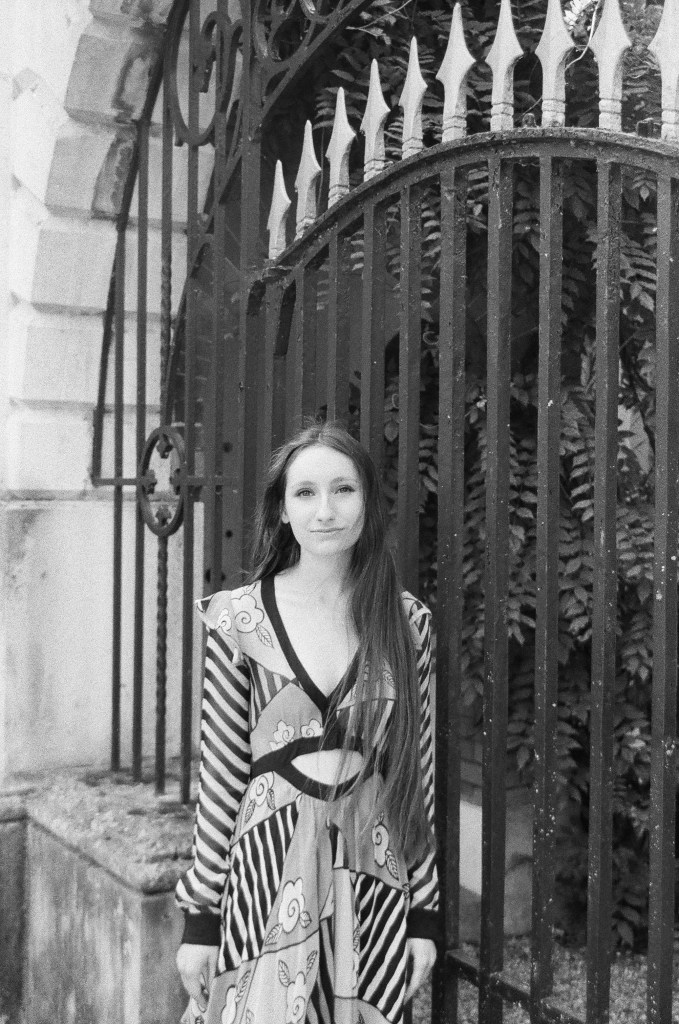
Where the Fashion and Textile Museum’s Ossie Clark + Celia Birtwell exhibition excels is in showing the artistic foundations and enduring quality of the pair’s clothes, which are constructed from a rare combination of poetry, movement and mathematics. Birtwell’s prints with their psychedelic colours still leap into life, encapsulating the thrill of being young and carefree. Clark’s plunging necklines and sexy bias cuts continue to exude a potent air of erotic danger. The ‘rock star’s girlfriend look’ endures. And it is in no small part due to the Ossie Clark brand that women, such as Pattie Boyd, Marianne Faithfull and Anita Pallenberg, were able to step out from behind the shadows of their famous partners, commanding attention and forging distinctive sartorial identities through breathtaking designs.
The exhibition Ossie Clark + Celia Birtwell is on view at the Fashion and Textile Museum, London until 11 April 2027.
Further Reading
Jenny Diski, ‘A life, surely? To Portobello on Angel Dust’, London Review of Books, 21.4 (1999) https://www.lrb.co.uk/the-paper/v21/n04/jenny-diski/a-life-surely
Federico Poletti, Mr & Mrs Clark: Ossie Clark and Celia Birtwell: Fashions and Prints (Silvana Editoriale, 2023)
Judith Watt, Ossie Clark 1965-74 (V&A Publications, 2003)

