By Maisie Corkhill
Period drama fans have been through a lot in recent years. In 2022, Netflix helmed the Fleabag-ification of Persuasion, with Dakota Johnson’s Anne Elliot breaking the fourth wall to tell us, “He is a ten. I never trust a ten”. Even Autumn De Wilde’s pastel-coloured, highly stylised Emma (2020) had its detractors. Then came Emerald Fennell’s Wuthering Heights (2026), apparently the most sacrilegious of the three. But objection to Fennell’s film went beyond questions of modernisation, or its camp sexualisation of a novel that is erotically charged but never explicit. Critics landed hard on the film’s mistreatment of class and race. The casting choices were seen as indefensible: Robbie (at 35) was too old to play the teenage Cathy, and Elordi too white to play the racially ambiguous Heathcliff of Brontë’s novel.
We have witnessed a shift in the definition of period drama, away from English heritage productions such as the beloved BBC Pride and Prejudice, or Ang Lee’s Sense and Sensibility (both 1995). Recent adaptations, along with the hugely successful Bridgerton (2020-present) raise questions of what period drama can, or should, be in our era of identity politics and representation. But some, like Fennell, have pushed the genre so far that it becomes unrecognisable, leading fans to seek solace in the comforting nostalgia of traditional Austen, circa 2005 Joe Wright Pride and Prejudice.
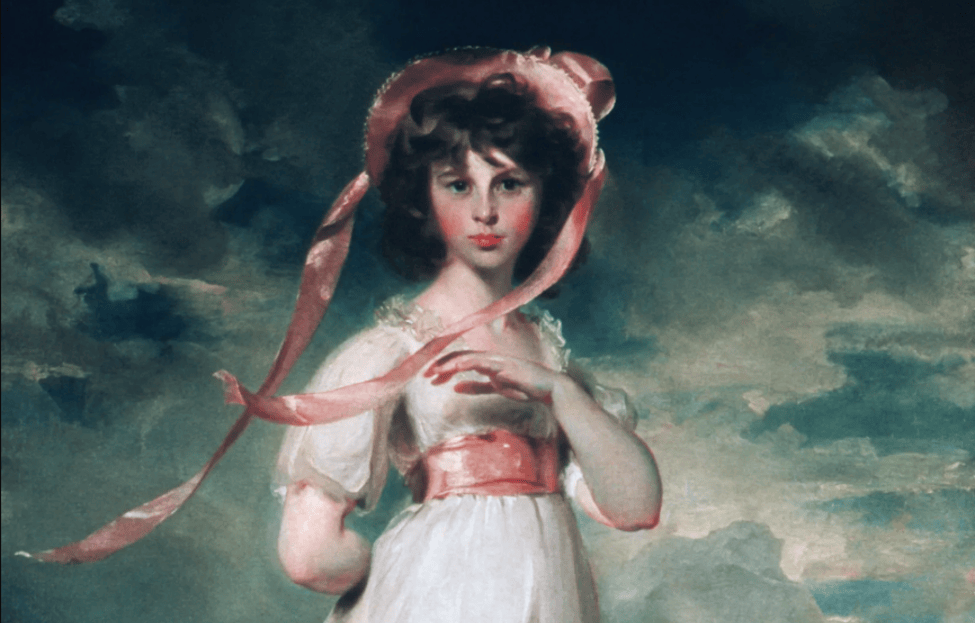
Enter Sense and Sensibility (2026) the adaptation that promises a return to “real” period drama, but with subtle feminist framing and undone hair. The film is extremely pleasant to watch. The lighting is warm (if a little dark), the scenery is lovely, and the costumes in particular are refreshing. Costume designer Grace Snell did a great deal of historical research: elements of the Dashwood family’s wardrobe are taken from the contemporary celebrity portraitist Sir Thomas Lawrence, as she told Radhika Seth for Vogue. More high-fashion looks such as Fanny Dashwood’s ensemble were inspired by ornate drawings of society women by Henry Fuseli. Snell’s approach was meticulous, as Seth reports, with ‘natural dyes, antique fabrics, and hand-sewn frocks’ which strive not only for authenticity but a ‘glorious undoneness’ that brings Austen’s visual world into the present.
Director Georgia Oakley has spoken about wanting the film to open Austen’s work to a new generation, despite herself feeling quite remote from the Gen-Z target audience. She told the New Yorker, “I could barely tell you what Gen-Z is – all I know is that the marketing team keep using the word ‘yearning’.” Daisy Edgar-Jones, who is self-consciously adept at marketing, has faithfully pushed the “yearn-maxxing” campaign in interviews. Oakley, meanwhile, has teased out elements of Austen that feel contemporary. This includes prioritising the sisterly relationship over the romantic ones and, as Rebecca Mead put it in her New Yorker piece, emphasising ‘the book’s outdoorsy wildness’. Nature is at the fore of this adaptation, and thematically entwined with Marianne’s rebellious spirit and romantic sensibility.
Esmé Creed-Miles plays Marianne more as a Brontë heroine than an Austen one, and interestingly the setting of the Dashwood’s cottage also defers to the Brontë aesthetic. Filmed at Ditsworthy Warren House on Dartmoor, this iteration of Marianne gets her own Romantic landscape, a moorland worthy of Wordsworth or Shelley. Austen herself preferred a more pastoral countryside, closer to the view of Edward Ferrars in the book: ‘“I like a fine prospect, but not on picturesque principles. I do not like crooked, twisted, blasted trees. I admire them more if they are tall, straight, and flourishing. I do not like ruined, tattered cottages. I am not fond of nettles, or thistles, or heath blossoms.”’. A ruined, tattered cottage such as Oakley has found on Dartmoor may appeal to modern tastes, but it is not accurate to Austen nor does it reflect the social position of the Dashwoods. A cottage by eighteenth century standards is quite a sizable house by ours. Indeed, Austen gives Barton cottage ‘four bedrooms’ and a sitting room of ‘about sixteen feet square’. It is in ‘a pleasant, fertile spot, well wooded, and rich in pasture’. For devotees of the book, then, it is jarring to see the upper-class Dashwood women instead transplanted to a rural farmhouse that had previously been used as a set in the film War Horse (2011) for the home of working-class Naracott family.
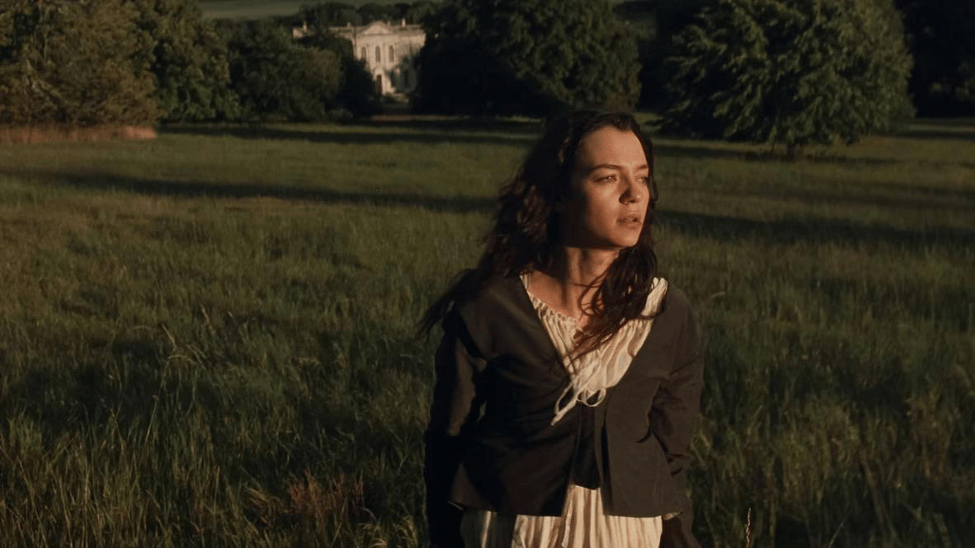
Curiously, the film’s reinvention of Austen’s landscapes has drawn little critical notice. If any aspect has attracted online backlash, it is instead Marianne’s hair. Internet historians have categorically stated: upper-class regency women did not wear their hair down. And Marianne’s hair is not just down, it is visibly matted and unkempt. Oakley said in an interview that she wanted the girls to look more relaxed at home, where they weren’t performing for anyone, but this is an entirely modern notion. Similarly, hair and makeup designer Nadia Stacey explained that Elinor’s hair is in a loose side plait by the end of the film because she’s ‘just working’, ‘chopping wood’. But why is Elinor Dashwood chopping wood? The film’s aesthetic choices – the hair and location – make the Dashwood sisters look, and behave, of a different class than Austen wrote them. This somewhat undermines the historical work of costume designer Snell, producing a strange mish-mash of authentic regency details and styling decisions which undermine them. The result looks like a period drama, but not always an Austen one: Marianne looks more Dickensian throughout. It becomes clear as the film goes on that it prioritises aesthetic choices that will look good to modern eyes. Indeed, the shot of Marianne walking away from Norland through a field looks quite like a period drama, but also like a campaign for a high-fashion house like Burberry.
Screenwriter Diana Reed wanted the language of the film to feel traditional, with an initial sense of acclimatising to unfamiliar speech to reproduce the feeling of reading a book that is over 200 years old. She also said, in a live Q&A streamed by Picturehouse, that she wanted to pull out the threads that resonate now. The script balances this well. Daisy Edgar Jones’s Elinor speaks in Austen’s language, and does not, like Dakota Johnson’s Anne Eliot, describe herself as “single and thriving”. She does however see off a bottle of red wine alone at night, identical to the heroine of the 2022 Persuasion. It seems this has become adaptation shorthand to convey regency heartbreak through a more liberated lens. Elinor and Edward are also less awkward than in Emma Thompson’s screenplay (1995), to the point where they are perhaps over-familiar, even conspiratorial, from the moment they meet. There is a lot of humour, which is appropriate because Jane Austen is an incredibly funny writer. The many one-liners are Reed’s, inspired by Austen, like Margaret’s “Why does London get all the men” or Mrs Jennings’s “yes, a duel should be kept for a special occasion”.
Some significant changes have been made to the story – particularly the men – without critics taking much notice. Firstly, Edward Ferrars’s backstory has been altered to make him more noble, but also more boring. Lucy Steele is not the daughter of his tutor in Plymouth, he does not fall in love with her as a foolhardy young man. In the film, Lucy is from a good family, so Edward’s mother arranges the match. When Lucy’s father remarries and has sons, his first family falls down the social hierarchy, and Edward’s mother forbids him to marry her. Edward is sympathetic to Lucy’s plight and upholds the engagement, despite never loving her.
This change is not trivial, nor is it a coincidence in our age of “all men are trash” discourse. Edward’s own youthful sensibilities are not to blame here for his prior engagement, instead he is the principled – if a little more one-dimensional – man standing by a woman who has been compromised by society. This flattening of Edward stands as one of the film’s modern elements, along with an entirely new take on Lucy. A catty golddigger in previous adaptations, here we see Mrs Jennings (oddly and self-righteously out of character) chastising the girls, and us, that Lucy has “no money, no name, no education” so we can “hardly blame her”. The film reaches to better Austen’s characters or our opinion of them, in line with more straightforward modern sympathies. Austen herself was more interested in the space between being a good person and behaving badly: indeed, the novel never required Edward to be perfect for Eleanor to love him.
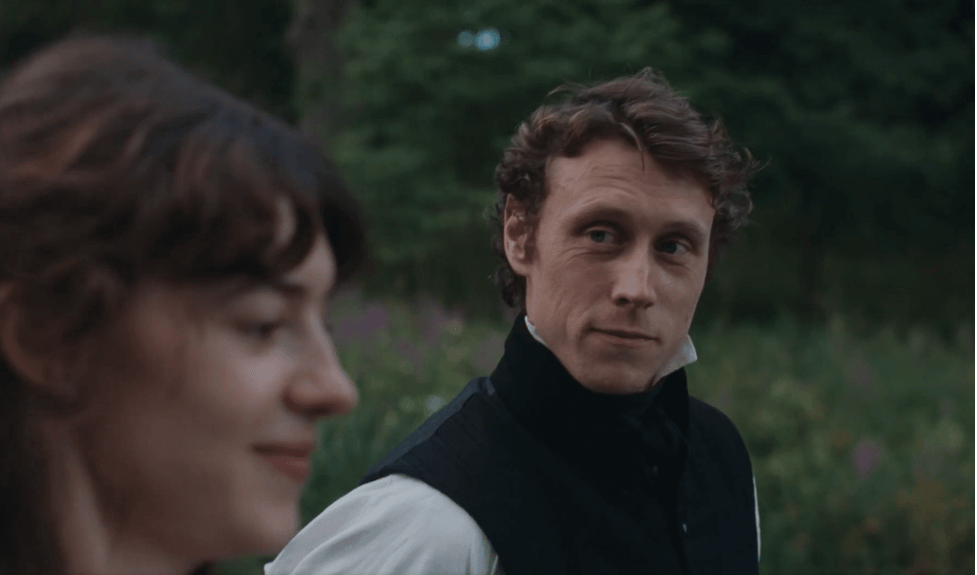
Brandon and Willoughby’s dynamic is also redone. In the book, Brandon’s childhood sweetheart Eliza is married instead to his older brother, unhappily, and while Brandon is in the East Indies she has an affair and bears a child. That child, also Eliza, becomes Brandon’s ward and when she is a teenager she is seduced by Willoughby and has his child (another Eliza). This was apparently too many Elizas for the film, and Reed’s screenplay has cut it down to just one. Brandon’s original sweetheart becomes the older woman seduced by Willoughby – whom he does leave pregnant – but both she and the baby die in childbirth.
This may be more convenient, but it changes Brandon and Willoughby respectively from protector and father figure versus libertine and defiler to simple love rivals. Reid revises Willoughby’s motivations: as a widow, Eliza is vulnerable and Willoughby takes advantage of her, with designs on the Delaford estate. While strategic – and slimy, referring to Eliza as “a woman of the world” – this Willoughby is no longer the man who preyed on a much younger woman, anywhere between 14 and 16 in previous adaptations. Here, one of the darkest moments in Austen is sanitised. What looks like modernisation, or a need to be concise, works to make Austen more palatable to a new audience.
This adaptation has, for want of a better phrase, read the room on contemporary period drama. It offers a return to the comforting sight and sounds of Joe Wright’s Pride and Prejudice (2005). Also a Working Title production, it seems Oakley wishes to emulate the success and sheer escapism of that film, but she is working from a blueprint that is over twenty years old. Like Pride and Prejudice (2005), Sense and Sensibility (2026) is set across magnificent country houses and breathtaking national landscapes. Both take a naturalistic approach with the no-makeup rule on set and earthy costumes. Both lean towards a quiet yearning rather than explicit romance. And despite the two decades between them, both films have a principal cast that is entirely white.
A “trad” period drama may seem exactly the place to retreat from the noise of identity politics. But it is surprising that there has been absolutely no critical discussion of the casting choices in this film, particularly given that its casting director is Kharmel Cochrane, responsible for Wuthering Heights (2026). Cochrane, herself mixed-race, was at the fore of that film’s casting controversy. She describes her work as ‘renowned for championing fresh, diverse talent’. Robbie and Elordi were neither fresh nor diverse. The main issue with the casting in Wuthering Heights (2026) – reported diligently by the BBC, The Guardian, Forbes and others – was the white lead for Heathcliff, despite the novel’s slight textual suggestions of the character’s racial otherness. Austen, on the other hand, does not provide the material for a race-conscious casting choice, but in the discourse surrounding Wuthering Heights it became clear that the issue has gone beyond the question of textual accuracy.
We should consider what period drama, especially Austen, represents: the English country-house fantasy, its pastoral landscapes and inherited estates, that have so long been synonymous with whiteness. But adaptations do not only recreate their source, they respond to the culture that creates them. As literary critic Sunder Rajan writes, ‘The classics are circulated and resurrected with a view not only to paying homage to the culture of the past but, even more importantly, to shape a culture of desirable ‘modernity’ in the present’. Every new Austen adaptation therefore reflects not only Austen’s world, but the era that has chosen to remake it. Of course, it is not a crime to enjoy period dramas made twenty or thirty years ago. But society, and crucially filmmaking, has changed: accepting whiteness as a given in the period drama of 2026 feels off.
Most opposition to colour-blind casting is on the grounds that it changes the subtext of the character too much. But Sense and Sensibility offers multiple chances to cast non-white actors in ways that do not materially change the story. One instance is Mrs Jennings and/or her daughters. Fiona Shaw did an admirable job here, but the role could easily have gone to the brilliant Adjoa Andoh (of Bridgerton). Perhaps the best diverse casting is when it adds new life to the narrative. Given Herbert Nordrum’s restrained approach to the character – which came off as simply dull – it seems the key opportunity missed here is Colonel Brandon. Brandon is one of the few major characters in Austen that has been outside of England. He returns from a military campaign in the East Indies, placing him in direct proximity to the colonial world that sits on the margins of Austen’s narratives. Had he been played by a South Asian actor such as Riz Ahmed or Dev Patel, that history would have been brought into focus.
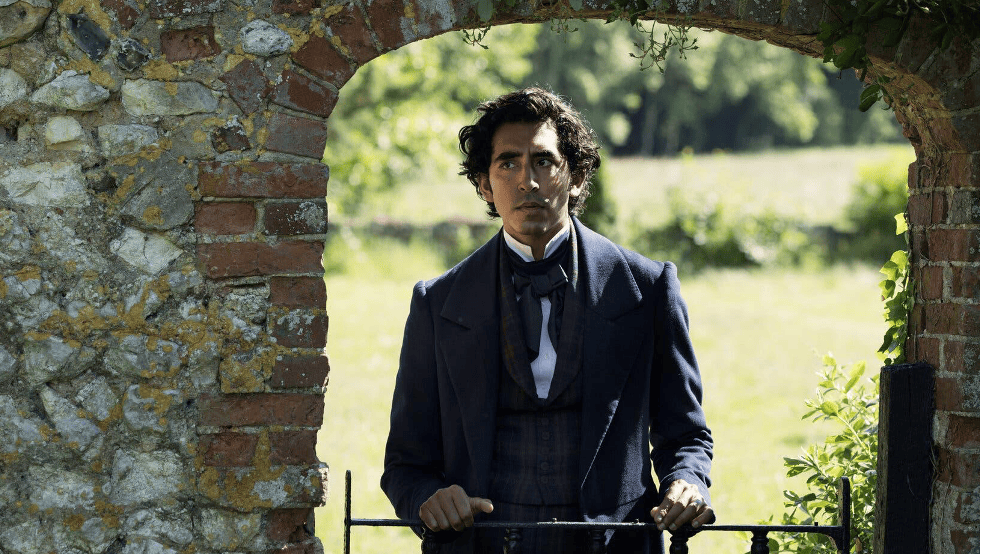
Patel is British Gujarati, so seeing him in Brandon’s uniform would have raised the question of what it means for a British actor of Indian heritage to play an English colonel who has spent time serving the Empire in India. It would make Brandon’s outsider status (he is ridiculed by Willoughby and Marianne for his time abroad) more complex, and bring attention to one of the instances where Austen engages with the British Empire. But apart from anything else: Dev Patel is the right age for Brandon (who is around 35), he does well in period drama (he was the lead in a Dickens adaptation), and he looks good enough in the cravat to justify Marianne’s change of heart.
Cultural historians have demonstrated a substantial Black presence in Britain during the Georgian period. There were also South Asian people in Britain, many arriving through the East India Company, military and commercial networks. In their research on Archival Silences, Al-Amoudi, Birch and Newman write that ‘there was a burgeoning population of free Black and South Asian people in [London]’ even as members of these communities faced ‘institutional discrimination and hostility’. The historical evidence therefore supports a more diverse population in the period than generally assumed. Does it justify a non-white actor playing a protagonist in an Austen novel? It doesn’t have to. Bridgerton has already demonstrated that the whiteness of Regency romance can be challenged without breaking the genre. While, for all its faults, the 2022 Persuasion seamlessly cast diverse actors in Austen’s world without making diversity its manifesto.
The unwillingness of this new Sense and Sensibility (2026) to address the contemporary climate in any meaningful way – aside from flattening its male leads, and making Austen look more Brontë – renders it primarily a project of pretty visuals. Its departures from Austen do not represent a new take on the material but a pastiche on the turn of the century period drama. The main issue here isn’t necessarily that there should be fewer white actors. It is that the studio has self-consciously framed this adaptation as an “irresistable new take” and a “deeply relatable story”. Yet the film does not consider who gets to see themselves reflected in period dramas, and who gets to find them relatable.
Further Reading
Sense and Sensibility (2026), directed by Georgia Oakley. Focus Features/Working Title
Fahad Al-Amoudi, Kate Birch and Simon P. Newman, ‘Historical Research, Archival Silences and Creative Voices’ Transactions of the Royal Historical Society, 32 (2022): 223-239.
Jane Austen, Sense and Sensibility, edited with an Introduction by Fancesca Segal (London: Vintage, 2014)
Corinne Fowler, Our Island Stories: Country Walks Through Colonial Britain (London: Penguin, 2024)
HeyUGuys Film, “Georgia Oakley On Jane Austen: “It Gives A Human Quality To The Film.” Youtube, Sep 15, 2026. [https://www.youtube.com/watch?v=hSSNAvrC5jo]
Rebecca Mead, ‘Learning To Yearn With Georgia Oakley.’ The New Yorker, 21 September 2026.
Edward W. Said, ‘Jane Austen and Empire’ in Culture and Imperialism (London: Vintage, 1994)
Radhika Seth, ‘An Exclusive First Look At The Swoon-Worthy Costumes of Sense and Sensibility.’ Vogue Online, 14 September 2026.
Radhika Seth, ‘How To Recreate Sense and Sensibility’s Romantic, Undone Beauty Look.’ Vogue Online, 23 September 2026.
Catherine Shoad, ‘“It’s just a book”: Wuthering Heights casting director defends choice of Margot Robbie and Jacob Elordi.’ The Guardian, 29 April 2025.
Rajeswari Sundar Rajan, ‘Austen In The World: Postcolonial Mappings’, in eds. Park and Sunder Rajan, The Postcolonial Jane Austen (London: Routledge, 2000)

