By Megan Phillips
The snow in the mountains was melting and Bunny had been dead for several weeks before we came to understand the gravity of our situation.
The first line of Donna Tartt’s debut novel, The Secret History, has attracted readers since it was published in 1992. Combining the gothic sense of foreboding with the style of a classical Greek tragedy, the campus novel acts as reverse murder mystery, opening with the question not of ‘who’, but of ‘why’. Set at a small liberal arts college in Vermont, The Secret History revolves around an exclusive group of six Ancient Greek students. Richard Papen, the protagonist and narrator, reflects on his experiences joining the clique, and the events leading up to the group’s eventual murder of Edmund ‘Bunny’ Corcoran. The idea that “beauty is terror” is a recurrent motif throughout the novel, and the group’s commitment to aesthetics eventually becomes the cause of their moral decline.
The reader’s perceptions of this enigmatic group are entirely predicated on the unreliable narration of Richard Papen, the outsider, whose first person narration is fundamental to The Secret History’s status as the first, defining dark academia novel. Professor Julian Morrow’s Greek class depart from the norm to become a spectacle – a placeless, timeless entity that cared neither for modernity nor integration. The main characters act in ways that are out of place at the university. Francis Abernathy, a wealthy, gay, redhead from Boston, considered by Richard as “the most exotic of the set”, provides the secluded country house in which the group spend much of their time. Camilla Macaulay, the only female member of the group and twin sister to Charles Macaulay, is described as “a living reverie for me: the mere sight of her sparked an almost infinite range of fantasy, from Greek to Gothic, from vulgar to divine”, and Richard continues to romanticise her throughout the novel as something otherworldly. Henry Winter and Bunny Corcoran could not have been more unalike. Bunny is loud, impulsive, good at tapping into the other’s insecurities, and the only member to have relationships outside of the group. Henry, who fascinates Richard most, is brilliant, aloof, and completely detached from feeling empathy for others, and from the modern world (to the extent of not realising astronauts had been to the moon).
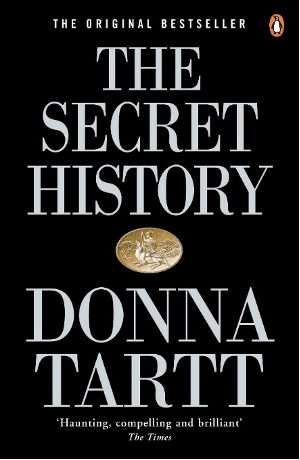
These first impressions change as Richard becomes inextricably tied to the group – the characters are more complicated, at times morally-repulsive, and yet often seem to fit with this idea of ‘beauty as terror’. Embodying the Greeks, Henry attempts a Dionysian bacchanal with the others at Francis’ country house, which ends in the frenzied, drug-induced, accidental murder of a neighbouring farmer. Richard learns of the group’s clandestine activities from Henry, for he, and Bunny – who did not take the bacchanal seriously – were the only two not to attend. Though it triggers his insecurities of exclusion, his curiosity is drawn not to the horrors of murder, but to the knowledge that he has been let in on such a deliciously-fascinating secret.
I suppose if I had a moment of doubt at all it was then, as I stood in that cold, eerie stairwell looking back at the apartment from which I had come. Who were these people? How well did I know them? Could I trust any of them, really, when it came right down to it? Why, of all people, had they chosen to tell me?
The group’s allure is far from dimmed by this terrifying revelation. Richard is concerned not with the horrific violence of this accidental murder, but with his status within the group. Excluded from the initial deed, but brought into the circle and made complicit after the fact, he does nothing to divert from the path he is heading down. This scene ultimately marks the turning point in the group’s moral decline, and makes it all the more difficult for Richard to extricate himself from future predicaments.
As the novel progresses, the characters spiral evermore towards their own destruction. The energy grows tense between Bunny and the group when he discovers the truth about the murder, and begins to blackmail them. Henry decides to murder Bunny, and the story circles back to the prologue as Richard and the rest of the Greek class push him over a ravine. Richard was not supposed to bear witness to the scene, yet, as the fates decide, he ends up complicit in the murder.
The murder tears the group apart, and Donna Tartt paints a climactic eruption of paranoia. The slow pace of the novel finally rewards its readers (and Richard) with answers that even he could not romanticise. Ugly truths destabilise any sublime or picturesque conception of his classmates; Camilla and Henry had been manipulating him from the very start, and Camilla had been in an incestuous and abusive relationship with her brother Charles, whilst also in love with Henry.
The scenes grow tense as Charles no longer trusts Henry not to murder him too, and, gun-wielding, he seeks Henry out. Finding Henry with Camilla, Richard yet again watches the events unfold before him as he is mistakenly shot by Charles. Henry takes control of Charles’ gun, and, in Greek fashion, commits suicide. Nobody particularly cares about Richard’s gunshot wound, including, it appears, Richard, who dedicates a thought to the price of his now-ruined expensive white shirt.
I expected everyone to stop and look at me. No one did. I wondered if I should call it to their attention.
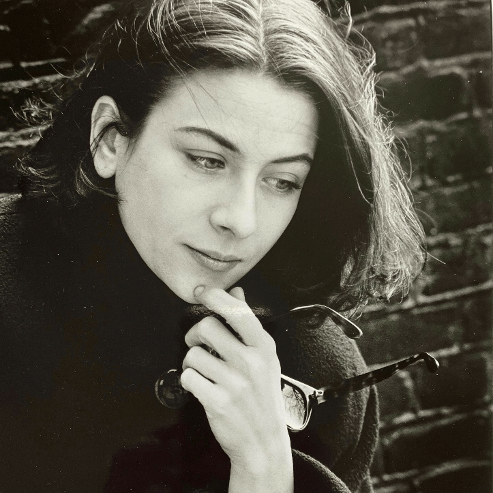
Donna Tartt’s creation of Richard’s passive, unreliable narration is incredible. Those who critique her work for romanticising the morbid actions of the characters have themselves fallen into the very same trap as Richard. He rarely progresses his own plot, but is instead lead by the actions of others. He walks through life in an almost dream-like state, complicit in murder yet for the most part blissfully unaware of the secrets and lies lurking just below the surface. The ending highlights what happens to people who remain on the surface – seeking only the aesthetic without delving into the darker reality of the situation. The slow pace of the novel lulls the reader, until they are awoken by the harsh truth that social detachment, the intellectual pursuit for the classical mind, and the superficiality of certain aesthetics can all kill in extremes. Beauty really is terror.
https://thequeensreadingroom.co.uk/the-magic-and-mystique-of-donna-tartt/
From the beginning until the very end, Richard’s attachment to the group divulges his loneliness, his hatred for his poor, Californian childhood, and his desire to belong. Greek class was the antithesis of his fears; to study Greek was to be detached and intriguing, and oh, did Richard want to be in on the great game. Wealth aside – for there was nothing to do about that, no matter how he tried to hide it – it was there at the college where he could “fabricate a new and far more satisfying history, full of striking, simplistic environmental influences; a colorful past, easily accessible to strangers”. Thus, the readers knew no more about Richard than his classmates, and Richard knew no more about his classmates than the readers. An unnerving atmosphere of secrets, lies, and deceit, this simple literary device successfully builds a buzz of anxiety that hums in the background of the novel, until reaching its peak at the climactic moment. Richard’s muted, passive thoughts and actions, mixed with rich descriptions of his idolised classmates as they take agency over the progression of the plot, make him just as much the observer as the reader. His perspective is as romantic as it is a haunted retrospection on his experiences. Donna Tartt’s use of first person narrative controls and dictates how much access is granted into this elite, insular, academic circle, and leaves readers feeling like they know everything and nothing.
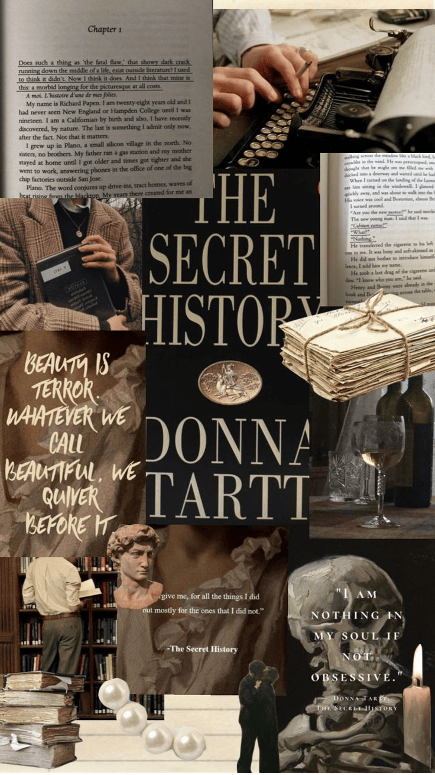
For a book that redefined the campus novel and popularised the dark academia genre, The Secret History and its ambience have been major topics of discussion within modern popular culture. Characterised by gothic architecture, tweed, and an appreciation for the arts, the moody aesthetics of the subculture have foregone Tartt’s initial warnings posed within the novel. The genre has often romanticised academia, remaining uncritical of the often Eurocentric and exclusionary institutions. The genre’s obsession with intellectualism manifests itself in a performative ‘mood board’ aestheticization of sleep deprivation, cigarettes and caffeine, rather than a genuine curiosity for knowledge.
https://pin.it/f6cZqIgCqZ
Donna Tartt knows this. Her intricate, multifaceted characters were not intended for oversimplified Pinterest posts reducing their personalities down to a collage of highlighted book pages, marble busts and Latin phrases. Tartt portrays the dangers of isolation, obsession and intellectual arrogance, and with serious consequences. The group were not enigmas to the rest of the college; they were seen as a highly pretentious, out-of-touch cult. Donna Tartt is a mastermind in warping our perspective of morally-bankrupt characters; readers can only interpret them through Richard’s idolising and desperate longing to be a part of their world, thus leaving the readers to romanticise the very lifestyle Tartt satirised.
Further Reading
Eisenstadt, Jill, and Tartt, Donna, ‘Donna Tartt’, Bomb, vol. 41 (1992), 56-59.
Lackey, Ryan, ‘Disappointing Attachments: Reading the Secret History on Campus,’ South Central Review, vol. 38 (2021) 90-96.
Bulaitis, Zoe Hope. “Navigating Dark Academia: Student Identity, Nostalgia, and Neo-Victorian Influences Online.” Open Screens, vol. 7, no. 2, July 2025,
Tartt, Donna, The Secret History, (London, 1994).

