By Dolla Merrillees
We all have one tucked away in an album: a photobooth portrait taken in our teens, perhaps with friends, perhaps alone. Smiling, pulling faces or striking a pose, these small strips of photographs capture fleeting moments of youth and self-discovery.
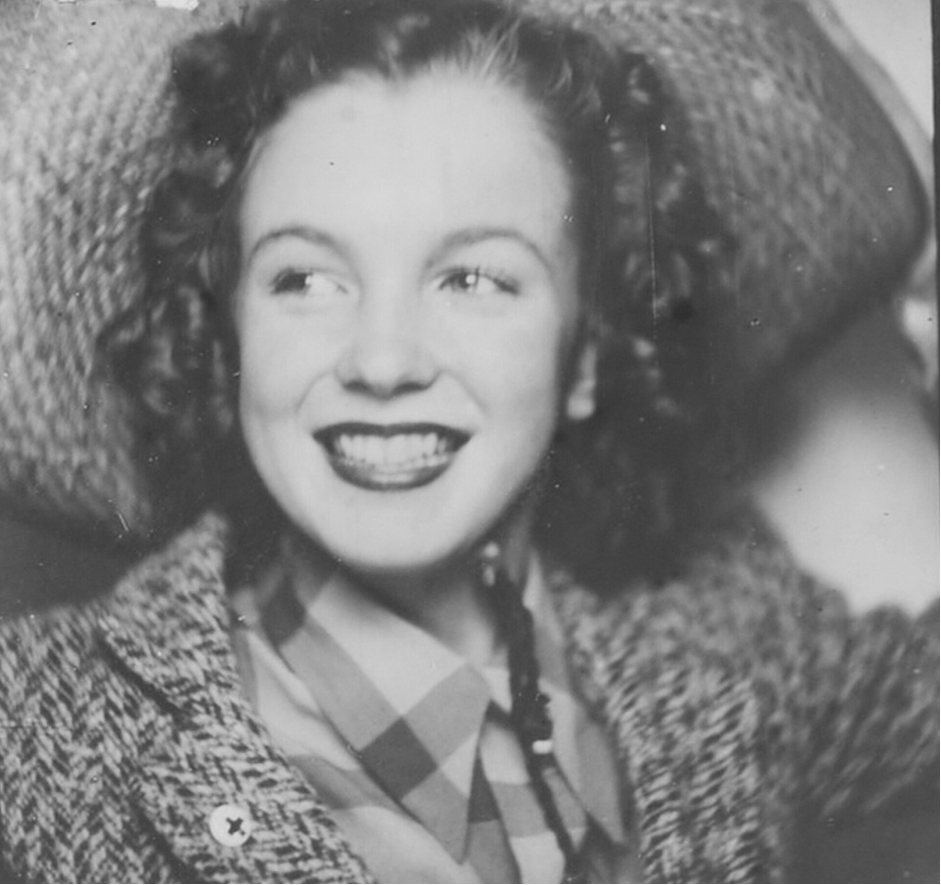
Among the hundreds of images in the National Portrait Gallery’s exhibition Marilyn Monroe: A Portrait, marking the centenary of her birth, perhaps the most compelling is a tiny photobooth portrait (c. 1940) of a young Norma Jeane Baker. Like so many of our own adolescent snapshots, it captures a moment suspended between childhood and adulthood. It is also one of the few images in the exhibition not filtered through the lens of a photographer or artist. Fresh-faced and hopeful, she gazes towards a future she could not yet imagine: one that would bring extraordinary fame, end in tragedy and transform her into one of the most enduring icons of the twentieth century.
https://www.sothebys.com/en/buy/auction/2023/pier-24-photography-from-the-pilara-family-foundation-sold-to-benefit-charitable-organizations-evening-sale/self-portrait-photo-booth-portrait
Curated by Rosie Broadley, Senior Curator of 20th-Century Collections, and Georgia Atienza, Assistant Curator of Photography, the exhibition traces the transformation of Baker into Marilyn Monroe and the careful construction of the public identity that would come to define her. Organised more or less chronologically, it draws on photographs, artworks, magazine covers, film stills and archival material to chart her journey from aspiring model and pin-up to Hollywood star, whose screen career included films such as Gentlemen Prefer Blondes (1953), Some Like it Hot (1959) and The Misfits (1961).
Photography forms the exhibition’s central thread. Bringing together the work of some of the most influential photographers of her era, it explores Monroe’s collaborations with figures including André de Dienes, Eve Arnold, Cecil Beaton, Richard Avedon, Milton Greene and Allan Grant. From the nude calendar photographs she posed for in 1949 to some of the final images taken by George Barris on Santa Monica Beach shortly before her death in 1962, the exhibition demonstrates how photography did more than record Monroe’s life. It helped construct, circulate and sustain the mythology that continues to shape how she is understood today.
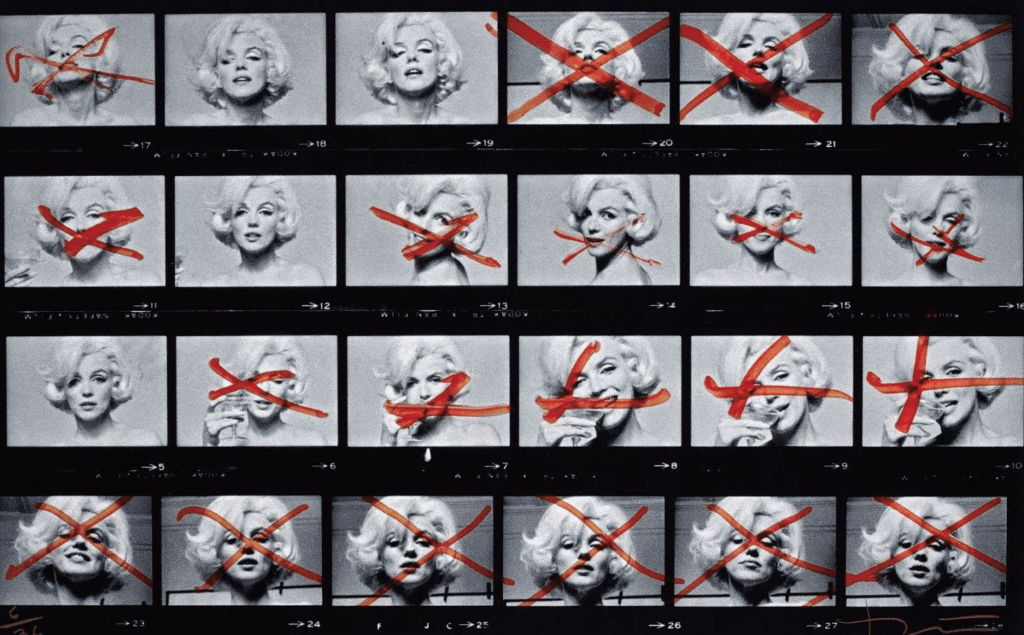
The exhibition also foregrounds Monroe’s active role in shaping that mythology. Far from a passive subject, she exercised considerable control over how she was photographed, directing sittings, selecting images and retaining the right to veto those she disliked, a process captured in Philippe Halsman’s photograph of Monroe reviewing contact sheets in his New York studio during the 1959 Jump session.
What becomes apparent is the remarkable consistency of the persona she projected. Whether photographed by Avedon or Beaton, Monroe remains unmistakably Monroe. The hairstyles, makeup, poses and expressions vary only subtly, suggesting that it was not the photographers who created her so much as Monroe who understood, better than anyone, how to perform for the camera. Possessing an instinctive command of the lens, she turned portraiture into an act of self-fashioning, carefully constructing a public identity that reveals remarkably little of the woman behind it.
Yet this very consistency also becomes one of the exhibition’s limitations. As the show progresses, the extraordinary degree of control Monroe exercised over her image becomes somewhat monotonous and one begins to long for glimpses of the woman described by magazine editor Robert Stein, who, together with photojournalist Ed Feingersh, spent a candid week with her in March 1955. Stein later recalled that “there was another Marilyn” who seemed to deflate “like the air being let out of a balloon” whenever she was no longer being observed”.
https://www.phillips.com/detail/bert-stern/UK040215/16
This is not out of any desire to puncture the myth, but because the exhibition repeatedly invokes Monroe’s search for what she called an “honest picture” — a “real” or “right” picture, as Avedon recalled. While the exhibition hints at the person behind the public facade, it rarely lingers long enough to explore the tension between performance and self that continues to make Monroe such a compelling figure more than sixty years after her death.
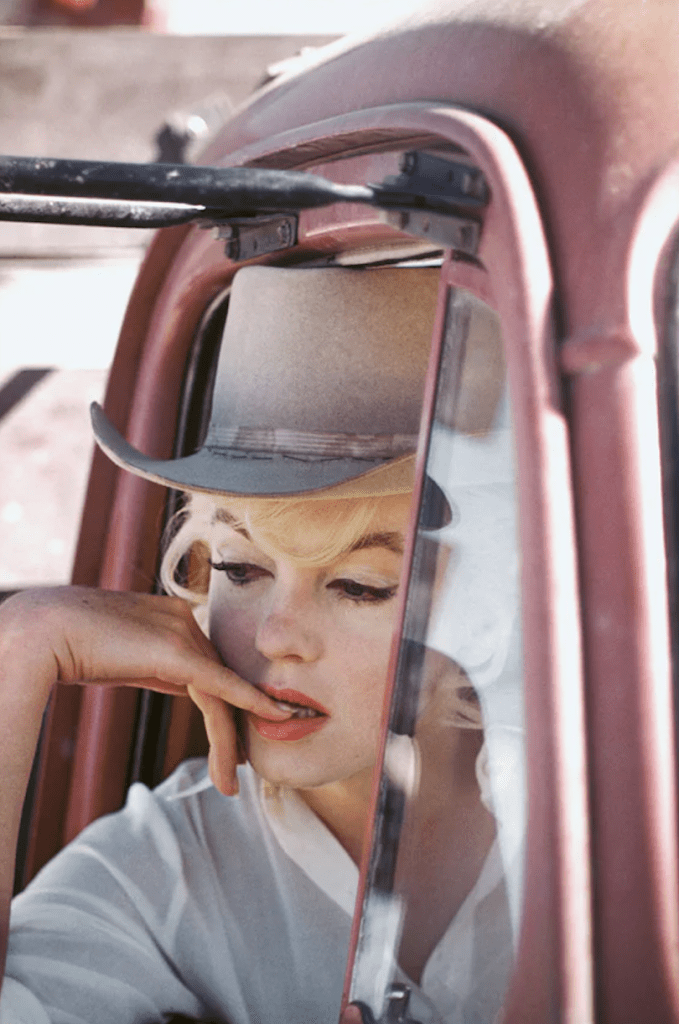
There are occasional suggestions of vulnerability and uncertainty. Among the most compelling are Arnold’s photographs taken on the set of The Misfits (1960), which seem to occupy the space between the star known as Marilyn Monroe and the young woman who had once been Norma Jeane. Whether this reflects Arnold’s particular sensitivity as a photographer, the trust that developed between the two women, or simply her ability to get beyond the surface is impossible to know. What is clear is that these photographs create room for ambiguity, allowing Monroe to appear at once self-possessed and vulnerable, performer and private individual. They stand apart from the work by de Dienes for example, whose fascination with Monroe bordered on obsession and whose images tend to reinforce, rather than complicate, the mythology that grew around her.
https://www.theguardian.com/artanddesign/2023/jun/11/the-big-picture-marilyn-monroe-unravels-in-the-desert
Likewise, while the exhibition touches on key episodes in Monroe’s life — her difficult childhood in foster homes, her transformation from Baker into Monroe, her marriages, including to playwright Arthur Miller and her struggles with fame — biography remains subordinate, serving primarily as a framework through which the photographs are understood rather than as a subject of sustained exploration.
Rather than revealing the “real” Marilyn, the exhibition invites reflection on the nature of portraiture itself and the ways identities are mediated, constructed and shaped through representation. The more one looks, the more Monroe appears not as a woman gradually revealed but as an archetype, distilled into a handful of familiar poses, pouts and gestures, endlessly performed and reproduced.
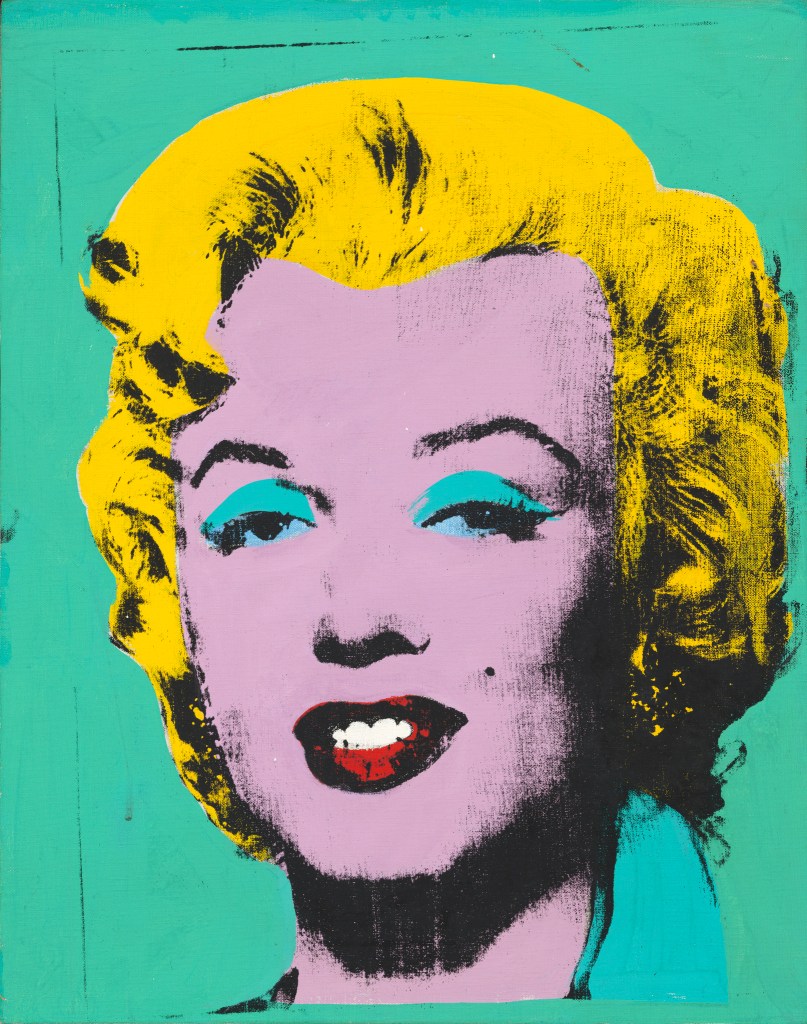
In addition to the photographs, the exhibition includes works by artists who have depicted Monroe over the decades, among them Andy Warhol’s iconic screen prints (1962), Marlene Dumas’s intimate and unflinching Dead Marilyn (2008), painted in the wake of her mother’s death, and Joseph Cornell’s shadow box Custodian – M.M. (1962). One of several memorial tributes Cornell dedicated to Monroe, the work reflects the depth of his fascination with her. At once elegiac and deeply personal, it can be read as an expression of devotion, longing and the sublimated desire that often animated his imaginative universe.
© 2026 The Andy Warhol Foundation for the Visual Arts, Inc. / Licensed by DACS, London. National Gallery of Art, Washington.
While Monroe’s inner and outer lives may not always have aligned, she photographed like nobody else before or since. As Arnold observed, “I never knew anyone who even came close to Marilyn in natural ability to use both photographer and still camera.” Even as a teenager, as the photobooth portrait suggests, she instinctively understood how to summon a dazzling smile, tilt her head at precisely the right angle or strike a pose.
One final work captures my attention: a self-portrait drawing (c. 1956) by Monroe for photographer Sam Shaw, with whom she shared an admiration for the Japanese artist Hokusai. Consisting of little more than a handful of swift ink and pencil strokes, it appears almost abstract at first glance. It relies on suggestion, inviting the viewer to complete the image in their imagination. It is a rare and spontaneous act of self-representation, yet even the drawing offers no revelation. Instead, it reminds us that Monroe continues to be whatever we wish to see in her: starlet, sex symbol, victim, feminist icon, gifted actress or tragic celebrity. As the title of the work itself suggests: What the Hell… That’s Life.
Further Reading
Eve Arnold, Marilyn Monroe. Woodbridge, Suffolk: ACC Art Books, 2024.
Marilyn Monroe and Ben Hecht, My Story. Lanham, MD: Taylor Trade Publishing, 2006.
Donald Spoto, Marilyn Monroe: The Biography. London: Arrow Books, 1994.

