By Ava Doherty
The modern age required a new feminine archetype—a woman chic yet relatable, touched by capitalism in crisis. She was decidedly post-2008 in both outlook and fashion. Gone was the ostentatious clothing, and in came the cable knit, the block colours, the French minimalism, because the economy had contracted, and so had her tolerance for the modern office. Both in temperament and fashion, Phoebe Waller-Bridge’s Fleabag was born circa 2013.
Waller Bridge did not just create a character; she created a permission structure for a generation of women to aestheticise their own unravelling. It became okay to be ‘messy’ to break down and have a cry, especially because there was a quotable framework to do it from. Sociologist Angela McRobbie has written about how postfeminist culture packages female empowerment as individual style choice rather than collective political action; Fleabag is perhaps its most elegant expression. Instead of having to quote Sylvia Plath, you could just walk around in red jumpers and trench coats, and it became shorthand for Fleabag.
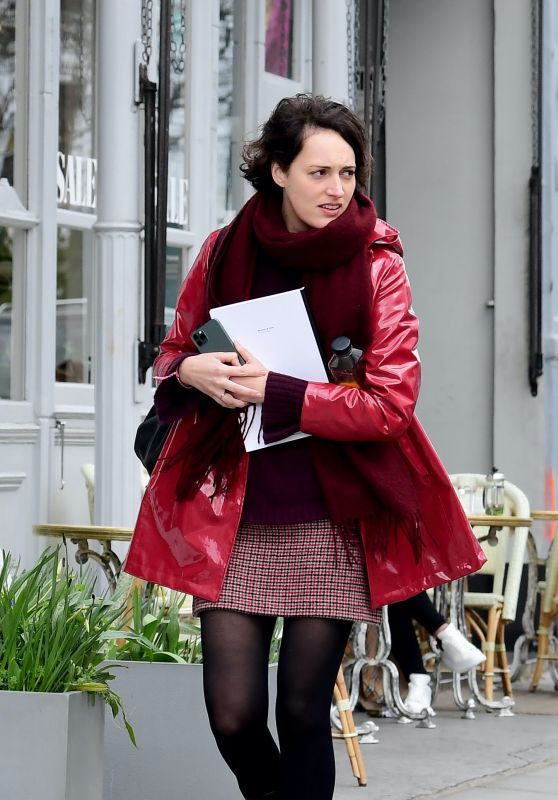
The visceral centring of women in TV serials, as emphasised in Fleabag, was long overdue. That is why, when the time’s cultural moment arrived, it felt lived-in and inevitable. Everybody began asking why there had not been such a display of a woman’s inner life in a sitcom that truly reflected how feminism was problematised by the exhausting expectations and realities of living in today’s capitalist world.
Despite starting as a play in the Edinburgh Fringe and transitioning to television, it retains a meta-theatrical quality on screen—the ability to see beyond the present plot points and predicaments, to offer commentary on the commentary. Who are we, the viewers, actually endorsing by being passive witnesses to Fleabag’s unravelling? Are we enabling her? No. But she is asking us to hold a mirror up to ourselves and examine why it is we recognise her so readily. We are Fleabag. At least, that is what Waller-Bridge’s work invites us to do. But how many of us stopped to think when identifying ourselves with her, what we were attaching ourselves to? What lexicon do we become a part of? How many people then started pronouncing our lives a complete and utter unashamed mess?
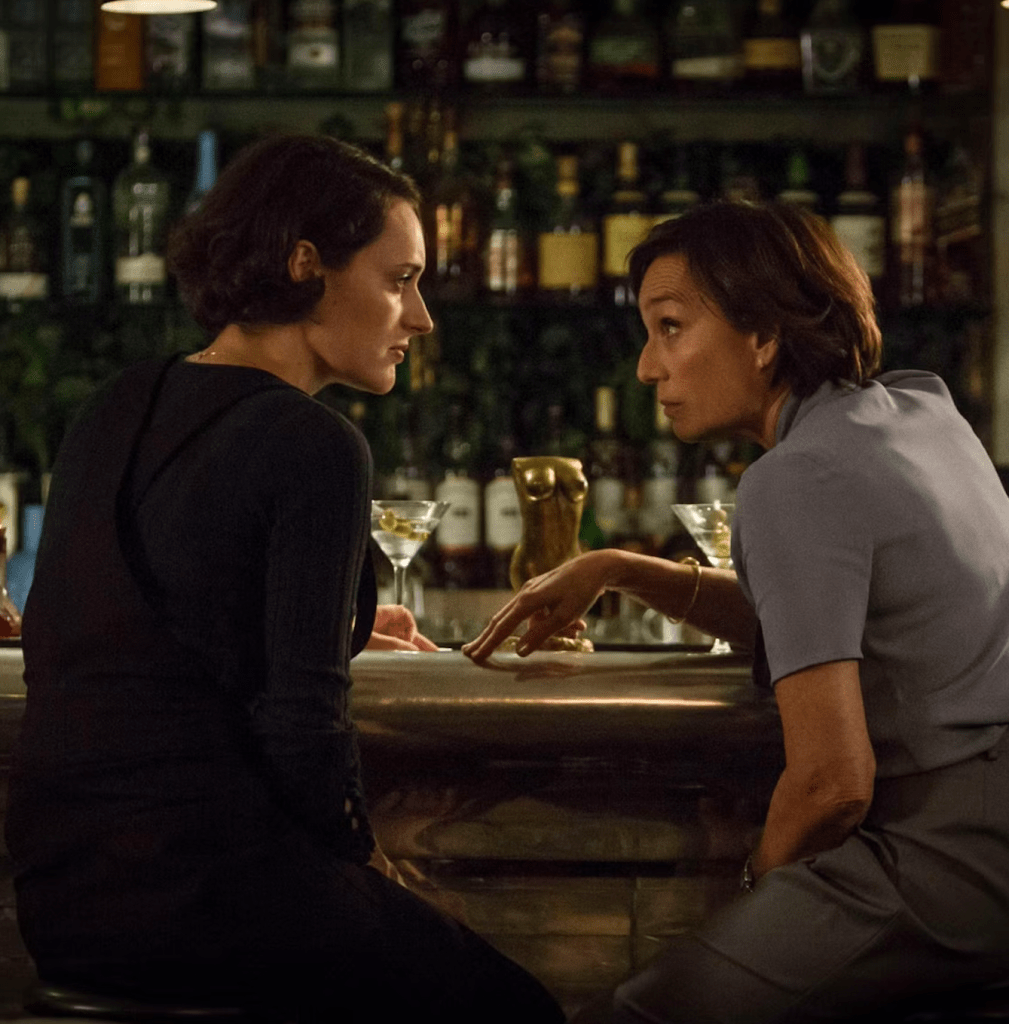
Worst of all, she seemed to make a breakdown sexy. Those late nights, those anxieties rendered beautiful. Her ambivalence about the male gaze, the desire to be wanted, and the desire to repel simultaneously gave a framework to something previously unverbalised. To use sexuality as a weapon seemed to usher in a new decade of openness about where the liberated yet tired woman ends up. ‘I worry I would not have been such a feminist if I had bigger tits’, she says at the Quaker meeting. ‘Don’t worry, Fleabag,’ we all said in unison from our sofas.
https://www.youtube.com/watch?v=RZrnHnASRV8
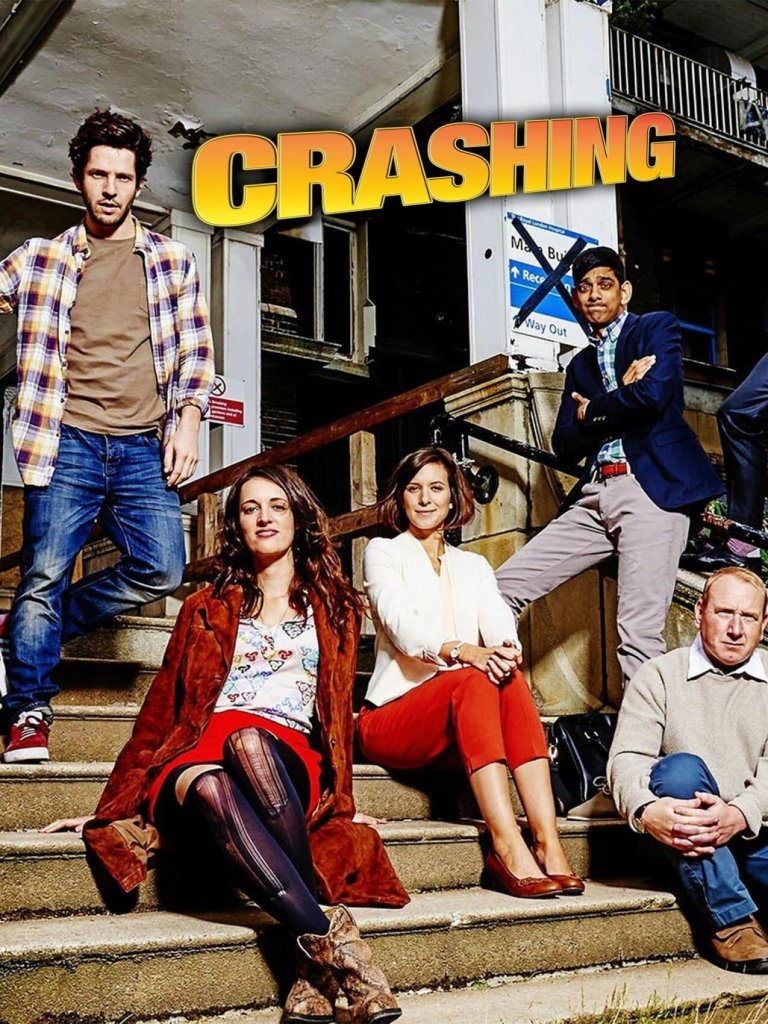
Waller Bridge’s pattern of work seems to demand that the observer find themselves in it. Her work is, after all, about modern life—compulsion, urges, desire. In Crashing, the 2016 predecessor to Fleabag, another complicated, sexually frustrated woman comes to stay at a London hospital converted into a block of flats. Her lack of housing comments on the absurdity of London’s prices, just as Fleabag’s cafe does.
Perhaps this is not just a state of mind but a way of being for certain women—the ones Waller-Bridge keeps returning to. They are so imperfect that she lets them be. She lets them say and do whatever they want. Is that the point of feminism? To be so totally and unashamedly me?
Belinda, the self-made businesswoman played by Kristin Scott Thomas in Fleabag’s second series, offered a different kind of female archetype entirely. Belinda wished only to be regarded solely in terms of business, defying gender-based evaluation on merit. Ageing is freeing, she said, and she heralded the age of it. I am hoping there are still those out there who are continuing that march in solidarity, recognising that sometimes we want to be more than the sum of our parts, we want to be considered in the context of our work, not the face and body, and baggage of a gender we have been so rigidly confined to.
I am asking whether this romanticisation of messiness has led me, and others, to give ourselves a free pass. I thought when people compared me to her, it was a mark of true depth. It felt as if I had finally been recognised as entering ‘womanhood’ and transitioning out of being a teenager. Having ‘adult’ problems. There was something seductive about the comparison—it suggested interiority, complexity, the kind of damage that reads as interesting rather than merely inconvenient. I now wonder if it was a mark of something else entirely—a manufactured persona mistaken for personality. Maybe Fleabag is dead. Maybe I killed her. Maybe we all did.
Or perhaps she was never ours to kill. The problem with permission structures is that they outlast the person who created them. Waller-Bridge has moved on—to Bond, to Hollywood, to whatever comes next. But the archetype she created still lingers, walking around in red jumpers, still breaking down on cue, still mistaking legibility for depth.

Perhaps Fleabag was never saying any of what I thought she was saying at all. Perhaps she is simply showing us a mirror to the worst parts of ourselves, all our worries and compulsions, and poor decisions, without endorsing any of it. The real moral may be more uncomfortable than permission: that if you commodify your mess, label it depth, caveat it sufficiently, and sell it as inevitable, you can keep engaging in it indefinitely. For the plot, as they say. The question Waller-Bridge leaves unanswered is whether awareness of the permission slip counts as refusal. I am not sure it does. And I am not sure she thinks so either.
Further Reading
John Berger, Ways of Seeing (2008)
Catherine Rottenberg, ‘Disavowing dependency: On Angela McRobbie’s Feminism and the Politics of Resilience‘, European Journal of Cultural Studies 25:1 (2022)
Phoebe Waller-Bridge, Crashing (2016)
—Fleabag, BBC (2016-2019)
—Fleabag: The Scriptures (2019)
Emily Watkins (2025), ‘Phoebe Waller-Bridge was the voice of a generation—what happened?’ The i, 13 September. Available at: https://inews.co.uk/culture/television/phoebe-waller-bridge-was-the-voice-of-a-generation-what-happened-3911987

