By Amina Bold
Ottessa Moshfegh’s My Year of Rest and Relaxation (2018) is less a study than a tableau of suspended agency where the governing forces of a woman’s life are conspicuously absent: no family, no real friendships, and, crucially, no love, though there are plenty of lovers. Without these organising principles, what remains is the dull, persistent seasickness of waiting, a condition that, for women, is less an interruption of life than one of its prescribed forms.
John Williams’s Stoner, similarly, is a study of a life narrowed by acquiescence, its disappointments arriving without spectacle. Stoner is quietly subsumed by the university; at home, his marriage calcifies, dying a quiet death absent of ballad or ceremony. Both novels meditate on what remains of a person when the outward forms of life (work, education, romance) persist despite the absence of self-authorship. This condition of “life without spirit” is staged in the novels, I will argue, through the ways both novels stage passivity, distorted time, and failed transcendence.
From the outset, Moshfegh’s My Year of Rest and Relaxation frames its central question as one of evasion: what, if anything, can a person escape? The opening epigraph contrasts the material constraints of life from the existential conditions of embodied life itself:
“If you’re smart or rich or lucky
Maybe you’ll beat the laws of man
But the inner laws of spirit
And the outer laws of nature
No man can
No, no man can”
Early in the novel, the days accumulate without consequence, structured by minor acts (shopping, eating, medicating) that fail to cohere into anything resembling purpose. Without the constraints of the dominant forces of plot in writing women (eg. coming of age, romance, marriage, and family life), Moshfegh’s protagonist constructs a conspiracy to slumber, obtaining prescription sleeping pills from a kooky doctor and enlisting an artist to do petty errands in exchange for allowing him to make her the subject of his, by her account, reductive art. Yet this refusal is not emancipatory. Her withdrawal is not freedom but a vacancy, a fantasy of escape that cannot turn itself into a life.
“I travelled more peacefully through outer space, listening to the rhythm of my respiration, each breath an echo of the breath before, softer and softer, until I was far enough away that there was no sound, there was no movement. There was no need for reassurance or directionality because I was nowhere, doing nothing. I was nothing. I was gone.” (Ottessa Moshfegh, My Year of Rest and Relaxation, p.171)
Like many women, Moshfegh’s protagonist possesses the capacity for world-making activity, but social life channels her into waiting, preserving and existing more as a decoration to someone else’s self-realization. While the protagonist rejects the labours of normative femininity, her refusal never becomes a genuinely self-authoring project. She does not replace one mode of life with another, but merely empties life out. Her negation has force as style, but not as action. She reflects that “since adolescence, I’d vacillated between wanting to look like the spoiled WASP that I was and the bum that I felt I was and should have been if I’d had any courage.”
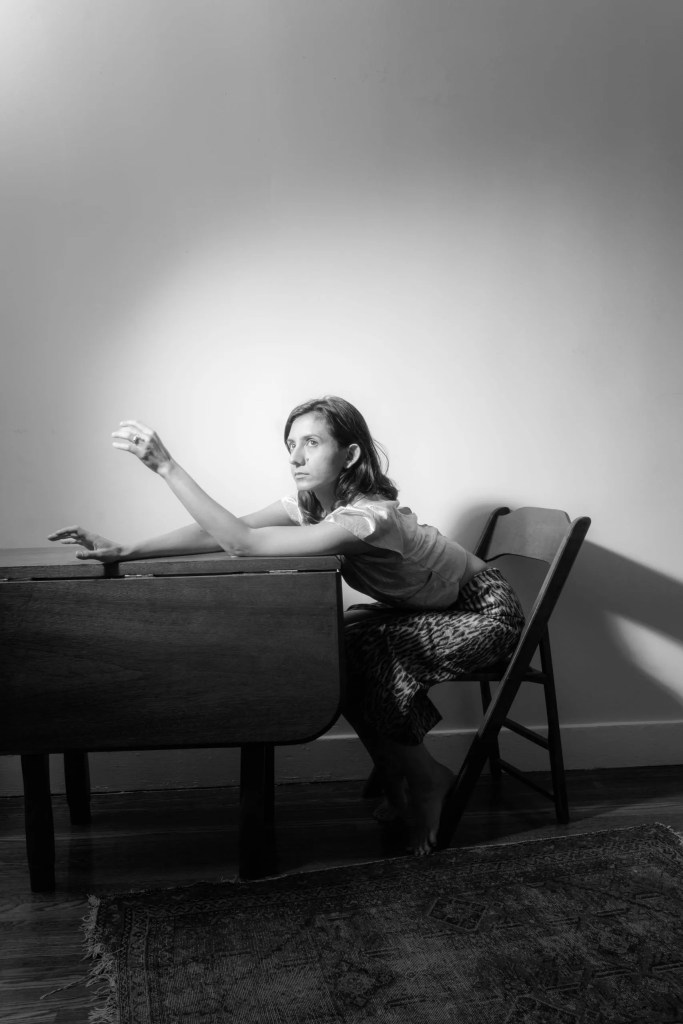
© Dru Donovan 2018
https://www.newyorker.com/magazine/2018/07/09/ottessa-moshfeghs-otherworldly-fiction
In Stoner, the passage of time is experienced less as an erasure but rather as a compression:
“The past gathered out of the darkness where it stayed, and the dead raised themselves to live before him; and the past and the dead flowed into the present among the alive, so that he had for an intense instance a vision of denseness into which he was compacted and from which he could not escape, and had no wish to escape.” (John Williams, Stoner, p. 16)
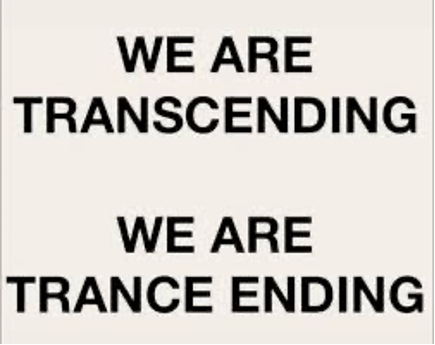
For both protagonists, life is marked by a failure of outward movement. In The Ethics of Ambiguity (1947), Simone de Beauvoir writes on the facetious nature of negative freedom, writing that true freedom is entered into through projects that carry the self beyond its present condition. She writes,
“Every subject posits itself as a transcendence concretely, through projects; it accomplishes its freedom only by perpetual surpassing towards other freedoms; there is no other justification for present existence than its expansion towards an indefinitely open future.” (De Beauvoir, 17)
https://www.facebook.com/groups/587276468104826/posts/3457418994423878/
What makes My Year of Rest and Relaxation a true contribution to literature is its insistence that female passivity is never merely existential. It is social, aesthetic, and rehearsed. If the narrator enacts the fantasy of opting out, Reva, her needy college friend who refuses to exit her life, hovers at the edges of the frame, embodying the labour of normative femininity: stuck in a cycle of striving, applying creams, networking, curling hair, and calibrating charm. Reva’s speech, too, is entirely second-hand, a collage of borrowed scripts and prefabricated affect. “Every emotional gesture was always right on cue” (123); “Everything she said sounded like she’d read it in a Hallmark card” (165); “She was just as good as a VCR, I thought” (204). In other words, Reva’s justification is always in someone else’s hands. While the protagonist refuses the script altogether, Reva performs it too well. Neither is free.
Edith, in Stoner, embodies a similar desperation, though in a different register: “He did not speak to Edith about her new behaviour; her activities caused him only minor annoyance, and she seemed happy, though perhaps a bit desperately.” Edith’s desperation, like Reva’s, suggests the poverty of a life organised around forms of femininity that promise meaning but cannot sustain it. Beauvoir’s point in The Second Sex (1949) is exact here: “To emancipate woman is to refuse to enclose her in the relations she sustains with man, but not to deny them.” The problem is not relation itself, but enclosure within relation, the reduction of female existence to repetition, maintenance, and being-for-others.
“The videos described were of me
Talking into the camera, seeming to narrate some personal stories—I cry in
one—but Ping Xi had dubbed everything over. Instead of my voice, you
heard long, angry voice mails Ping Xi’s mother had left him in Cantonese.
No subtitles.” (Ottessa Moshfegh, My Year of Rest and Relaxation, p.176)
Ping Xi’s videos expose the limits of the protagonist’s withdrawal by showing that silence alone cannot and will not free her from representation. Though she studied art history at Columbia, she is returned by his camera to one of art’s most overdetermined roles: the nude woman who is created to be seen but should not be heard.
Thus, Ottessa Moshfegh’s My Year of Rest and Relaxation and John Williams’s Stoner, life persists in form long after substance has drained away. However, where Williams presents diminishment as the quiet tragedy of a man subsumed by circumstance, Moshfegh shows that a woman’s withdrawal is never merely existential, private, or philosophical. Even in refusal, her protagonist remains caught in the social grammar of femininity: to be looked at, stylised, managed, and spoken for. This is what makes the novel feel so singular. There exists an established literary tradition of men like Stoner, men whose passivity can be read as seriousness, whose drift can acquire the dignity of tragedy.
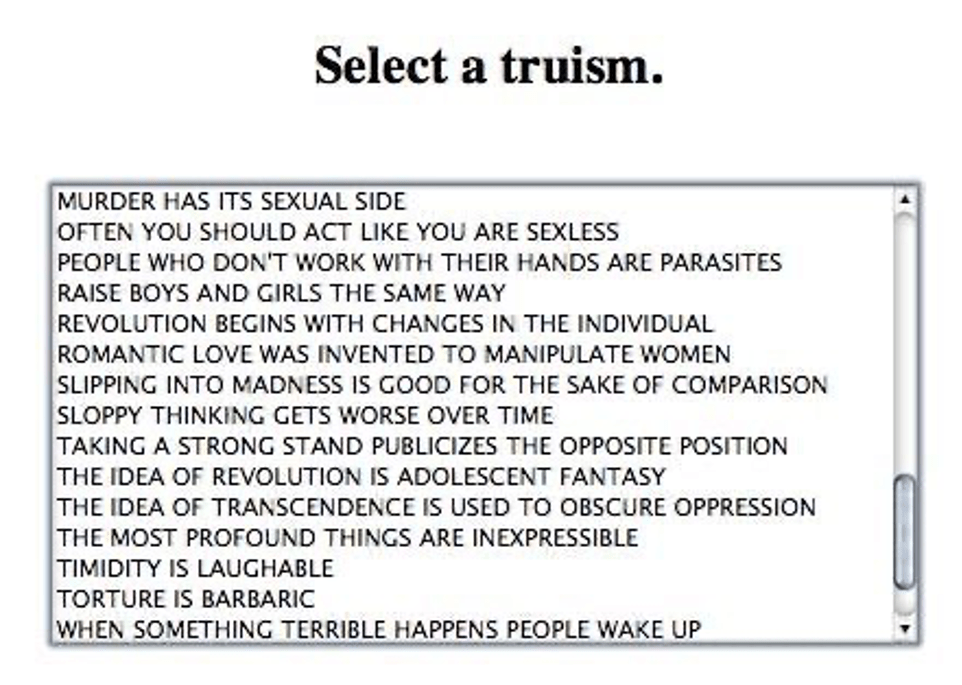
Moshfegh provides an account of something rarer in the literary tradition, though perhaps not in life: a woman whose emptiness is not romanticised, but exposed as the endpoint of a life structured by aesthetic expectation, commodified desire, and the false promise that opting out might itself amount to freedom. If Stoner shows how a life can be narrowed by acquiescence, My Year of Rest and Relaxation shows how, for women, negation does not amount to rebellion. Moshfegh’s great achievement lies in refusing to make this condition beautiful.
Further Reading
Moshfegh, Ottessa. My Year of Rest and Relaxation. New York: Penguin Press, 2018.
de Beauvoir, Simone. The Ethics of Ambiguity. Translated by Bernard Frechtman. New York: Open Road Integrated Media, 2018.
de Beauvoir, Simone. The Second Sex. Translated by Constance Borde and Sheila Malovany-Chevallier. New York: Alfred A. Knopf, 2010.
Shepherd, Angela. “Simone de Beauvoir on Freedom.” Filosofiska Notiser 3, no. 3 (October 2016): 3–22.

