By Millie Hilken
This review contains extensive spoilers. Trigger warning for discussion of sexual assault and rape.
Sorry, Baby is a 2025 film directed by Eva Victor about a woman’s experience of sexual assault and rape at the hands of her thesis advisor. In a non-linear, three-act structure, the main character Agnes (also played by Victor) experiences the assault, and then spends three years trying to recover. While Agnes’ best friend Lydie (Naomi Ackie) moves away and starts a family, Agnes remains stuck, both emotionally and physically, in the same place she was as a student.
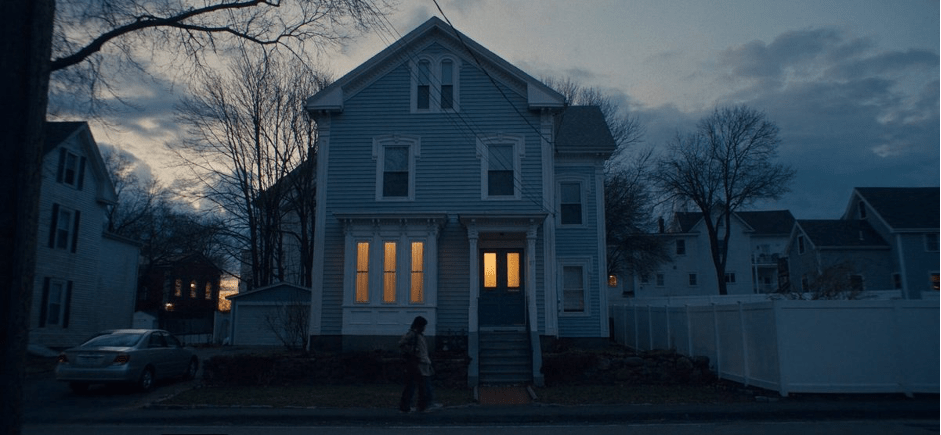
Importantly, this is a film that depicts sexual assault without depicting it. When the assault happens, we as an audience only see a static shot of the outside of Agnes’ supervisor Decker’s (Louis Cancelmi) house as day turns to evening turns to night.
© @arianassmotive on X
Much of the conversation about this film is about this static shot, since it is something which seems to directly refute the decades of (mostly) male-directed rape depiction or rape-revenge depiction in cinema, where we have to voyeuristically witness the violence of the rape to justify the subsequent violence enacted upon men.
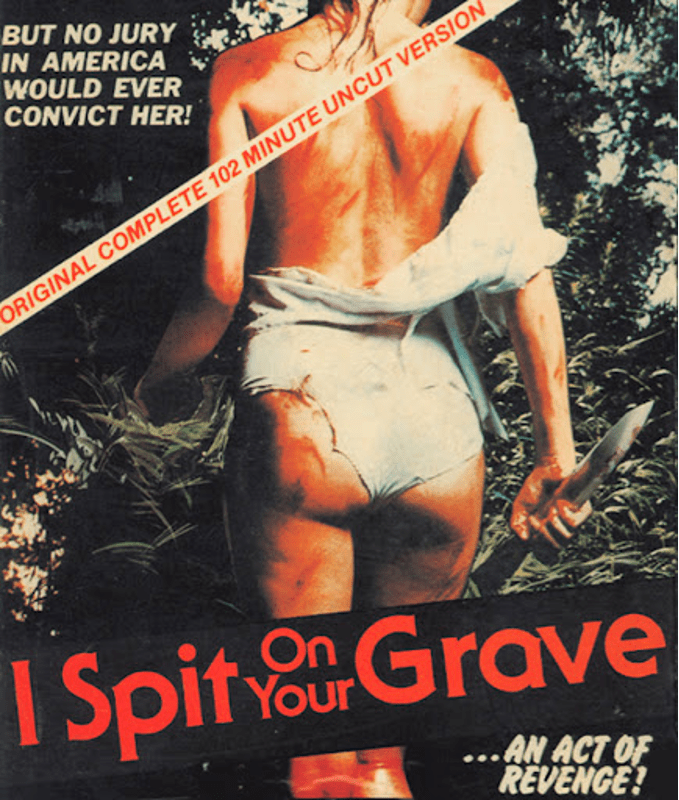
This choice is significant, since the audience relies entirely on Agnes’ testimony (or rather, absent, shellshocked rambling) of the incident in order to construct it in their minds. We are not presented any evidence of the truth of the assault (as the typical rape-revenge does), but are directed as an audience to believe her anyway. However, I wonder whether it is fully possible for Victor to fully demonstrate the realness and validity of Agnes’ experience without herself looking for ‘evidence’, and validating our urge as an audience to do so too.
The tension between witness testimony and positive evidence in understandings of rape is something that stretches far back into history. For example, Tara Leederman writes of 18th-century rape trials that:
juries and judges increasingly fixated on dirty linens and seminal emissions as positive evidence, which caused them to further doubt rape accusations in cases where [they] were not preserved or provided. … Forensic traces bec[a]me increasingly expected and relied upon, in addition to—and then in place of—a critical weighing of testimonies, both expert and experiential.
Victor explores this tension between testimony and evidence by placing Agnes in a courtroom, but as a juror for a separate crime, rather than a victim. She also refuses Agnes the act of recounting or testifying of the rape. Agnes states: ‘it would be my worst nightmare to tell this room of total strangers what happened to me.’ Within this statement, however, a testimony is constructed: the information is provided to the other jurors (and to us) that something happened ‘to her’, and that that something was traumatic, traumatic enough that even recounting it is her ‘worst nightmare’.
Instead of ‘dirty linens and seminal emissions’, then, our ‘evidence’ of the assault becomes Agnes’ refusal, and her retreat into herself. Outside of the courtroom, our evidence of the truth of the assault is seen in her stagnation, and her decision to remain within the house in which she lived at the point of the assault, instead of literally ‘moving on’ the way her friend Lydie does.
How could Agnes find it so difficult to speak if something bad didn’t happen during that still shot of Decker’s house? Agnes’ refusal to participate in the act of accusing thus affirms the misogynistic belief that women who do accuse men of rape are lying. In other words, we believe Agnes can’t be lying because she refuses to ruin the life of the man who raped her, but that in turn suggests we implicitly disbelieve women who do ‘ruin the lives’ of their rapists by speaking out.
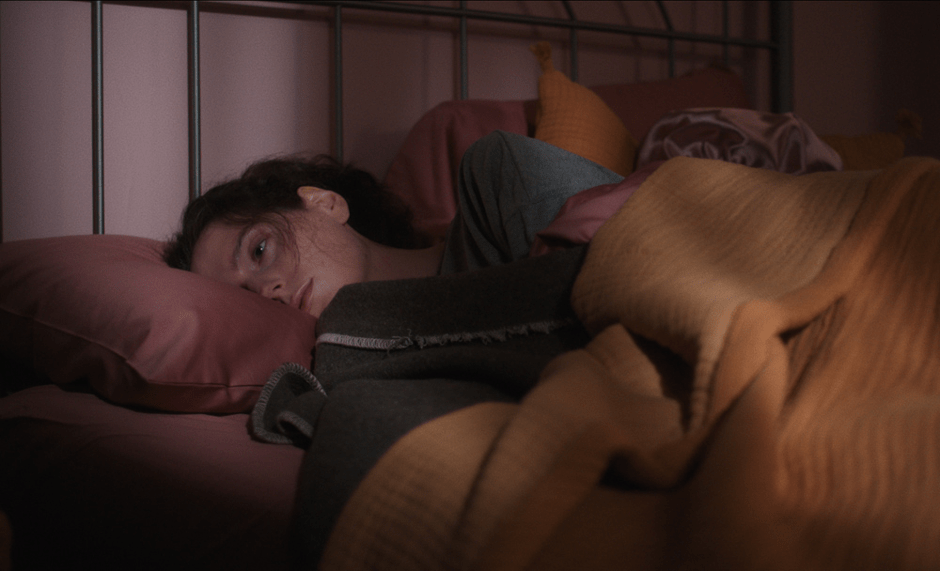
We cannot choose to believe Agnes without evaluating all the evidence presented to us, even as we are encouraged by the film over and over again not to do precisely that. Underneath all our empathy and anger on the behalf of Agnes lies the latent fear that women lie about rape to destroy the lives of powerful men around them.
Of course, I don’t think that is Eva Victor’s fault. It would be incredibly misguided to suggest that every depiction or narrative of rape has to fit a certain standard, and that it has to deliberately rebel against this judge/jury impulse. Everyone’s experiences of assault are different, so we need plurality and multiplicity in the art created about assault. Sorry, Baby is notably different from what we’ve been consuming as a culture thus far, to the extent that it has been widely praised as radical.
I would love to, however, one day see a film or read a book about a woman who constructs a narrative about a rape without any evidence of any kind and is believed anyway. So many people have a story without evidence, and they of course deserve our belief, our anger, and our support. A high-functioning, outspoken woman deserves as much belief as Agnes, and we have yet to see a depiction of her within our media culture.
As I’ve discussed, the tension between witness testimony and positive evidence has important real-life implications. For many people, Gisèle Pélicot’s story was not believable until they saw videos of her snoring while being violently raped. For many of those same people, Amber Heard’s testimony about what happened to her appears as a complete fabrication. Her quotes being memed and her likeness being parodied imposes the ‘women-are-lying’ narrative onto the evidence she has provided to us. We thus must refuse these urges to be judge and jury, and to look for positive evidence, because it is so ingrained within the way we think about rape, and it suffocates women (men, girls, boys, infants) who have already endured the unendurable.
References
Leederman, Tara, ‘The Site of the Crime: Trial Narratives, Forensic Reading, and the Novels of Samuel Richardson’ (University of California, Irvine: 2023).
Victor, Eva. (2025). Sorry, Baby. A24.

