By Will Parman
Katherine Mansfield (1888-1923) is too often read as cruelly disinterested in the effects of war. These readings flatten her wartime writings: displacing them from the history of women’s war writing and washing away queer themes that are integral to their pathos. This apathetic portrait does not fit a woman who lost her brother, Leslie ‘Chummie’ Beauchamp, to a grenade accident in 1915, and travelled within the zone des armées (Western Front), witnessing the effects of chlorine gas first-hand and surviving bombings while trapped in Paris. Queerness was similarly defining for Mansfield’s life, as the victim of what would today be considered conversion therapy in 1909, after her same-sex attraction became apparent to her mother. She suffered a miscarriage attributed to this inhumane treatment and expressed suicidal ideation in her private journal. Throughout her short life, Mansfield had many lovers, male and female — most critics retrospectively view her as a bisexual woman.
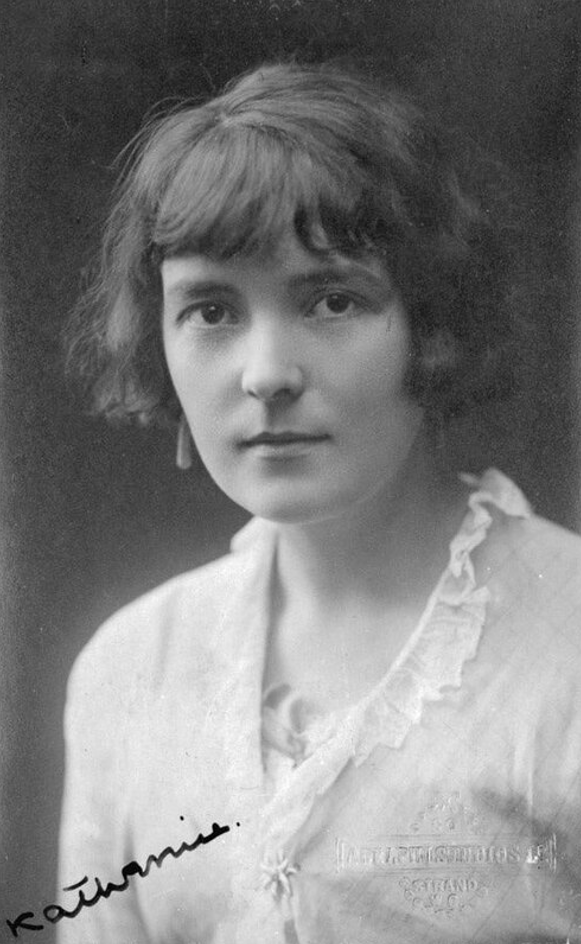
Photograph by Charlotte Mary Pickthall. Found in Alexander Turnball Library, available via Wikimedia Commons
In her war writings, Mansfield regularly intersects romance with conflict, which, in context, makes great sense: this is her personal wartime experience. However, it is also understandable that she has been read as unsympathetic for injecting romance into a conflict that ended the lives of millions globally. My article introduces middle ground, challenging the frequent moral judgements unfairly assigned to Mansfield by patriarchal agents.
In one of her best-appreciated war stories, ‘An Indiscreet Journey’, Mansfield crafts a wartime story mirroring her own unaccompanied travel into the zone des armées to meet her lover, a French soldier whom her narrator calls ‘Little Corporal’. This story mirrors Mansfield’s own clandestine journey in 1915, spending four nights with her lover, Corporal Francis Carco, an actual French soldier (and writer) with whom she was having an affair.
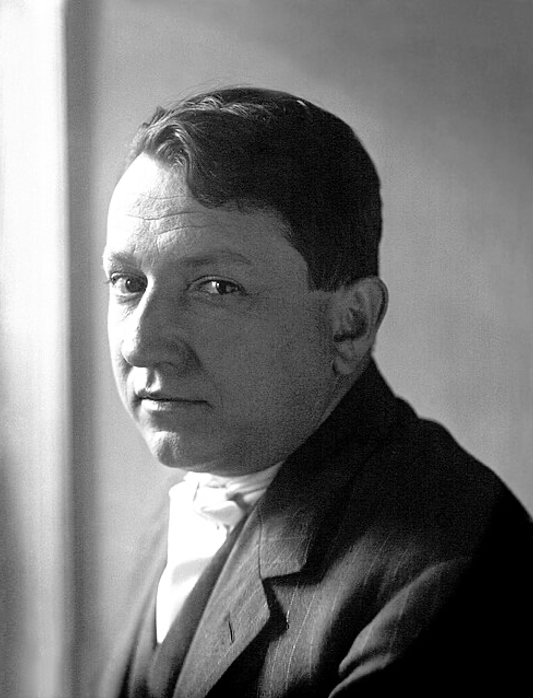
Her pursuit of intimacy exists as a microcosm within the macrocosm of the war; imagery of the domestic remains the subject, but is distorted by the casualties that surround her:
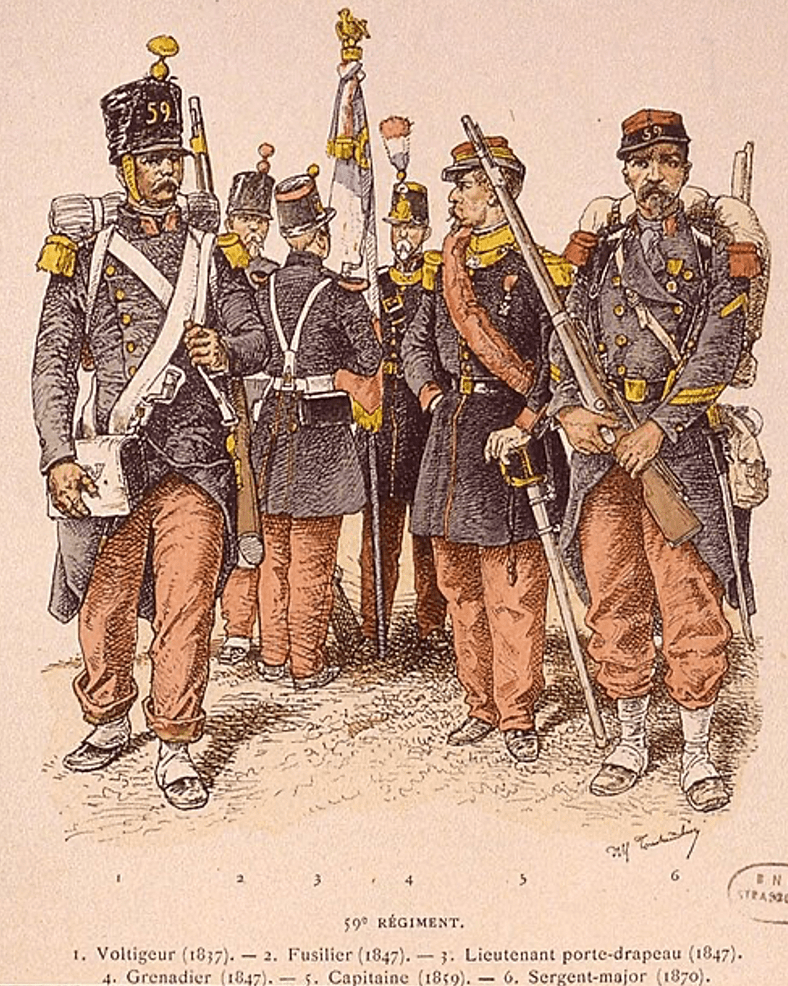
Through an open door I can see a kitchen, and the cook in a white coat breaking eggs into a bowl and tossing the shells into a corner. The blue and red coats of the men who are eating hang upon the walls. Their short swords and belts are piled upon the chairs. Heavens! what a noise.
Mansfield’s wartime experience is caught in the liminal space between the domestic and combative. The blue and red coats connote the pantalon rouge, the traditional French military uniform, and ‘tossing the shells’ carries a militaristic double meaning, made unavoidable by the presence of ‘swords and belts’. Within this passage, we can also understand the accusation of Mansfield’s apathy. Read flatly, a complaint of eggs cracking is hardly appropriate when nearby there are countless men deafened by shells, hiding in muddy craters pretending to be dead, so as not to be killed. But this reading vacates any sense of irony, which is prominent in Mansfield’s writing.
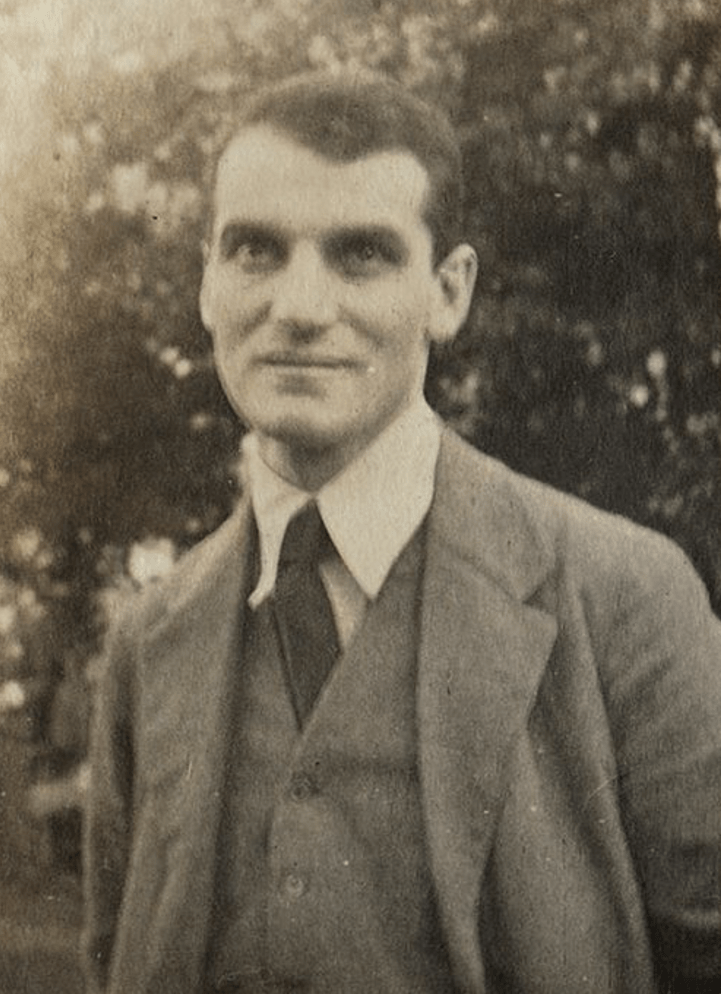
Her perceived indifference to the war is disproportionately based on her husband John ‘Jack’ Middleton Murry’s autobiography, Between Two Worlds (1935), which promotes this perspective that becomes attributed to Mansfield by association: ‘we were neither for the war, nor against it’. Murry was initially enthusiastic about enlisting; however, he became apprehensive and successfully persuaded a physician to find him unfit for service. Mansfield in a letter to her close friend S. S. Koteliansky writes, ‘Don’t believe the conjugal “we”’, casting this indifference into further doubt.
Born into a patriotic New Zealander family loyal to their ‘Home’ — which still meant England — and where her brother and friends were serving, Mansfield felt ashamed of her husband. Some friends, such as the poet Rupert Brooke, died around the time of her affair and her writing of ‘An Indiscreet Journey’. In her journal, Mansfield admits to feeling as if she were unfaithful to Carco when alone with Murry, and articulates the shame she feels proxy to Murry: ‘when I think of him [Carco] at the front I am simply numb’.
Unlike Murry’s claim, there exists strong primary evidence that Mansfield was patriotic and supportive of the war effort. She writes in her letters that, ‘England is fighting for something beyond mere worldly gain and power’ and suggests that ‘people are become more brave and generous than … in the days of peace’. Without her knowledge, these private opinions were then published as wartime propaganda in New Zealand’s Evening Post on 6 November 1914 in Wellington. To her father, Mansfield displays great knowledge of wartime events and their implications:
If only this war would end and make the Atlantic safe … [The papers] seem to agree that the German offensive is only beginning.
This is a far cry from Mansfield’s accused indifference, as she keeps up with current affairs. Her primary and secondary knowledge of events throughout the war and her — albeit unwilling — role as a propagandist invite us to challenge the role of women in WW1. For Mansfield, there is an open question as to how she fits alongside contemporary women writers such as Beatrice Hastings or Jessie Pope — the latter being the propagandist whom Wilfred Owen ironically dedicated his manuscript of ‘Dulce et Decorum Est’ to.
The cracked eggs’ lack of gender in ‘An Indiscreet Journey’ perhaps becomes a way for Mansfield to signify trauma through ungendered, inanimate objects, as seen with other objects:
crash! over went the bottle, spilling on the table … the drip-drip of the wine … dropping so slowly, as though the table were crying. Then came a roar
The table is treated as if it were a casualty, bleeding ‘a bottle of some orangecoloured stuff’; its ‘crying’ deafened between a ‘crash!’ and ‘roar’. Inanimate objects personified as war casualties decouple the tragedy of war from masculinity. It also brings battlefield action to the domestic setting. The story lays a foundation for the legibility of non-male experiences of war trauma, who oftentimes become the unspoken victims and casualties.
In 1998, Hillary Clinton (then First Lady) stated that ‘Women have always been the primary victims of war’. Clinton’s assertion remains controversial now, and would have been comparably so during WW1. Mansfield’s challenge to the culturally enforced masculine monopoly over war trauma, through her injection of romance and the bleeding of combat into domestic spaces, offers a feminine voice in a masculine discourse. As her remarkable engagement with the war shows, she was certainly not apathetic to it. The power of her husband’s sweeping comments, however, are telling of the precise culture Mansfield sought to interrogate.
References
Clinton, Hillary Rodham, ‘First Lady Hillary Rodham Clinton: First Ladies’ Conference On
Domestic Violence: San Salvador, El Salvador — November 17, 1998 (As Delivered)’:
Clinton White House Archives (1998), https://clintonwhitehouse3.archives.gov/
WH/EOP/First_Lady/html/generalspeeches/1998/19981117.html.
Fullbrook, Katherine, Katherine Mansfield (Brighton: The Harvester Press, 1986).
Kimber, Gerri, Todd Martin, Delia da Sousa Correa, Isobel Maddison, and Alice Kelly,
Katherine Mansfield and World War One (Edinburgh: Edinburgh UP, 2014).
Mansfield, Katherine, ‘An Indiscreet Journey’: Katherine Mansfield: Selected Stories
(Oxford: Oxford World’s Classics, 2002).
Martin, Kirsty, ‘D. H. Lawrence, Katherine Mansfield and Happiness’: Katherine Mansfield
Studies, 2.1 (2010), pp. 87–99. https://doi.org/10.3366/kms.2010.0008.
Murry, John Middleton, Journal of Katherine Mansfield (London: Constable & Co., 1927).
Smith, Angela, ‘Katherine Mansfield at the Front’: First World War Studies, 2.1 (2011),
pp. 65–73. https://doi.org/10.1080/19475020.2011.555473.

