By Iris Read
https://www.independent.com/2025/10/15/slide-on-the-razor-radical-cabaret-and-the-expressionist-avant-garde/
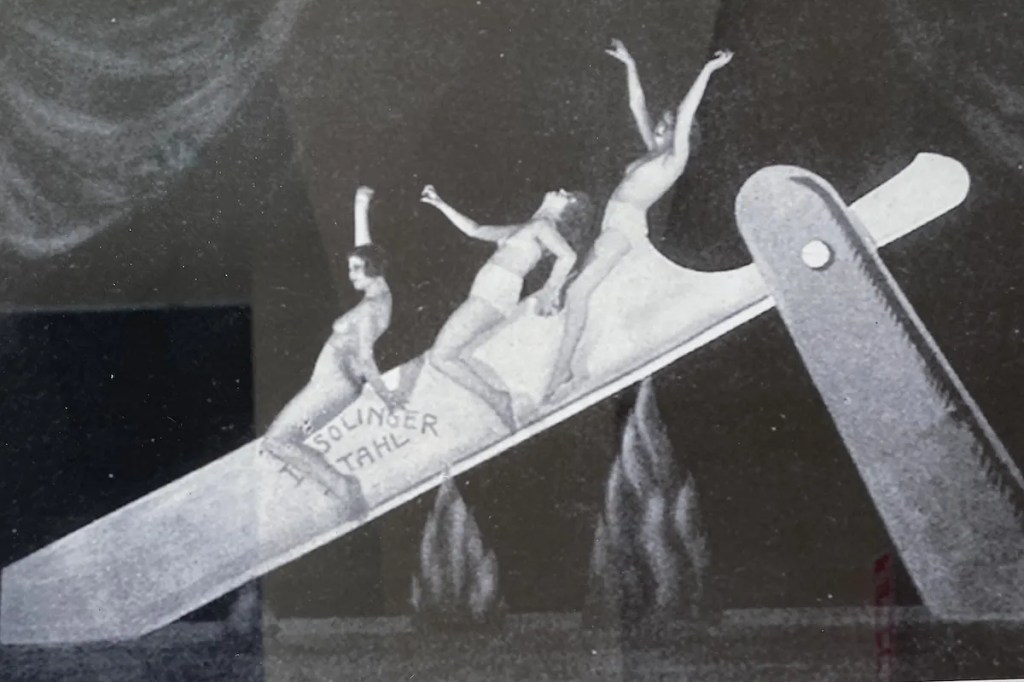
Three women, topless, slide down a razors edge. Their arms are thrown back as though falling, their heads as though in pleasure. Their eyes are heavily painted, their expressions unclear.
This photograph, taken in a Berlin burlesque club in 1923, captures the dark absurdity of the Weimar Republic: a period of liberation and debauchery shadowed by economic depression and, at least retrospectively, the rise of Nazism. It also encapsulates, more precisely, the precarious position of women in inter-war Germany.
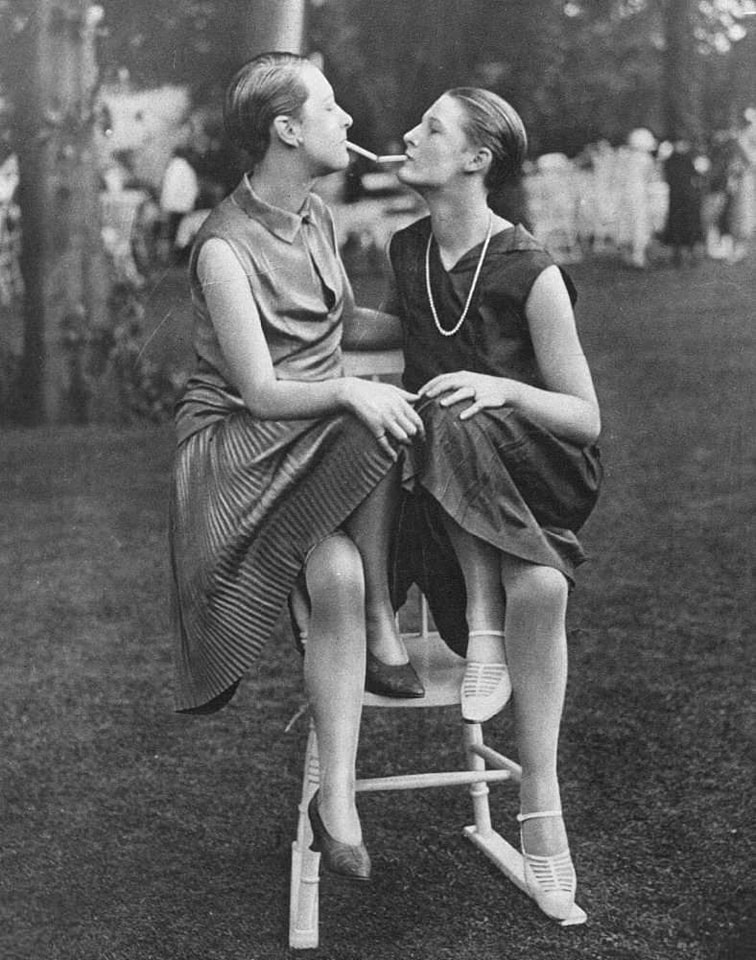
Amidst economic turmoil, many more women entered the workplace. Young women in particular flocked to the city, in pursuit of work, and of independence that was unimaginable only a generation before. So emerged the image of the ‘New Woman:’ for some, a symbol of female liberation, for others a threat to the sanctity of German culture.
Her reality, however, is one of uncertainty and exhaustion. Katarina von Ankum describes the fractured experience of a generation of young women who ‘have begun to expect a hitherto unimaginable mobility and independence but have also had to adjust to the idea of having to support themselves and stand on their own feet in the hectic and aggressive urban environment.’ For an insight into the psyche of the 1920s New Woman – her humours, sorrows and desires – we must turn to the oft overlooked writing of German women. The complex experience of womanhood in the Weimar republic is captured in the life and writing of author Irmgard Keun (1905-1982).

https://www.nytimes.com/2018/11/02/books/review/irmgard-keun-gilgi.html
Working first as a stenographer, then as an actress – careers she shared with the protagonists of her novels – Keun turned to writing in 1931 with Gilgi, One of Us. Gilgi is the embodiment of the ambitious New Woman. She has it all planned out: ‘she’s holding it firmly in her hands, her little life.’ But what makes Gilgi truly interesting is the moments when her grip slips: when she runs of money, when a friend falls into poverty, when she falls ridiculously head-over-heels in love. It is her complexity that makes Gilgi ‘one of us’, and it is Keun’s sharp irony and raw depiction of female sexuality that made her first novel a hit.
Her second novel, Artificial Silk Girl (1932) follows a similar pattern. Doris is an aspiring actress who arrives in the city with a fur coat and a dream. To experience Berlin through Doris’ eyes is to watch it collapse; to watch the theatrics fail and the curtain fall as reality closes in. The city is a space of freedom and possibility fractured by poverty, misogyny and the growing threat of fascism. Keun captures the simultaneous excitement and exhaustion of navigating work and love in the big city. These are not formulaic tales of ‘fallen women,’ but rather of women fragmented by their social context. Across Keun’s work emerges a captivating and complex image of the modern woman.
As always in times of liberation, women’s new freedom was met with conservative backlash, and politics swiftly encroached on Keun’s own life. When the Nazi party rose to power in 1933, Keun was blacklisted and her work confiscated. After her attempts to sue the party failed, she had no choice but to flee Germany.
Keun’s life during the war is still somewhat mysterious; we know she lived in both France and Holland, that she continued writing, and that in 1940 a British newspaper reported her death. The story was false, and Keun returned to Germany under a new name. Her writing career never quite recovered after the war, and she lived in relative obscurity until the 1970s, when a new generation of women needed a mirror to reflect their lived experience.
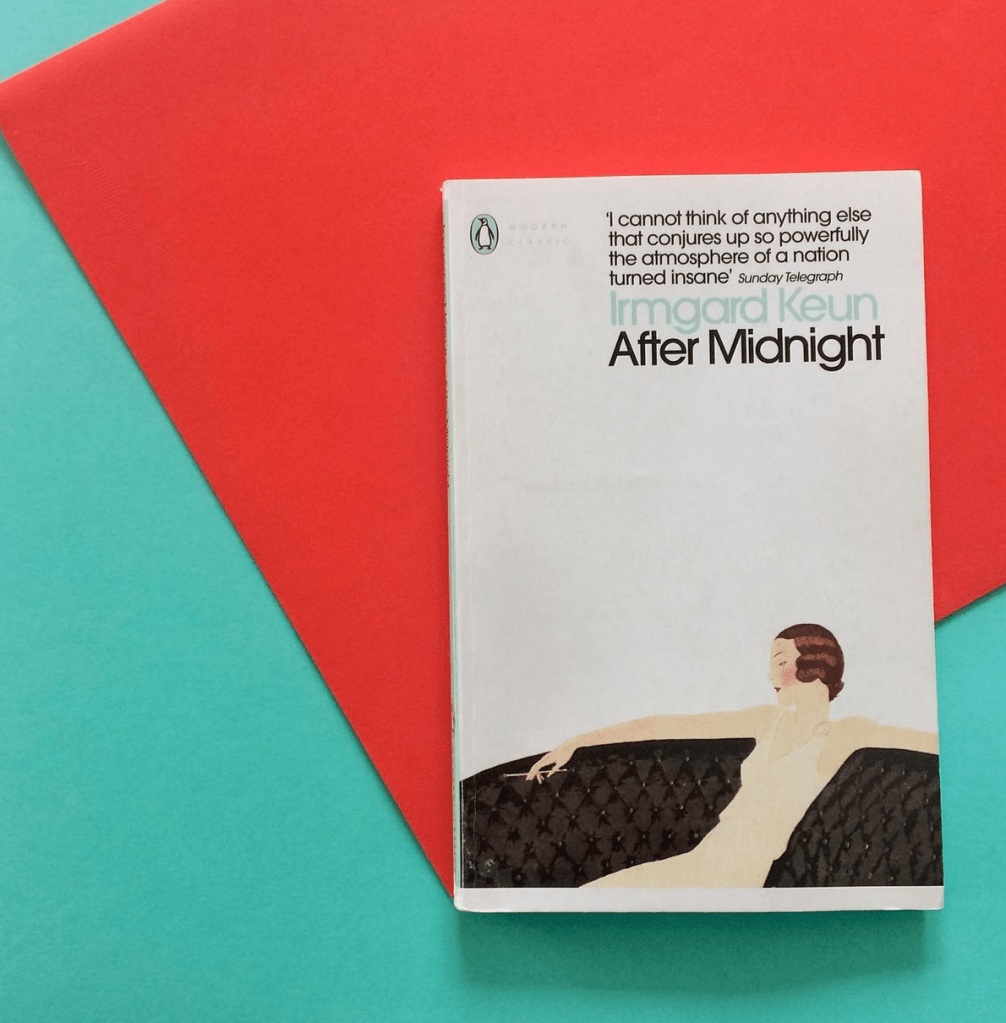
It seems fitting that many of her novels end, as they began, in motion. In After Midnight (1937) Sanna flees Germany in the arms of her lover. Gilgi, too, sits on a train; she is running from love. And Doris stands undecided between train station and bar – between an oppressive countryside fantasy or the relentless ‘dance, dance, dance’ of the city. Her voice is that of a generation of women, poised on a razor’s edge and asking, ‘where should I go?’ But always, amidst the uncertainty and hardship, Keun’s women are extraordinary for their persistence in desire. These are women who want. A job. A man. A true silk dress. They want to be something, to make something of themselves and of this life. They want to prove that this world, which can be so cruel, can also be kind.
Crossing the border, Sanna holds on to unsteady hope:
‘We’ll sleep now. We shall need strength when we wake up. There are still stars shining behind the misty clouds. Please God, let there be a little sunlight tomorrow.’
References
Keun, Irmgard. After Midnight. 1937. Reprint, Penguin, 2020.
——. Artificial Silk Girl. 1932. Reprint, Penguin, 2019.
——. Gilgi, One of Us. 1931. Reprint, Penguin Classics, 2019.
Von Ankum, Katharina, Women in the Metropolis: Gender and Modernity in Weimar Culture . University Of California Press, 1997.

