By Hollie Eaton
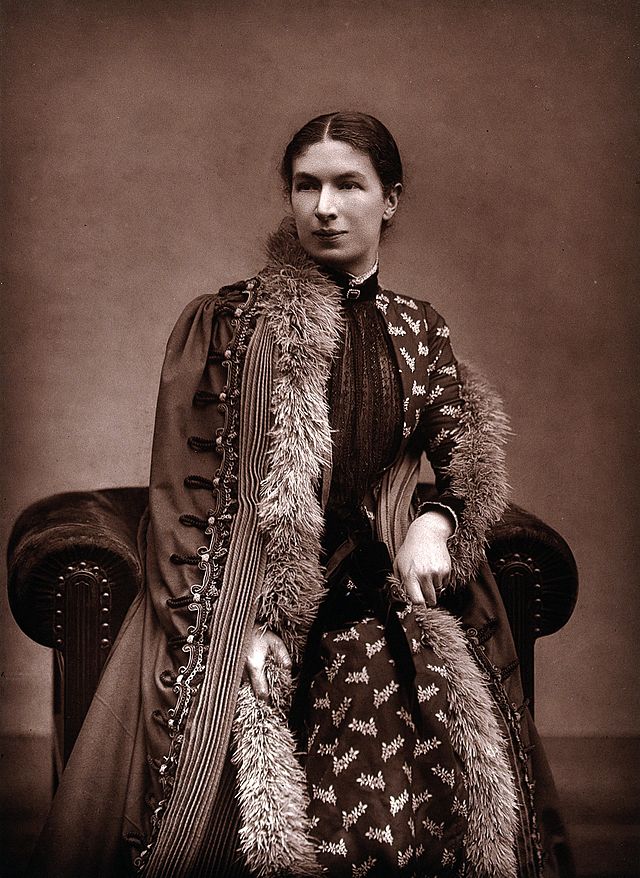
Mary A. Ward was one of the most successful women in fin-de-siècle Britain. Under her pen name, ‘Mrs. Humphry Ward’, she achieved significant fame as a novelist in the early twentieth century: the international publication of her novels both propelled her into the role of breadwinner for her family, a position rarely occupied by women in this period, and granted her extensive opportunities for world travel. In the 1880s, she was central to the women’s education movement in Oxford, helping to found Somerville College and campaigning for the right of women to access university learning alongside male students. Ward was also a pioneer of the settlement movement and a prominent social campaigner in the 1890s, particularly exhorting successive Conservative and Liberal governments to develop education provision for disabled children. Upon her death in 1920, The Times described her as ‘one of the last of the great Victorians’.1
Ward was also strongly opposed to women’s suffrage, a fact seemingly at odds with her literary success, political engagement and critical aptitude. To make sense of these contradictions, historians and literary critics alike have struggled with the application of the notion of ‘feminism’ to Ward’s life. Scholars have asked whether or not her campaign for women’s education can be regarded as feminist in light of her views on suffrage, if anti-suffragism is the same as anti-feminism, and whether or not opposition to women’s political equality precludes social and economic achievements. At a time, however, when most pro-suffrage women would not use the newly-developed term ‘feminist’ to describe their campaign, this label can only take us so far in understanding the mindset of a woman such as Ward.
In 1889, Ward was one of the organisers and principal signatories of the ‘Appeal Against Women’s Suffrage’, a five-page article in which 108 women of prominent social standing called on ‘the common sense and the educated thought of the men and women of England against the proposed extension of the Parliamentary suffrage to women’.2 In 1908, she co-founded the Women’s National Anti-Suffrage League, an organisation driven by a desire to oppose the militant suffragette campaign but also to unequivocally deny the right of women to participate in parliamentary politics either as voters or as Members of Parliament.
‘Separate spheres’ was at the heart of Ward’s world-view, as it was for many women across the suffrage divide in this period, and informed her approach to the women’s movement more readily than abstract notions of fundamental political rights or gender equality. Within this model, the working of society was maintained by a careful balance of gendered responsibilities: men were associated with the ‘public’ sphere of parliamentary politics, and women the ‘private’ of domestic cultivation. Neither of these roles were considered more important than the other, but their separation was integral to the harmony of a well-ordered society. For anti-suffragists such as Ward, granting the vote to women threatened to disturb this precarious balance of power.
Ward’s own interpretation of ‘separate spheres’ drove her anti-suffragism more than outright opposition to women’s involvement in public life. In 1910, the Women’s National Anti-Suffrage League passed a resolution proposed by Ward which stated that ‘there are not one, but two ways of fighting the franchise – a negative and a positive way’.3 Instead of focusing on the reasons why women should not vote, Ward developed her own set of arguments which sought a different role in politics for women away from the parliamentary vote: this was labelled the ‘Forward Policy’ for the progressive direction Ward considered such arguments could take the League.
The ‘Forward Policy’ distanced women from the parliamentary franchise, but not from politics altogether. Women had been able to vote for local government bodies since 1869, a right steadily expanded across the nineteenth and early twentieth centuries. In this period, English municipal bodies were tasked with responsibilities such as healthcare, sanitation, education provision and care for the sick and elderly; these areas readily aligned with women’s supposedly inherent qualities of nurture and care as mothers in the ‘private’ sphere. Ward drew on this alignment in the development of the ‘Forward Policy’ to argue that existing rights in local, rather than national, government were key to women’s participation in the state more broadly. It was here, Ward argued, that there existed ‘a vast field of women’s work, as yet practically unexplored’, and this should be focused upon before the national franchise could even be considered. 4
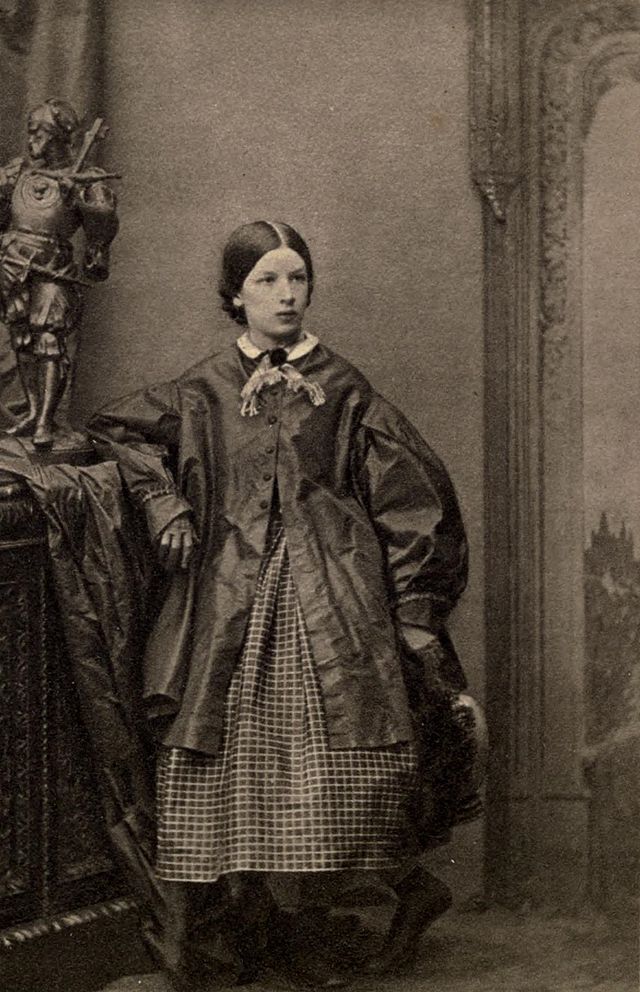
For Ward, the lines of separate spheres were not immutably drawn between the ‘private’ and the ‘public’, but between men’s preserve of the ‘national’ and women’s concern for the ‘local’. Her anti-suffragism involved campaigns to involve women in local government work, and she supported both pro- and anti-suffrage women for municipal election. By 1914, this work had become less a means to oppose women’s suffrage and more a call for re-arrangement of the British political system. In a letter to The Times, Ward called for the enlargement of local governments with greater legislative powers over ‘social and domestic affairs’ to be filled entirely by women. Men, by contrast, would possess only the national vote, with Parliament tasked with ‘physical force, finance, diplomacy, and colonial relations of the Empire’.5 The result would be a constitutional separation not only of local and national government but the political functions of men and women. Ward intended to implement the ‘separate spheres’ model within a new political order: women were not to be confined to the home, but to bring the qualities developed there to relevant work in their own political bodies.
Ward’s arguments mean she occupies an ambiguous space in the history of women’s political activism. She was a literary success, pioneer of women’s education, political campaigner, and staunch opponent of women’s parliamentary rights all at the same time. Her development of the ‘Forward Policy’ emphasises how politics stretched far beyond the House of Commons for women in this period. In this way, the intersections of Ward’s life, achievements, and opinions craft a complex space within the familiar binaries of support and opposition for the contemporary women’s movement.
References
1 ‘Mrs. Humphry Ward’, The Times (25th March 1920), p. 16.
2 ‘An Appeal Against Female Suffrage’, The Nineteenth Century (June 1889) 148:25, p. 781.
3 ‘The Principles of our League’, Anti-Suffrage Review (July 1910), p. 2.
4 ‘Anti-Suffrage League’, Girton Review (1909) 25, p. 8.
5 ‘Minor Parliaments and Woman Suffrage’, The Times (15th May 1914), p. 9

