By Vanesa Valcheva
Julia Kristeva (b. 1941) arrived in Paris in 1965 as a young Bulgarian intellectual and quickly became one of the most provocative voices in French theory. Her contributions are many across philosophy, psychoanalysis, linguistics, and literary criticism. Among these, she grapples particularly militantly and tenderly with the question of what happens to the parts of feminine experience that cannot be translated into coherent political demands.
This question emerges from her study of language itself. Kristeva argues that beneath every sentence exists what she calls “the semiotic,” referring to the pre-verbal, bodily layer of language: the rhythms, sounds, and physical intensities that exist before words and constantly push against organised speech that is, “the symbolic.” According to her, this pre-linguistic dimension is rooted in the maternal body, in the infant’s experience of fusion with the mother before boundaries solidify and language becomes possible. Before we can say “I,” we exist merged with the mother in pure bodily sensation. Becoming a speaking subject requires violently separating from that maternal presence, a psychic process Kristeva theorises through “abjection.” We expel the mother to establish where we end and the world begins.
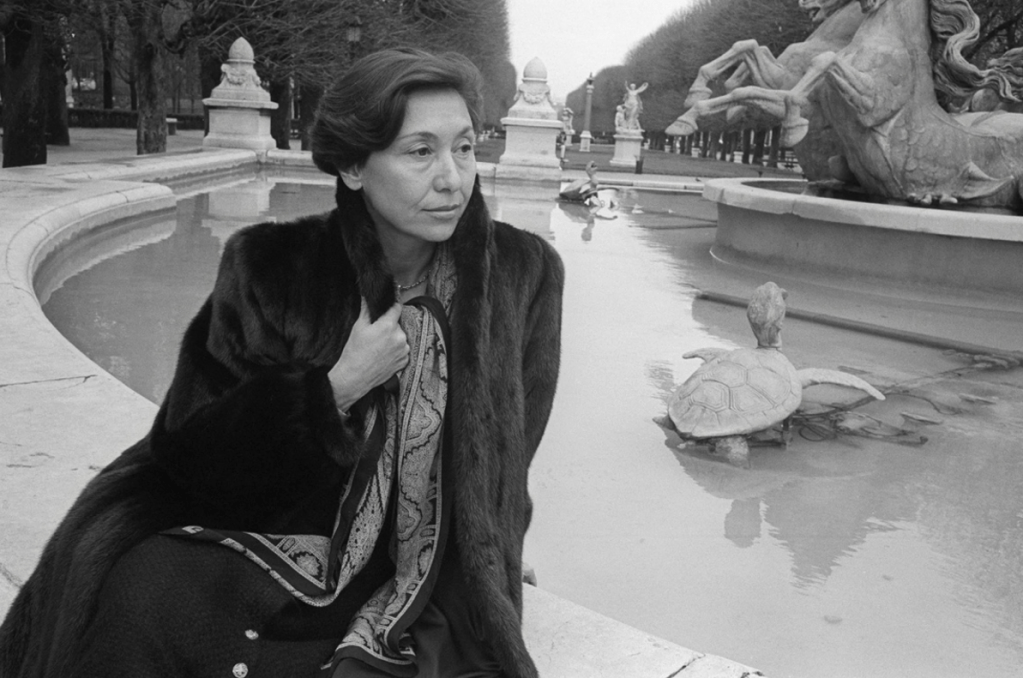
Between 1980 and 1989, Kristeva continuously returned to women who refused or failed to complete this separation. In her 1980 essay Powers of Horror, she theorises abjection as the violent expulsion through which we become subjects. She writes that what causes abjection is “what disturbs identity, system, order. What does not respect borders, positions, rules.” Put simply, abjection creates identity by redrawing boundaries that have been blurred. Separating from the mother is necessary for human development, but abjection theory suggests the child then marks a dividing line between themself and that preverbal realm, rendering everything maternal a threat to order.
Kristeva’s seminal psychoanalytic book, Black Sun (1987), turns to melancholic mothers whose depression stems from an overwhelming attachment to maternal experience that exceeds symbolic language—a collision between lived bodily experience and a world without words for it. Decades later, in Teresa, My Love (2008), Kristeva spent 600 pages exploring Teresa of Avila, the sixteenth-century mystic whose ecstatic writings describe bodily encounters with God. These encounters exceeded theological vocabulary available to express them. For Kristeva, mysticism and melancholia share a structural similarity that points to intensities exceeding the symbolic order. Teresa is another figure who embodies the feminine excess that resists translation.
But it was Marguerite Duras (1914-1996), the French novelist and playwright known for her experimental literature, who occupied the most complex position in Kristeva’s thinking, and whose work revealed the deepest tensions in Kristeva’s relationship to feminism. In Black Sun, Kristeva reads Duras’ fractured prose as symptomatic of depression, as “distorted speech” or “discourse of dulled pain”, when separation from the maternal fails to stabilise meaning. In Duras’ novels scenes repeat without resolution, characters lose definition and bleed into one another, time refuses linear progression. For Kristeva, this exemplifies the semiotic overwhelming the symbolic, when the pre-linguistic intensities shared between mothers and infants break through into language and shatter its coherence.

Kristeva’s reading is contested, notably by literary critic Karen Piper who argues that what Kristeva diagnoses as symptom about Duras’ writing is deliberate. Piper suggests that Duras’ formal choices constitute deliberate political refusal, that the fragmentation is a method. Duras, in Piper’s reading, therefore chose her self-incoherence, and the fact that readers generally find her exhausting or incomprehensible is precisely the point. She refuses to provide the satisfaction of closure because closure would mean accepting terms she rejects, whatever they may be.
Scholarship, feminist or otherwise, tends to triangulate Kristeva-the-theorist, Kristeva’s reading of Duras, and her personal and professional rejection of feminism to elaborate on discourses such as identity politics. In so doing, commentary has remarked on Kristeva’s ambivalence about political legibility itself.
The melancholic mothers describe depression as an overwhelming fullness, a surfeit of feeling that presses against language until words themselves feel impossible, each sentence a diminishment of what cannot be said. Duras, by contrast, functioned extraordinarily well as a writer and filmmaker even as her work refused conventional intelligibility. Teresa of Avilla similarly managed astonishing institutional effectiveness. What connects these women across their considerable differences is their shared inability to make themselves politically intelligible. They could not organise in recognised political forms. But in that very incapacity, each preserved something essential about feminine experience that gets lost when coherence becomes the condition of being heard, when intensity must flatten itself into language that institutions can process.
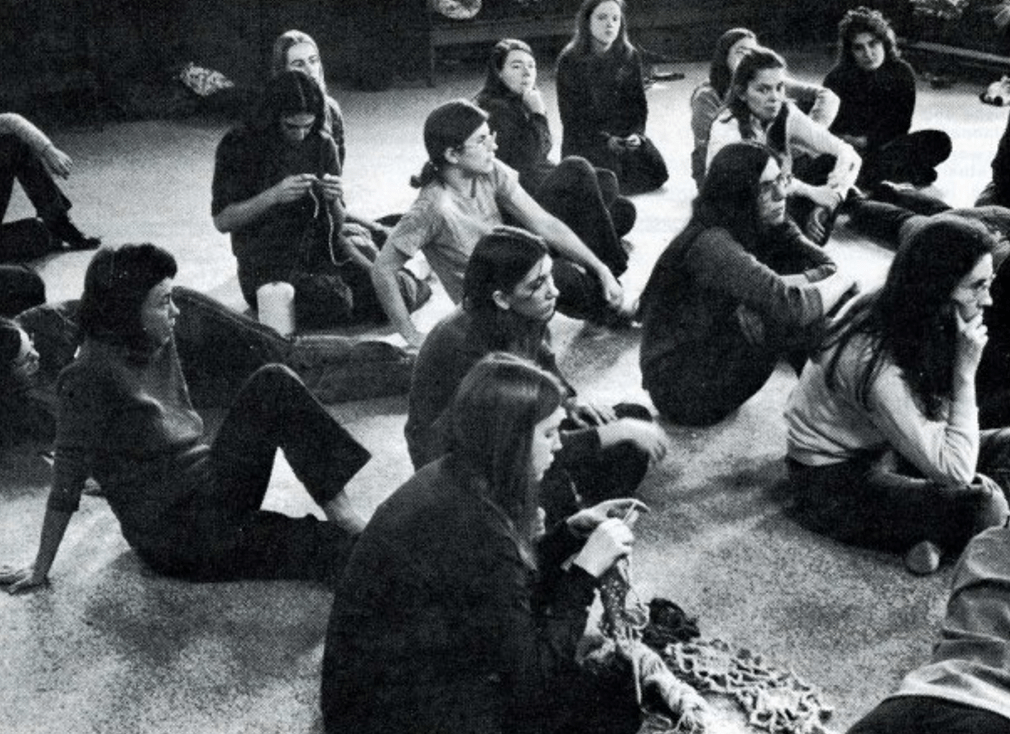
Kristeva’s refusal of feminism becomes comprehensible, if not defensible. Feminist consciousness-raising groups in the 1970s gave women a vocabulary for experiences that had seemed too diffuse or too private to constitute political grievance. The groups allowed women to recognise patterns and hear individual suffering as part of a collective condition. They could learn, in other words, to make themselves legible.
https://womenslibrary.org.uk/2020/06/30/the-metoo-movement-consciousness-raising/
Kristeva’s contributions point to the real trouble that the process of becoming politically intelligible requires adopting the very structures of rational discourse that had excluded women in the first place. One had to demonstrate coherent subjectivity, articulable demands, to prove they had successfully separated from the maternal. This meant that whatever in feminine experience remained pre-linguistic, whatever operated as intensity rather than meaning, had to be therapeutically resolved before it could be brought into political speech. Kristeva may have been hinting at a worry that the success of feminism came at the cost of abandoning the women who could not or would not perform this kind of coherence.
Kristeva never resolves this tension, and perhaps that is a contribution in its own right. She remained committed to the women who could not make themselves politically legible, a concern that resonates in contemporary debates about postpartum depression and the struggle to articulate forms of feminine suffering that resist clinical or political categories. She insisted their existence posed a question that feminism’s success, at the time, had not answered. By attending to what gets lost when coherence becomes the price of inclusion, Kristeva marked the limit of what institutional recognition can achieve; that every political vocabulary, even liberatory ones, produces its own exclusions. The women who remain suspended in feminine experience, whose subjectivity refuses the terms available to express it, still persist.
References
Kristeva, Julia, Powers of Horror: An Essay on Abjection, trans. by Leon S. Roudiez (New York: Columbia University Press, 1982).
Kristeva, Julia, Black Sun: Depression and Melancholia, trans. by Leon S. Roudiez (New York: Columbia University Press, 1989).
Oliver, Kelly, ‘Julia Kristeva’s Feminist Revolutions’, Hypatia, 8.3 (Summer 1993), pp. 94–114.
Piper, Karen, ‘The Signifying Corpse: Re-Reading Kristeva on Marguerite Duras’, Cultural Critique, 31 (1995), pp. 159–77.
Schippers, Birgit, ‘Kristeva and Feminism: A Critical Encounter’, in Julia Kristeva and Feminist Thought (Edinburgh University Press, 2011), pp. 21–54.
Szilágyi, Anikó, ‘Julia Kristeva: Teresa, My Love: An Imagined Life of the Saint of Avila, trans. by Lorna Scott Fox’, Translation and Literature, 25.2 (2016)
 Bluestocking Oxford