By Radhika Bhargava
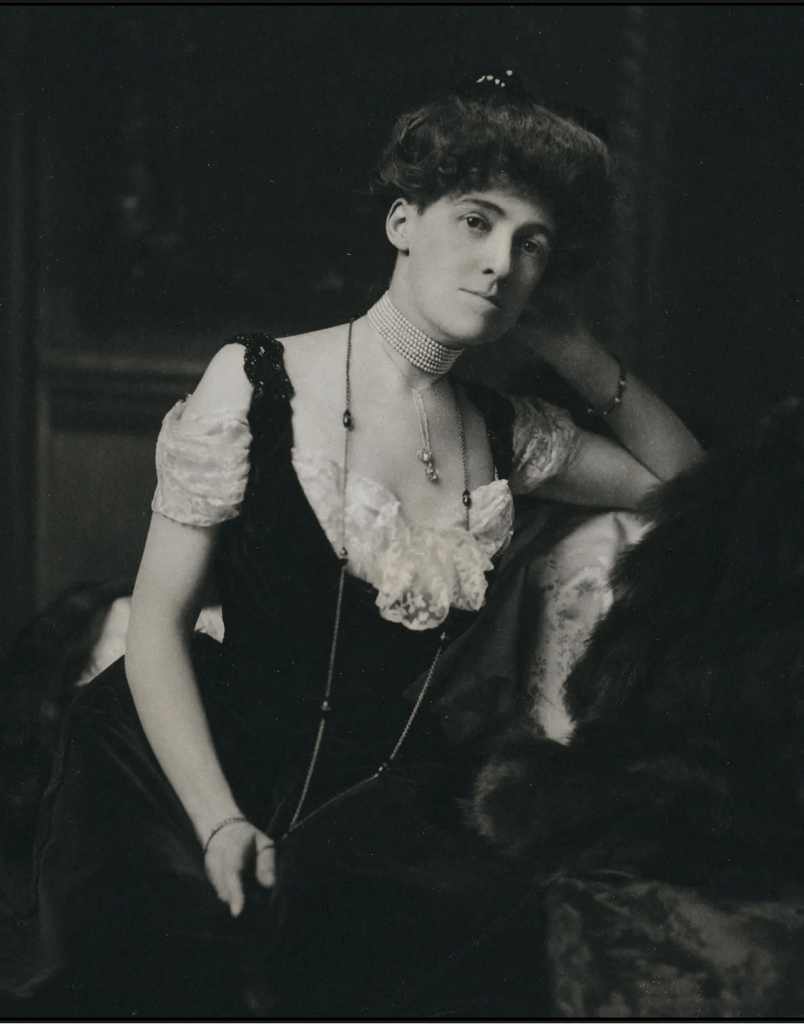
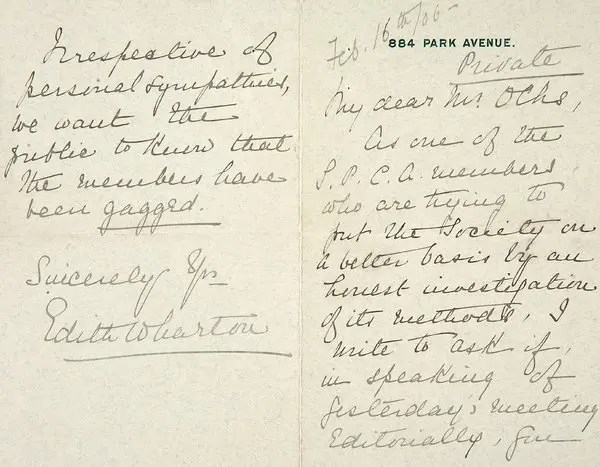
Perhaps we never settled upon a “Great American Novel” because it has so long been compromised by the tedious subject matter of a man in crisis. The Great American Novel demands a tragic American man, Greek in fate yet exceptional by virtue of self-invention. Jazz Age enthusiasts and high school reading lists may defer to F. Scott Fitzgerald as its doomed scribe, but in doing so, erase the literary blueprint left by the tragic American man’s greatest muse and envy: a sharp-tongued socialite. Edith Wharton (1862-1937), brownstone-bred and quintessentially Old New York, embodied an opposing era in American literature to Fitzgerald, though their works are marked by an enduring mutual fixation on the cost of ambition and fatalistic fascination with the trajectory of social implosion. Wharton mastered precise moral realism in her depictions of Gilded Age drawing rooms which Fitzgerald attempted to emulate behind glitter, yearning, and satirical edge as the country entered an era craving stimulation. However tempting to construe Wharton as an exacting predecessor of the Great American Novel given her technical prowess, neither she nor her contemporaries could have anticipated Fitzgerald and the tides of discourse he ushered in. Her position more closely mirrored that of Zelda Fitzgerald: an astute observer privy to a world he sought desperately to understand.
https://www.britannica.com/biography/Edith-Wharton
Unlike her de facto descendant, Wharton centered systems, not sympathy. The House of Mirth (1905) peers behind the velvet curtain of the Gilded Age to reveal a nation that has conflated social performance with moral worth, offering an exposé of American contradiction. Eschewing isolated tales of personal decline, Wharton designs the downfall of protagonist Lily Bart from gestures so routine they qualify as structural critique. Lily’s aristocratic standing founders under the compounding stress of dinner invitations, dress fittings, and a lecherous lender, hallmarks of a society where moral worth is indexed to appearance, and social grace operates as a form of speculative investment. Pride in principle does not spare the tragic American woman from narrative punishment because the reluctance to perform in a country fused to ambition is far more sinful than mere moral compromise. Lily Bart was perfectly fluent in this economy of sensibility but could not compel herself to place faith in it and thus suffered the fate of a martyr, perishing in pursuit of autonomy.
In The Custom of the Country (1913), Wharton renders this cynical framework explicit through Midwest aspirant turned continental aristocrat Undine Spragg (U.S., pointedly). Her shrewd approach to marriage is not dissimilar to that of a white shoe firm plotting its next most profitable acquisition. From the lens of Wharton’s sociological realism, desire functions as a tradable asset, and Undine’s serial reinventions through each divorce and subsequent relocation serve as reinvestments in her own social value. While Lily Bart’s noble demise can be read as a lament of orthodox virtue, Undine Spragg, in all her amoral glory, signals the emergence of a modern, profit-driven subjectivity distinctive to the New World. Fitzgerald’s uncanny portraits of restlessness and ruthlessness a decade later, from Gatsby’s meticulously constructed façade to Daisy’s transient reflections, are then Art Deco skyscrapers built atop Wharton’s Gilded Age foundations.
https://www.nytimes.com/2016/05/05/insider/1906-the-members-have-been-gagged-edith-wharton-says.html
Not quite contemporaries so much as matriarch and heir, the two met only once, under clumsy circumstances that more broadly characterize Fitzgerald’s quest to apprehend an ideal native to Wharton. She extended an invitation to the Fitzgeralds for tea upon publication of The Great Gatsby in the summer of 1925, intending to bestow praise and perhaps trade some subtly barbed criticisms. Zelda, ever the prophet, insisted that Wharton would make her feel “provincial,” sparing herself of an ill-fated aesthetic collision. F. Scott arrived alone at Wharton’s French estate eager for validation from the writer whose polite restraint some would think he abhorred. He gifted her a copy of Gatsby, scrawled within a joke about his “eternal youth”—a charming quip that undermines his maturity nonetheless. His conversation did little to redeem him, as he would go on to brag about dwelling in a bordello. Unimpressed, Wharton later described Fitzgerald in the manner you might a fresh-faced hack at the Union bar: “a very pretty, fair boy who had drunk too much champagne.” And yet, Fitzgerald was everything the Great American Novel demanded that a woman of her comforts, with her salon-seasoned wisdom, could never quite satisfy.
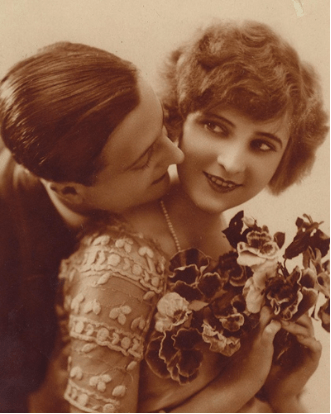
To Fitzgerald, Wharton personified the very rooms impossible for him to fully inhabit. She wrote with the assurance of a member of the strata she profiled, not in awe of its glamour but from a position secure enough to lay bare its moral limits. In Wharton’s drawing rooms, wealth was a controlled experiment for studying ethics under pressure whereas in Fitzgerald’s mansions, it served as a catalyst for combustion. True to his doomed image, Fitzgerald stalked the artistic validation of an ancestor he could imitate only lyrically, not logically. The matter of his wife and muse (and arguable ghostwriter), Zelda, further complicates this lineage. Wharton’s theme of portraying women as dual symbols and casualties of ambition runs through Zelda’s lived experiences, shaping the psychology of the woman F. Scott modeled his worlds after. If Lily Bart proves moral value collapses under the weight of spectacle, Zelda extrapolates the predictability of that collapse to the age of celebrity. Her inherent radiance coupled with Undine’s flirtatious self‑invention and Lily’s eventual disintegration under the public gaze easily grants her the title of Whartonian heroine, and makes her the perfect complement to the tragic American man.
https://blog.overthemoon.com/weddings/zelda-and-f-scott-fitzgerald-wedding-look-back/
Had they properly met, Wharton would likely consider Zelda emblematic of the worlds she once wrote, even a sort of living sequel. There’s a certain subtextual kinship between the idols of one man who could never quite please either. Their social proximity and curious resemblance may be a footnote in the canon of American literature, but absent that link, the Great American Novel could not have been conjured.
References
Milford, Nancy. Zelda: A Biography. New York: Harper & Row, 1970.
Wharton, Edith. The Custom of the Country. New York: Charles Scribner’s Sons, 1913.
Wharton, Edith. The House of Mirth. New York: Charles Scribner’s Sons, 1905.
 Bluestocking Oxford