By Radhika Bhargava
Hannah Arendt’s writings exemplify the sort of perspective borne from abnormality. Her
interpretation of totalitarianism was not that of a detached political theorist, but someone subject to statelessness, condemned to witness bureaucratic oppression from a state of exile. Her most notable works, The Origins of Totalitarianism and Eichmann in Jerusalem, understand totalitarianism as perverse reinvention of lawlessness and reason rather than a legitimate political system. Unlike some historians or memoirists, Arendt does not flatly recount the totalitarian violence of the 1930s and 40s. Instead, she discerns the mechanisms by which totalitarian regimes succeed in destroying the capacity for human thought and moral judgment. She identifies legalistic rationality and social isolation as totalitarianism’s finest weaponry, surely influenced by her personal trauma due to prolonged exile, during which she grew intimately familiar with isolation and seemingly irrational circumstances. Deprived of her intellectual sphere, she knew totalitarianism as something more profound than political catastrophe: a fundamental inversion of the human right to reason she so dearly treasured.
Arendt’s experience in exile on the basis of her Jewishness spanned an entire decade, deeply ingraining a stateless identity within her. Arrested by the Gestapo in 1933, stripped of German citizenship in 1937, and interned in French camps until her escape in 1941, she embraced statelessness as a harsh political and existential reality that would inform her theory of totalitarianism. In Origins, Arendt explicitly links the phenomenon of statelessness to the creation of what she calls ‘superfluous people’, or those who are reduced to ‘bodies without rights or political identity’. She defines the condition of being ‘superfluous’ as a new political status emerging from the unprecedented mass expulsions and denaturalisations of the early 20th century, resulting in a sudden lack of agency and protection she herself grappled with. Her statelessness, a period of nearly 17 years without citizenship, even in refuge, cannot be reduced to a biographical detail given it serves as the foundational lens through which she attempted to grasp and untangle the political logic of totalitarian regimes.

https://www.neh.gov/humanities/2014/marchapril/feature/the-trial-hannah-arendt
As perhaps the most dedicated scholar of Arendt, Samantha Rose Hill, opines, this consistent uprootedness and bureaucratic rejection stoked Arendt’s sympathies for the plight of refugees and those alienated from civil society. Arendt insists the thirst of totalitarianism cannot be quelled by oppression or persecution in the long term because ultimately, it seeks complete political erasure. By rescinding the legal protections and social recognition of an already ostracised group, such regimes prime their targets and perpetrators for the kind of arbitrary violence and eventual physical extermination that transpired during the Holocaust. Arendt highlights this unique vulnerability triggered by the loss of political identity, writing that those abandoned or shunned by their government ‘remain homeless, become stateless…and are deprived of their human rights.’ From her perspective, political annihilation is a mere precursor to the totalitarian project of mass extermination, under which laws and rights are rendered null and void. Despite fleeing the Kafkaesque bureaucracies of the Nazi and Vichy regimes, she astutely recognised that the dilemma of stateless persons is not a historical anomaly but a stark political warning.
Contrary to the perceived irrationality of these bureaucracies, however, Origins argues that totalitarian regimes do not represent some pseudoanarchic breakdown into lawlessness or madness but rather a terrifying triumph of a peculiar kind of lawfulness ‘without law’. Arendt distinguishes an obsessive internal ‘logicality’ within totalitarian systems that justifies their subtle replacement of historical reality and moral norms with rigid ideology, obscuring true diversity of thought and conscience. This neat, perverse order grants precedence to ideological narratives over the facts and individual realities that compose human plurality. Arendt clearly derives her critical insight into how ordinary legal and administrative processes can mask and enable mass murder from lived experience. Having been forced to navigate bureaucratic nightmares as a self-described refugee, she could comprehend how innocuous-looking paperwork, legal decrees, and mandatory procedures alienated people from their humanity and the rights intrinsic to it and facilitated their physical destruction. Totalitarianism morphs law into an instrument for terror capable of administering death with bureaucratic ‘lawfulness’ that superficially mimics legality yet operates outside the realms of genuine justice or law.
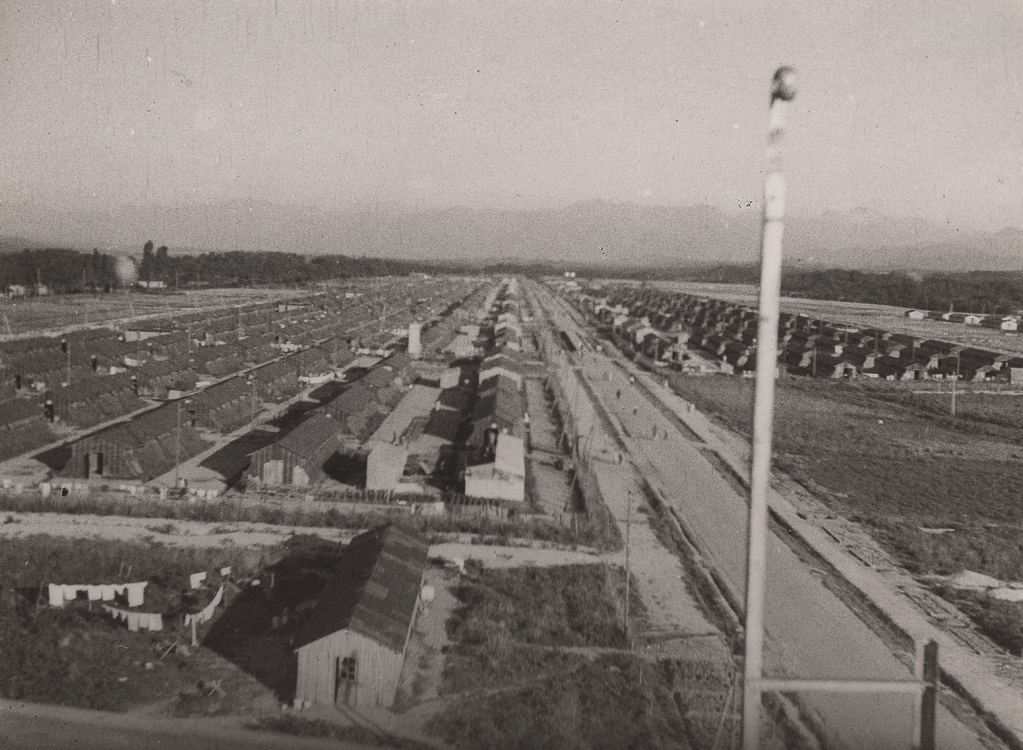
https://www.gurs1940.de/en/exhibition/places-of-internment/gurs#/
Arendt prominently reinforces this conception of totalitarian bureaucratic ‘lawfulness’ in Eichmann in Jerusalem, characterising her subject on the stand as the personification of insidious legalistic rationality. SS officer Adolf Eichmann was indeed a ‘terrifyingly normal’ bureaucrat who committed atrocities not stemming solely from sadistic intent but at the behest of a supreme ‘thoughtlessness’, a hardwired unwillingness to consider the positions of others or confront moral reckoning. The Arendtian concept of the ‘banality of evil’ exposes how totalitarian regimes opt for ordinary cogs instead of charismatic tyrants as the most efficient, apathetic arbiters of their will. Undoubtedly, her proximity to the mundane devolution of her former home into an ethnostate—a state where civilians are united by a particular racial or ethnic identity rather than a set of shared values—allowed her to recognise this phenomenon and confront that the erosion of accountable institutions is not symptomatic of, but actually essential to totalitarian domination.
Arendt’s observation of Adolf Eichmann during his 1961 Jerusalem trial for crimes against humanity further solidified her notion that ‘evil’, as a measure of suffering inflicted, can manifest as so unassuming and thoughtless. Eichmann represented a mass-produced bureaucrat, endlessly loyal but not quite fanatic. In Arendt’s assessment, the devastation he wrought could be attributed to a fatal disengagement from critical thinking or moral reflection. His testimony was that of a laggard fortunate enough to stumble into a regime where his obedience and expendability were valued, the perfect vessel for genocidal ideology. His affliction was distinct from ignorance, signalling a cognitive emptiness impossible to rehabilitate or neuter, something Arendt found almost personally offensive and ironically, even inherently inferior. Her distaste, verging on hatred, for the thoughtless is inextricable from her experience of being treated like a case file or ‘problem’ to be purged. Arendt was subject to intense depersonalisation over the course of her exile, in part by dehumanising policy such as that enforced by Eichmann but also by confinement to a ‘space of solitude’ that affects both citizens and pariahs of totalitarian regimes. Individual thought and intellectualism are deemed useless, even treacherous, and thereby eradicated, entrusting governance to future Eichmanns. Arendt understood that loneliness and isolation are factories of the totalitarian state in which thoughtlessness proliferates and poisons communities, pitting ‘each individual in his lonely isolation against all others and himself’. This psychological and social fragmentation also disintegrates group ethics and stunts resistance, inducing complicity. In the context of her traumas, this strain of loneliness does not spawn contemplative reflection or radical plots, it drives one to surrender.
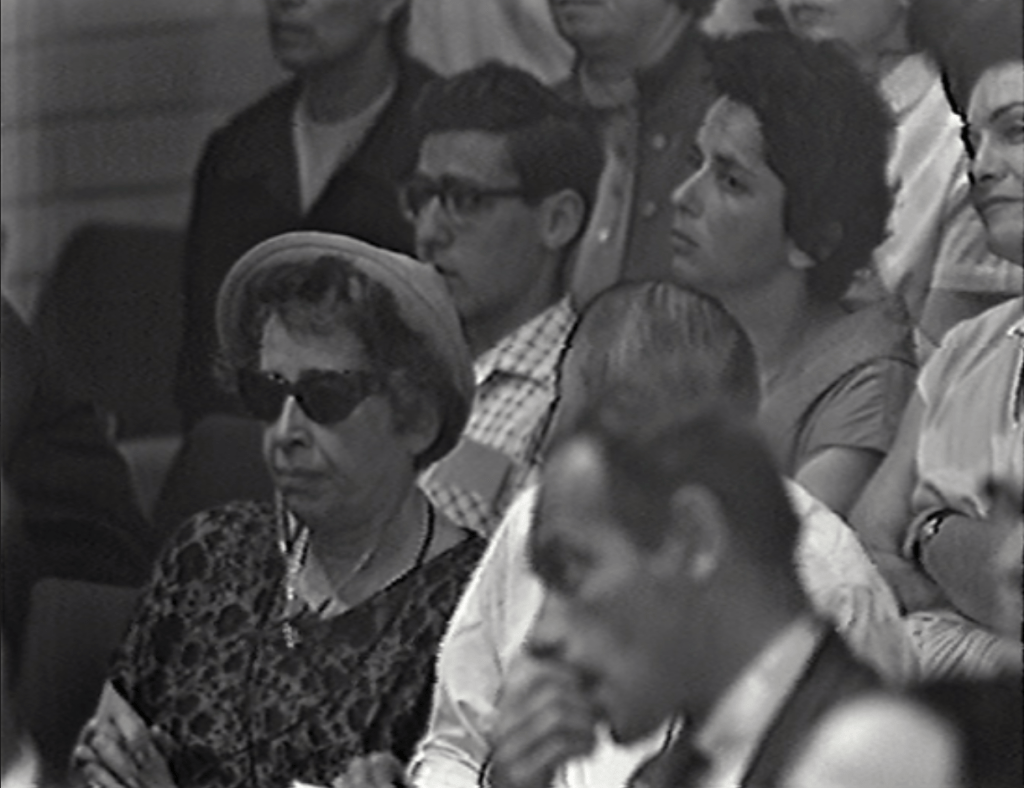
https://worldrecordsjournal.org/arendt-in-jerusalem-documentary-theatricality-and-the-echo-of-irony/
Preceding her two most monumental works, the essay We Refugees (1943) offers a rare glimpse into Arendt’s own dulled sense of self amid the traumas of totalitarianism. She articulates the human cost of uprootedness, the revocation of home language under occupation, as a kind of social death precipitating totalitarian dehumanisation. Like thoughtlessness, uprootedness is not an individual tribulation but a systematically exploited sentiment implanted by the regime. In her examination of the psychological toll of exile, Arendt notes the prevalence of suicide among refugees, many of whom were overwhelmed by extreme marginalisation and sought to escape despair with dignity through an act of their own volition. She frames the mass suicides of Jewish refugees as a conscious response to the grim epiphany that their social and political deaths are inevitable under regimes founded on the very denial of their rights and humanity. Her acknowledgement of the link between political disenfranchisement and personal despair underscores her argument that the structures of totalitarianism permeate physical violence, rotting down to the moral and existential core of its victims. To paraphrase, it kills the root. Arendt’s frustrations guide her essay to dissect political flaws she deems intrinsic to the nation-state system, whose dependence on territorial and legal sovereignty, she claims, ensures eventual statelessness and displacement. This embedded failure alludes to the limitations of the international political order and underscores the urgent need for a recognition of universal human rights, which she advocates for more comprehensively in her later concept of ‘the right to have rights’.
Hannah Arendt’s philosophical urgency did not arise spontaneously; her survival of the refugee condition grants her writing a certain political imperative at a moment of immense dehumanization. She dismisses the notion of passive totalitarianism by clearly articulating its intention to annihilate personhood and subvert reason, while maintaining that passive compliance fuels the larger machine. Arendt’s trauma was not the nebulous anguish of one woman, it was her philosophical informant.
References
Arendt, Hannah. The Origins of Totalitarianism. New York: Harcourt Brace, 1951.
Arendt, Hannah. Eichmann in Jerusalem: A Report on the Banality of Evil. New York: Penguin, 1963.
Arendt, Hannah. “We Refugees.” Menorah Journal, January 1943.
Hill, Samantha Rose. Hannah Arendt: An Introduction. London: Bloomsbury, 1997.
 Bluestocking Oxford