By Shelly Foreshaw Brookes
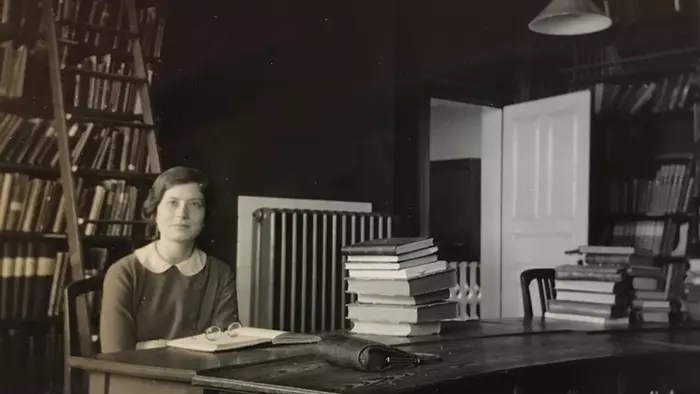
One of the most widely used Arabic dictionaries today has an unsettling origin: it was commissioned under Hitler’s regime, to facilitate the accurate translation of Mein Kampf (1925) and to disseminate Nazi propaganda around the Arab world. Embedded in its history is an unsettling paradox—the foundational contributions of a brilliant Jewish scholar, Hedwig Klein (1911-1942). Klein, a young Arabist of extraordinary talent, had already been marked for deportation to a concentration camp when the Nazis pulled her from the list. Not to save her– but to put her to work. She was forced to help compile the very dictionary intended to serve a regime dedicated to her destruction.
Born in 1911 into a Jewish family in Antwerp and raised in Hamburg, Klein became a
German citizen at the age of fourteen. Before her naturalisation, her father had died fighting for
Germany in World War I. A gifted student, she pursued Islamic Studies, Semitics, and English
Philology at the University of Hamburg. Her fascination with Arabic philology was both scholarly and deeply personal– a field in which she would make a lasting, albeit tragic, mark.
https://qantara.de/artikel/die-j%C3%BCdin-hedwig-klein-und-mein-kampf-die-arabistin-die-niemand-kennt
Klein’s doctoral research was a critical edition of Kitāb al-Maʿārif, an early Islamic work
attributed to Ibn Qutayba. Her work showcased both linguistic precision and historical insight. By 1937, her dissertation was complete and met all academic requirements, but newly implemented Nazi policies barred Jewish scholars from sitting doctoral examinations.
Refusing to accept this, Klein appealed directly to the university dean, beginning her letter
“I, Hedwig Klein, a Jew with German citizenship…” She emphasised the immense effort that she
had invested in her research and, in a last desperate appeal, referenced her father’s sacrifice for
Germany. Whether out of residual academic integrity or bureaucratic oversight, her request was granted. Klein passed with the highest distinction: ausgezeichnet (summa cum laude).
Arthur Schaade, the second academic reviewer, wrote that her work was “so diligent and
brilliant that it made one wish some older Arabists could live up to it.” Yet the triumph was a hollow one. Despite her excellence, Klein was denied the conferral of her degree— the Nazi policies would not allow a Jewish scholar to hold a doctorate.
As persecution intensified and it became clear her degree would never be awarded, Klein
tried to emigrate. Repeated efforts to secure a U.S. visa failed. Eventually, she received an invitation to join an Arabic professor in Bombay, India. Reluctantly leaving her family behind, she departed Hamburg in August 1939, hopeful about a future in academia. In a letter sent a few days after boarding the ship that would take her to freedom, she expressed optimism, writing, “Allah will help me.”

https://en.wikipedia.org/wiki/Hedwig_Klein
But four days into the journey, her ship—like all German vessels—was recalled to Germany
due to the imminent invasion of Poland. With the outbreak of World War II, British India– her
destination– became enemy territory. Her hopes were shattered. Her fate was shaped not only by Nazi racial laws but also by the regime’s geopolitical ambitions. As restrictions on Jews tightened, the Nazis sought ideological alliances with Arab nationalists—an effort that would, in part, rely on the very linguistic expertise that Klein possessed.
By the 1930s, Nazi Germany viewed Syria and other mandate-era regions as potential allies
in its anti-colonial propaganda efforts. Some Arab nationalists, frustrated by British and French
colonial rule, saw promise in Hitler’s anti-imperialist rhetoric and hoped a German victory might weaken European dominance. In cities like Aleppo and Damascus, slogans emerged: “Allah in heaven, Hitler on earth,” and “No more Monsieur, no more Mister; Allah’s in heaven, and Hitler’s on earth.” Excerpts from Mein Kampf were published in newspapers, often distorted by unauthorized translations. As propaganda efforts intensified, so too did the need for accurate linguistic tools. The development of an Arabic-German dictionary—spearheaded by Hans Wehr, an academic and lecturer—became part of this broader effort and was crucial for the regime’s goals.
Finding scholars with the necessary expertise was difficult, and despite her Jewish identity,
Klein’s exceptional command of both ancient and modern Arabic made her indispensable. At just twenty-nine, she was recruited– her scholarship now a grim asset to the regime.
Klein’s situation became increasingly dire. Forced to relocate to a Jewish-designated house,
she witnessed the deportation of her family and neighbors. Under Nazi orders, she continued her work on the Arabic-German dictionary– labouring in the very field she loved to serve a government intent on her eradication. The cruelty of this irony is hard to fathom: her passion for Arabic scholarship was being used to further genocide.
Among her colleagues, some admired her intellect and praised the quality of her work.
However, one famously stated that Klein should never be acknowledged for her contributions, reflecting the deep divides of the time and the pervasive anti-Semitic sentiment, even among intellectuals.
Klein’s work was meticulous. Her fluency and deep understanding of Arabic nuance were
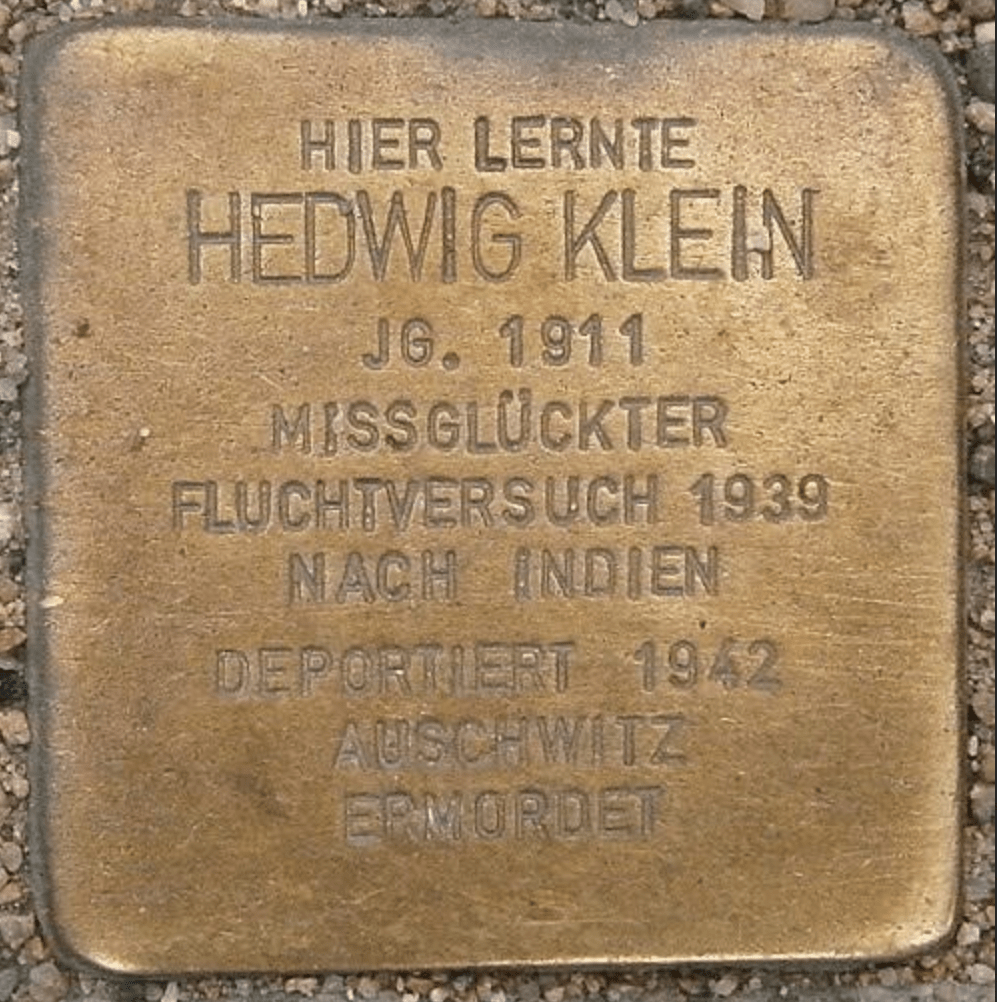
essential to refining the dictionary’s lexicon, ensuring a level of precision that future scholars would rely on for decades. However, she could not escape her fate. In 1942, Hedwig Klein was deported to Auschwitz, where she is believed to have died shortly after her arrival.
https://en.wikipedia.org/wiki/Hedwig_Klein
The dictionary, finalised in 1952– seven years after the war’s end–endured. Despite the
brutality of her fate, Klein’s work on the Arabic-German dictionary lived on. The Hans Wehr Dictionary of Modern Written Arabic, as it became known, remains one of the most widely used Arabic-German reference works to this day.

https://www.tabletmag.com/sections/history/articles/the-skeptic-hedwig-klein
Her legacy is a complicated one. Klein’s scholarship, forged under coercion and moral
compromise, ultimately transcended the malicious intentions of those who exploited it. Even as her expertise was conscripted by a regime seeking her annihilation, she persisted in doing what she loved. Her life and work remain a testament to the resilience of intellectual passion and the enduring power of knowledge amid inhumanity. In 1947, her former professor successfully ensured that Hedwig Klein’s dissertation was finally printed, and she was posthumously awarded a doctorate in philosophy. Hans Wehr, who had collaborated with her on the dictionary and was later identified as a Nazi sympathizer, attempted to distance himself from his wartime complicity by citing Klein’s involvement—ironically using her memory to soften his own.
For decades, Klein’s contributions went unrecognized. It was not until the sixth edition of
the dictionary, published on December 16, 2020, that she was formally acknowledged. The preface included this tribute: “The heirs of Hans Wehr and the publisher wish to remember Hedwig Klein, a Jewish colleague who contributed to the first edition. Her work on a ‘war-essential’ project did not prevent her deportation to Auschwitz, where she was murdered in 1942.” Today, Klein’s story is a pertinent reminder that we must continue to fight against intellectual appropriation, exploitation and persecution under tyrannical regimes.
References
Berman, Lazar. “Nazi ‘Cousins’: ‘Allah above Us in Heaven, and Hitler with Us on Earth’.” The
Jerusalem Post, April 25, 2013. https://www.jpost.com/magazine/features/nazi-cousins-allah-above-us-in-heaven-and-hitler-with-us-on-earth
Kotowski, Elke-Vera. “Scientific Networks – Arabist Hedwig Klein’s Attempt to Emigrate.” Key
Documents of German-Jewish History, February 9, 2023. https://keydocuments.net/article/kotowski-hedwig-klein
Wagner, Claudia M. “Die Jüdin Hedwig Klein und ‘Mein Kampf’: Die Arabistin, die niemand
kennt.” Qantara.de, September 20, 2022. https://qantara.de/artikel/die-jüdin-hedwig-klein-und-
mein-kampf-die-arabistin-die-niemand-kennt
 Bluestocking Oxford