By Laura Brink
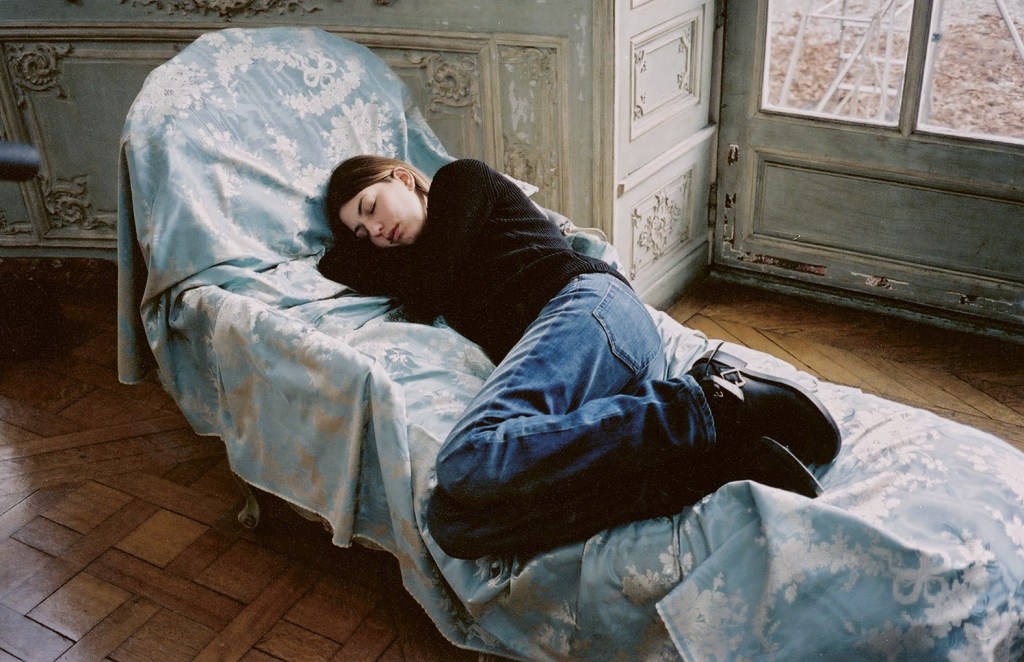
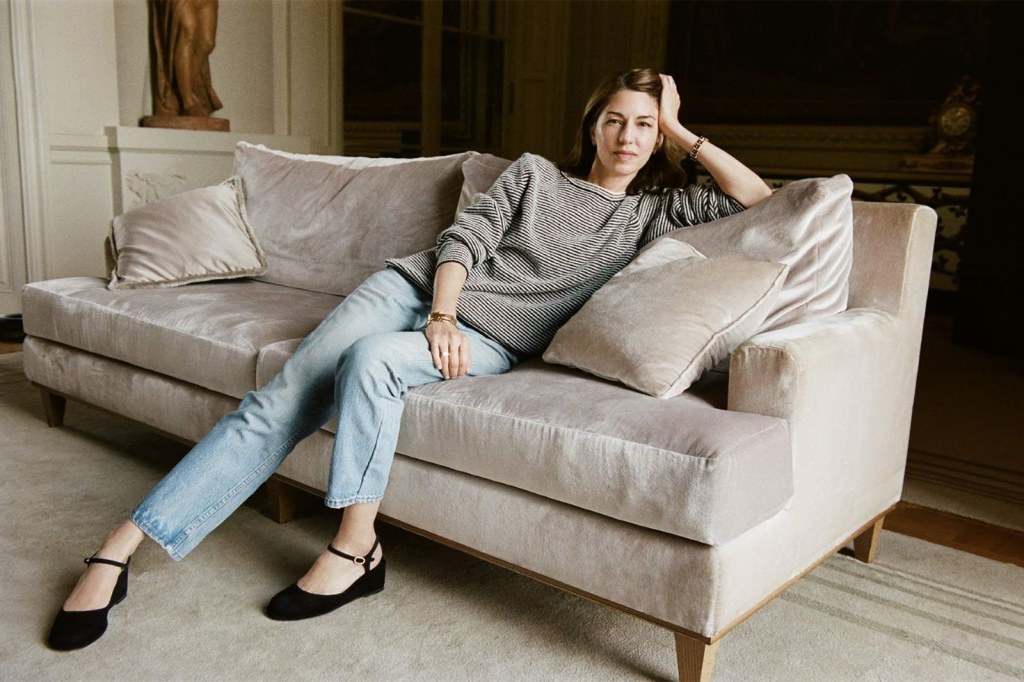
The success of the recent publication Sofia Coppola’s Archive (2023) reflects powerfully on Coppola’s particular directorial appeal. The art book consists of alluring behind-the-scenes snapshots from the sets of her over two decades-long career as a writer and director. She also adds snippets of the visual inspirations behind her work, a particularly significant inclusion as she frequently credits individual, strong images as her imaginative starting point for a new project. The prominence of the curated image in Coppola’s creative practice showcases her suitability to direct films, such as her most recent Priscilla (2023), surrounding the life of the much photographed and visually scrutinised celebrity.
(https://observer.com/2023/09/sofia-coppolas-new-book-archive-is-a-cinematic-scrapbook/)
(https://www.net-a-porter.com/en-ae/porter/article-75ccff3f16598546/fashion/art-of-style/sofia-coppola)
The photographs in Archive, though motionless, are not so different from a typical shot from a Coppola feature. Dreamy in atmosphere and lighting, tastefully colour-graded to evoke nostalgia, and capturing “messy”, feminine rooms filled with carefully composed ephemera, these images reveal a remarkable cohesiveness of style. Photography is a medium perfectly suited to Coppola’s feminist aesthetics: her often slow-paced, emotionally muted, and visually striking films have been praised for the way these qualities capture something of the feminine disposition, especially of girlhood. She captures her subjects confined in the stifling expectations of their gendered and privileged (notably white) existences by slowing her camera down, drawing from the ability of photographs to both idealise and entrap the female form through lingering shots and meticulous compositions. Her connections to the world of photography and painting are numerous: she cites artists such as Bill Owens and John Kacere as inspirations, both of whom prioritise clarity over naturalness in their depictions of their subjects, along with many works from the infamously posed genre of fashion photography. Such influences have made Coppola into the ideal filmmaker to capture the lives of the privileged, the pretty, and the often photographed.
Coppola’s unconventional take on Marie Antoinette’s life in her 2006 biopic of the young queen proved her capability to portray the life of a famous young wife struggling to blossom into a woman of her own making, outside of her marriage to a powerful man. Coppola’s Marie Antoinette, sensitively depicted with a blend of fun and melancholy, paved the way to her biopic about Priscilla Presley’s relationship with Elvis. Coppola’s scenes of the young queen of France looking listless in beautiful gowns, empty while eating symbolically charged cake, inform her depiction of Graceland as a gilded cage in Priscilla. This latest film is the clear result of Coppola’s honed attention to the suffocation of being reduced to an image, to photographs taken and framed by men, while also celebrating the sensual joys of prettiness, the conflicting pleasures of being an icon. Though Coppola still draws on the glamorous imagery of Graceland, and the appeal of actress Cailee Spaeny’s performance as an all-American schoolgirl sweetheart, these symbols, which are so often glamorised and sexualised by the male gaze, are deftly re-framed. Drawing on Priscilla’s own memoir of her time with ex-husband Elvis, and making use of romantic 1960s pop songs after being denied the rights to use Elvis’ music by his estate, Priscilla succeeds in giving the story of the Presley’s marriage a distinctly different mood from Baz Luhrman’s fast-paced, macho Elvis (2022).
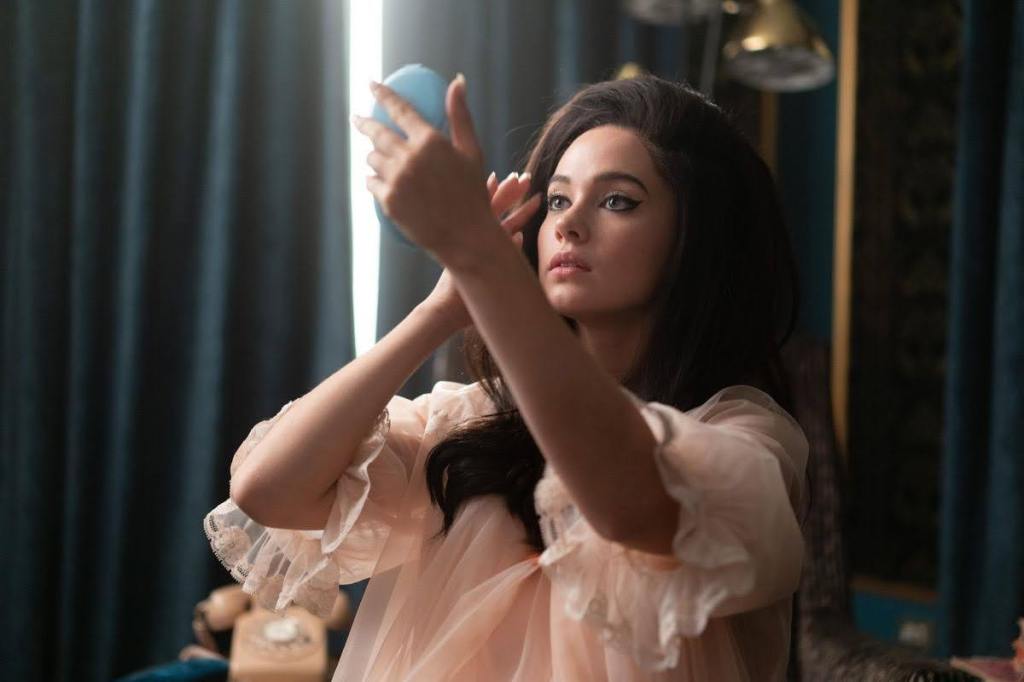
The release of Priscilla so soon after Elvis led many critics to draw – often contentious, frequently gendered – comparisons between the films. As evidenced by her refusal to be deterred in the making of Priscilla following the disapproval of Elvis’s estate, Coppola is unwavering in her project to champion the female perspective of her protagonists. Many of her films attract controversy: her debut feature The Virgin Suicides (1999) ignited fears that she would encourage teenaged girls to kill themselves through the glamourisation of her subject matter. She met with accusations of frivolity and vacuous materialism following Marie Antoinette (2006) and The Bling Ring (2013), and many noted her problematic refusals to address the glaring issues of race in the settings of Lost in Translation (2003) and The Beguiled (2017). Certainly, Coppola’s choice of subject throughout her oeuvre has revealed a preference for the conventionally attractive, socially privileged young women popular throughout film history, and her artistic innovation is situated in her reframing of familiar portraits instead of painting new, underrepresented figures.
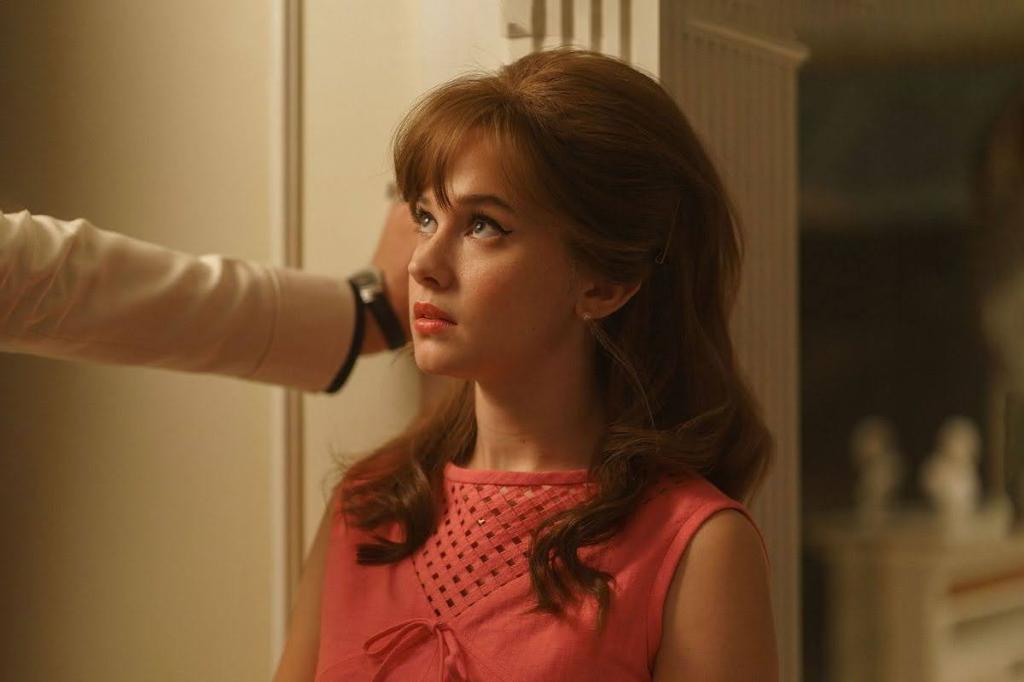
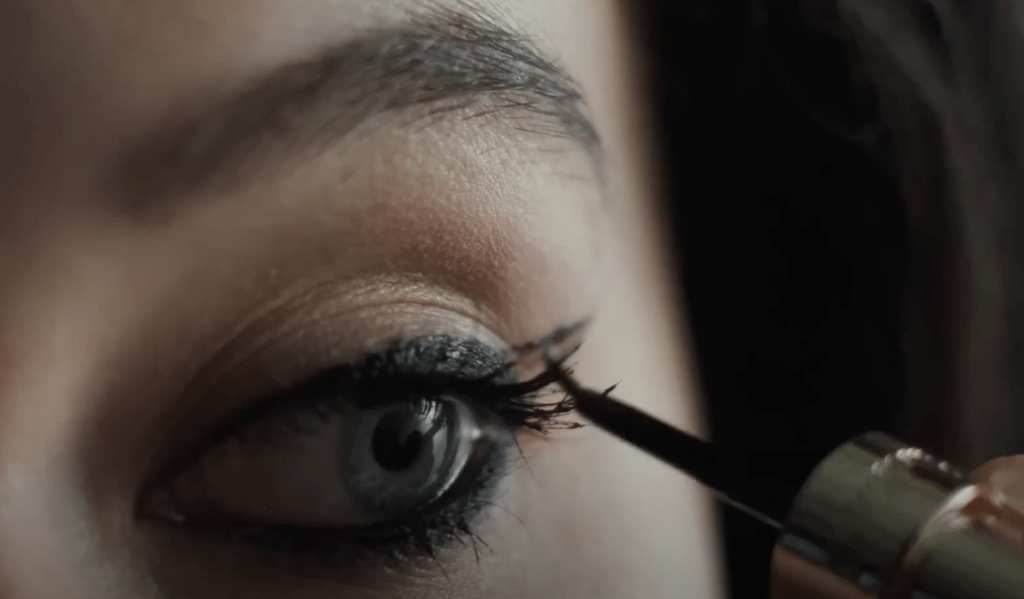
Thinking with the idea of “framing” as a central concept in Coppola’s work is intuitive, given that her work as director is inherently concerned with camera frames and compositions, in addition to her connection with fine art. She utilises framing to present Elvis from Priscilla’s perspective, thus achieving a more unflattering interpretation of the rockstar. Priscilla’s Elvis, portrayed by Jacob Elordi, is often shot with a wide angle, from afar, whereas Coppola choses to zoom in on Spaeny. The film contains numerous close ups of Priscilla’s face, prompting intense scrutiny of her appearance as it changes through hair and make-up. The audience is made complicit in the careful, critical gaze of Elvis as Priscilla is seen dyeing her hair black, styling it in increasingly large updos, and applying her soon-to-be-iconic winged eyeliner to suit his tastes. Though Priscilla does age throughout the film – it spans her life over thirteen years – the attention to the application of her make-up and hair products emphasises how much older this adjusted way of framing her girlishly pretty face makes her appear. Such subtle visual storytelling brings out the themes of grooming and paedophilia which are glossed over in, for example, the more pro-Elvis Baz Luhrman biopic. Coppola’s choice of the lanky Elordi, taller than the real Elvis and much more so than the petite Spaeny, furthermore allows her to compose shots in which Priscilla is literally framed within Elvis’ looming figure, trapping her against a wall in a stance which is both seductive and threatening, symbolic of the way in which Elvis attempted to control his wife’s image.
Coppola’s subversiveness is equally clear in The Virgin Suicides, adapted from a novel written by a man and narrated by a group of teenaged boys obsessed with their sexually blossoming female neighbours. Coppola’s creation is a cult-favourite film about the aesthetics and listlessness of girlhood. Just as the Lisbon sisters are shown through glimpses through windows and scrapbooked photographs, Coppola shows Priscilla gazing out of Graceland’s elegant window frames, behind its gilded gates, and through snapshots from the press. But even though the audience is made (or allowed to) gaze upon these women, like almost all of Coppola’s protagonists, we are shown their eyes, their faces looking at something or someone offscreen so often that it is impossible to escape the allure of wondering what they are looking at and thinking.
Beyond material markers of femininity – lace, panties, perfumes, make-up bottles, the colour pink – Coppola’s films centres the frame on the female gaze: her protagonists show audiences the world through their perspective even when the men around them encroach on them or try to flatten and frame them, and, most strikingly, they are women who gaze straight into the camera at us.
Further Reading
Anna Backman Rogers, Sofia Coppola: The Politics of Visual Pleasure (2018)
Ellen Gamerman, “The Eye Makeup Is Everything in ‘Priscilla’”, Wall Street Journal (2023)
Rachel Syme, “Sofia Coppola’s Path to Filming Gilded Adolescence”, The New Yorker (2024)
Suzanne Ferriss, The Bloomsbury Handbook to Sofia Coppola (2023) Tanya Gold, “Inside Elvis’s Dollhouse”, The New Statesman (2024)
 Bluestocking Oxford